30 Jan, 2022 10:57 Home World News on RT by Damian Wilson
British soldiers massacred 13 people on the streets of Derry in 1972. RT spoke to a man who lost his father on that fateful day in Bogside
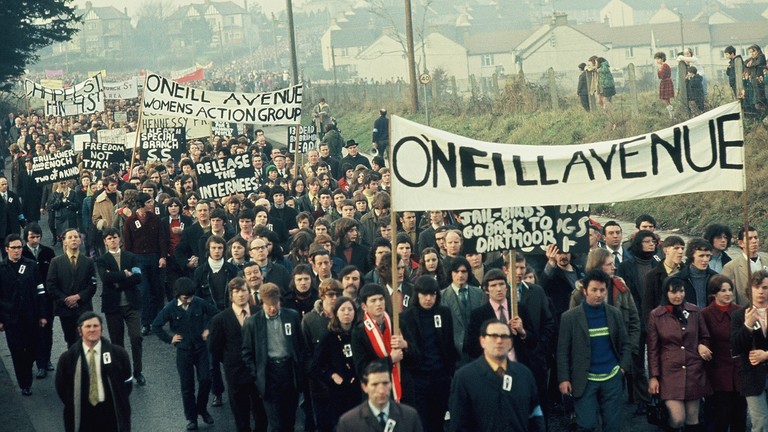
FILE PHOTO. Thousands march with the Northern Irish Civil Rights Assn. in Newry during a civilian protest organised in response to the shooting of 14 civilians by British paratroopers the week before, 2nd February 1972. © Getty Images / William L. Rukeyser
For the first time in 50 years, the crowds gathering in Derry this weekend to remember the events of the day forever known as Bloody Sunday will have some certainty.
\Certainty that the innocence of the 13 men and boys murdered on January 30, 1972 has been acknowledged, but also certainty that true justice has eluded them.
But that won’t stop the families of those killed and wounded by trigger-happy British Parachute Regiment soldiers in half an hour of bloodshed from celebrating what they’ve achieved in the years since. And it hasn’t stopped Enniskillen-born actor Adrian Dunbar, star of the hit TV police drama ‘Line of Duty’ from accepting an invitation to talk to his fellow Northern Irishmen and women on Sunday as they meet together to remember the past and pray for the future. READ MORE: Bloody Sunday, 50 years on: MP Francie Molloy slams British government for cover-up (E1101)
Among them will be Tony Doherty, who was just nine years old at the time. On the stone memorial at the foot of Rossville Street in Derry, his father’s name, ‘Patrick J. Doherty’, is at the top of the list of those mown down in the area of the city known as Bogside when the British Army opened fire on peaceful civil-rights marchers.
Patsy Doherty was shot by a soldier as he attempted to crawl to safety. Thirteen died that day and a fourteenth succumbed to his injuries a few months later.
Speaking exclusively to RT.com this week, Tony said, “It was at the hospital that a lot of the families, who became known as the Bloody Sunday families, met one another for the first time, as the remains of their recently murdered loved ones were strewn throughout the morgue.”
His mother, Eileen, was among those identifying the bodies recovered from the street where they had fallen, having been notified that her husband had been shot.
\ “When she first got the call, she didn’t know how badly my father had been hurt,” said Tony. “But when she got over to the hospital, she was only able to identify his body.” 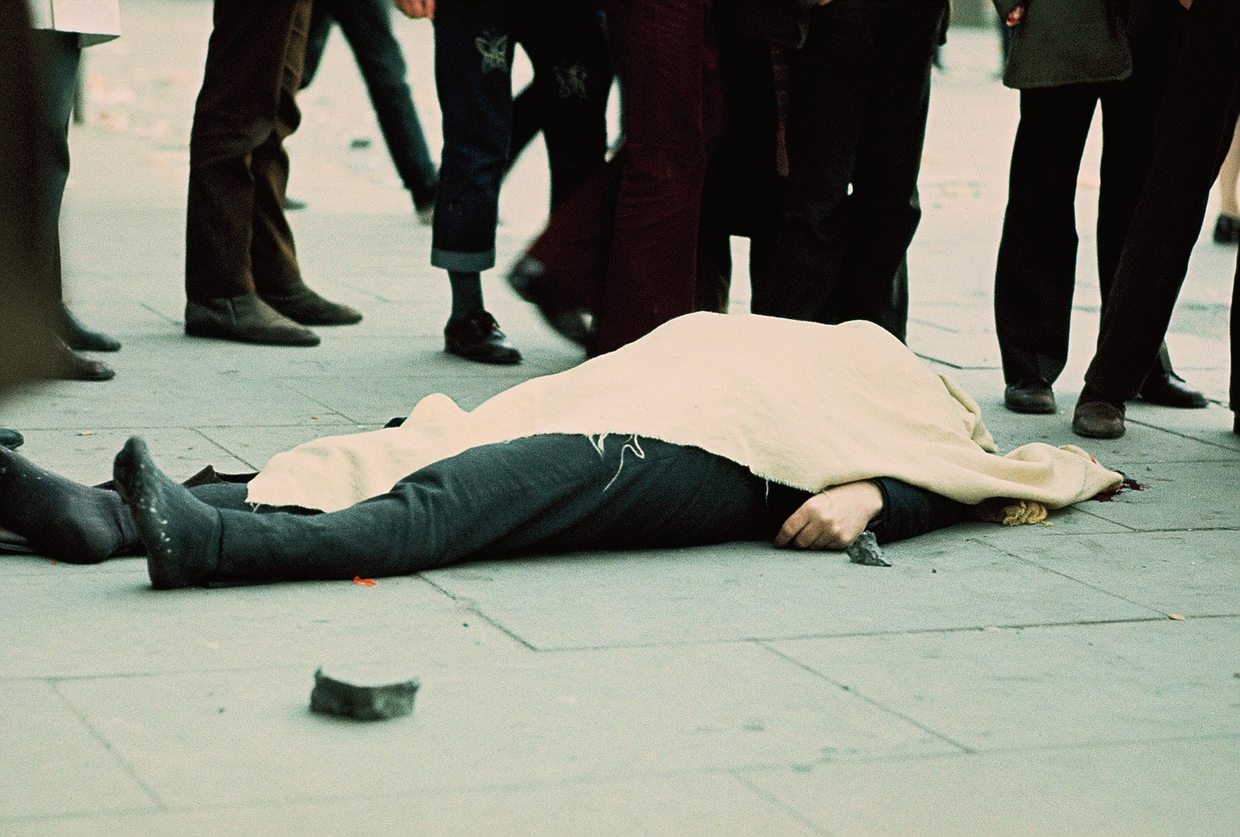 FILE PHOTO. A victim of the shooting by British paratroopers of 14 civilians during a civil rights march lies on the pavement near to Rossville Flats in Londonderry, 30th January 1972. © Getty Images / William L. Rukeyser
That left the widow with a duty no parent ever expects or deserves. “She had to come back and tell her six children that their father had been shot dead,” Tony said.
Continue reading “Death, pain and injustice: how British soldiers massacred scores of civilians in the UK”