To the adherents of the Sixth Declaration of the Lacandon Jungle of the EZLN in the United States.
To the networks of solidarity, support, resistance and rebellion with the EZLN and the CNI, or whatever they are called
To the National Indigenous Congress (CNI) and the Indigenous Government Council (CIG) in Mexico
To the Zapatista Army of National Liberation (EZLN)
To all those who resist capitalism from below and to the left and feel inspired by the EZLN’s struggle
Happy Enero Rebelde..Rebel January!
Enero Zapatista is a month-long series of politically and culturally conscious events that has been carried out for 18 years on unceded Kumeyaay land in what is now known as San Diego, California that commemorates the uprising of the Zapatistas in January 1994.
The theme for this year’s Enero Zapatista is….
Imagining Our Collective Autonomy:
The imagining of our collective autonomy is the seed that permits one to confront capitalism as a whole and imagine the worlds that do not yet exist, while protecting the worlds that do exist and have resisted and been preserved for millennia.
Collective Autonomy is not just building an autonomous world but a balance of deep analysis of the pattern of destruction to create something that does not replicate the latter.
Imagining is the making through a horizontal praxis that prevents the power of one to dominate, to instead allow the power of a whole collective body/community, to move, transform, create, imagine, and protect our mother earth.
Join us for the 18th annual Enero Zapatista series of events.
Opening Jan 7th 5:30-9:00pm at Centro Cultural de la Raza 2004 Park Blvd, San Diego. CA
Including:
-Political Ed Dialogue: Zapatista tour to Europe, Gira por La Vida! With Kristian Vasquez, Maritza Geronimo, Rosa Barajas & Enrique Davalos + community discussion.
Virtual Event.
-Enero Zapatista CompArte
Special portfolio exhibition:
La Autonomía es la Vida, la Sumisión es la Muerte by Grafica Malla (including Justseeds members Mazatl, Yobany Mendoza, and Thea Gahr) EDITION: 85, 2017
-Local Art and mural related to this years theme Imagining Our Collective Autonomy
We hope to see you all throughout the month!
All events will be held live in accordance with Covid safety precautions. The recordings will be uploaded on the page and social networks of the event.
Look out for the event flyers!
Follow @enerozapatista, enerozapatistasd@gmail.com https://enerozapatista.wordpress.com for more information on schedule and location of events.
I’ve been kicking around some ideas for a dystopian novel lately, and I was hoping readers might be able to provide me with some feedback.
I’m picturing a story set in a world where everyone’s a slave but doesn’t know it. People think thoughts they believe they came up with themselves, make decisions and lifestyle choices that they think are their own, buy things they sincerely believe they want, consume entertainment they honestly feel they enjoy, vote for political candidates they truly think they support, when in reality they’re all marching in complete obedience to an elite ruling class whose high-level mastery of mass-scale psychological manipulation has bent the public to their will.
In my novel people will be funneled from early childhood through an education system designed by plutocrats and social engineers to create efficient and compliant gear-turners, then when they are grown their programming continues in the form of mass media indoctrination. If they become politically aware they are funneled into artificially constructed ideological perspectives that are designed to look truthful and appealing but which don’t challenge existing power structures in any meaningful way.
In the same way, the political system in this dark alternate reality is designed to look free and democratic, but there’s no real connection between how people vote and the way their civilization actually functions. An unacknowledged, unofficial alliance of plutocrats and government operatives makes the actual decisions about how money, industry, government, and military forces will behave from day to day, and this secretive alliance controls the official political system the public believes is responsible for overseeing those matters. What people call “elections” are actually just the public choosing between two lackeys of that ruling alliance, and their only meaningful disagreements are on how the will of those rulers should best be advanced.
My dystopian society is built on endless violence, oppression and exploitation, but because in this world the science of mass-scale psychological manipulation is so advanced, people don’t even know that it’s happening. Mass murder is committed continuously in nonstop military operations overseas, and the public is successfully convinced that it’s to promote freedom and democracy and keep them safe from terrorism. People have to work multiple jobs in the wealthiest nation in the world just to put food on the table, and they are brainwashed into believing it’s their fault for not making better life choices. People die of exposure on the streets while billionaires rake in exponentially more wealth, and the public is programmed to believe it’s because the latter work harder than the former. Police forces and prison systems keep expanding in order to exert more control and people are trained to believe it’s to make them safe from crime. Journalists are imprisoned for telling the truth and people are told it’s to protect national security. Information on the internet is aggressively controlled and people are propagandized into accepting that it’s to protect them from dangerous speech.
In my dystopian novel the powerful will simply do as they please and then promote narratives to explain why those actions were justified. If a smaller, weaker government isn’t sufficiently obedient to the world’s dominant power structure, reasons will be manufactured to explain why they must be ousted. If it’s necessary to exert more control at home or abroad, justifications will emerge for why military expansionism is needed in this or that geostrategically important region or why increased domestic surveillance is required to keep people safe. The armed goons and war machines move wherever they are needed, and the public is either kept in the dark about those movements or told made-up stories explaining why they must occur.
Endless mass military slaughter is essential for the existence of the ruling power structure in this dystopia, because without it the world’s governments would simply behave in whatever way advances their own interests. The government is so profoundly corrupt that the corporations who manufacture military weaponry are inseparably intertwined with the decision-making apparatus of its foreign policy establishment and are permitted to actively lobby for more wars so that more of its expensive weaponry will be used. Mountains of human corpses are amassed for no other reason than because it is more profitable to launch weapons at them than to leave them alone. Nuclear weapons are stockpiled and placed around the world for no other reason than because it is profitable to make more of them.
It’s the same with environmental and economic policies. A global system is held in place at gunpoint in which mass-scale human behavior is driven by the pursuit of profit for its own sake, so environmental and economic policies just like military policies are formed not based on what would be best but on what would be most profitable for the plutocrats who shape those policies. Industry moves in whatever way rakes in the most money, no matter who it hurts, no matter how badly it imperils humanity.
And everyone just marches along with it, because they are manipulated into accepting this disaster by sophisticated propaganda systems, by movies and TV shows designed to normalize the dystopia they exist in, by tightly controlled information access, and by their own psychological compartmentalization since the reality of their situation is too disturbing to look at directly. They turn the gears of their dark world and then stay up late binging on soulless comedy shows to distract them from the horrors lurking just beneath the surface.
Obviously such a dystopia would be completely unsustainable and the most obvious ending would be to kill the whole world off within a few books by nuclear war or ecological disaster or something equally terrible, but maybe I could have the populace simply wake up to the manipulations and take back their will and shrug off the elites’ control like a warm coat on a summer’s day? I dunno. Something tells me that for some unknown reason today’s readers are too inured with learned helplessness and knee-jerk pessimism to be able to even imagine such a scenario, let alone accept it as a believable development.
Anyway, that’s my pitch. What do you all think? Does this thing have legs? Or is it too different from today’s world for people to relate to?
______________________
My work is entirely reader-supported, so if you enjoyed this piece please consider sharing it around, following me on Facebook, Twitter, Soundcloud or YouTube, or throwing some money into my tip jar on Ko-fi, Patreon or Paypal. If you want to read more you can buy my books. The best way to make sure you see the stuff I publish is to subscribe to the mailing list for at my website or on Substack, which will get you an email notification for everything I publish. Everyone, racist platforms excluded, has my permission to republish, use or translate any part of this work (or anything else I’ve written) in any way they like free of charge. For more info on who I am, where I stand, and what I’m trying to do with this platform, click here.
Gilbert GélinasJan 17·edited Jan 17Anyone who has followed you, even for a little while, would recognize your description of the state of the world in your synopsis. And I quite agree with it in general but there’s one point I don’t buy: that the ruling class would mindlessly lead their world to oblivion.There are historical precedents to my argument. In the 19th century, the United Kingdom passed laws that limited working hours and implemented safety measures in the workplaces. It wasn’t out of compassion, although the government wanted to be credited as such for obvious political reasons.It was because they had noticed something that had alarmed them. The price of work, that is the salaries, were on an irresistible upward move. So they formed an inquiry which discovered they had been depleting the UK of three generations of workers in the course of one.Since individual employers couldn’t implement corrections without putting themselves at a competing disadvantage, it had to pass through legislation. Of course, not everyone was pleased. In fact, the opposition came mostly from small businesses for which the measures were proportionally more costly. On top of that, the big corporations had lawyers that knew ways to pass the fiscal bill to the smaller ones.So the big companies were the liberals and the smaller ones, the conservatives. In order to have their program passed, the liberals sought the support of the working class which, of course, obliged. And that is why the liberals gained the reputation of being progressives.It also brought the elites of the working class to believe they had won a fundamental battle and that class justice could be reached within the system.But about a century later, technical progress made it possible to relocate production at low cost, that is the cost of importing the production was low but also the new locations were places where workers didn’t have the same protections and accepted lower conditions. Which is, not by coincidence, the time when free trade became a religion because it’s not beneficial to produce at low cost elsewhere if you have to pay compensating custom taxes when importing your product.And the workers unions found they couldn’t do a thing about it, especially since the workers’ parties thought they had to go along in order to have access to power.Right now, there’s a shrinking population phenomenon happening. Not through eugenics, as some would believe but through a relatively natural process of which some researchers identify urbanism and women’s education as the main causes. It’s presently obscured by the surviving mass of the baby boomers but they’re globally retiring and entering their exctintion phase. The next generations are not reproducing at replacement level. In fact, Japan is already experiencing population shrinkage.The ruling class is already addressing this problem with the Great Reset because capitalism needs growth so they’ll have to implement authoritarian measures to maintain their domination in the context of a shrinking economy. I believe this phoney pandemic is part of the program. But go explain that to propagandized people.So, they’re not as clueless as they seem. And, as Mao said, it’s natural to hate your ennemies but it’s a mistake to underestimate themExpand full comment
Please ask your doctor to explain to us how we got it wrong. We’d love to be shown we are wrong. But none of the health authorities want to talk to us for some reason. Not even for $1M.
Here is a collection of evidence that highlights the glaring errors in our pandemic response.
It is very important to educate doctors because most people rely on their doctors for advice. You can help by bringing this document to your doctor’s attention. Ask her if she will help to correct this “misinformation” by meeting with us in a recorded video. We will be happy to compensate her generously for her time. So far, nobody wants to talk to us on the record.
Since nobody inside the CDC, NIH, or FDA will talk to me or any members of my team of experts, I have tried to discuss the evidence summarized in this document with the members of the outside committee members of the CDC and FDA. I offered them $1M to take a meeting (or I will donate it to a charity of their choice if they want). They all refused. I have no idea why. They won’t tell me. I didn’t even get a counter offer. It’s so hard to give away a million dollars nowadays.
I’m extending my $1M offer to members of the VRBPAC and ACIP committees until the end of January 2022
In the hope of resolving these issues, I’m extending my offer until the end of January 2022. $1M to have a recorded discussion with the committee members on each item in this article. Why not clear the air so that the American people can decide for themselves who is telling the truth?
Those who refuse to consider this evidence put the entire future of medicine and health care in jeopardy, including their own careers.
Why would a committee member refuse $1M just to have a discussion on the science? As far as I know, you’d only refuse if you had something big that you wanted to hide, e.g., that you are incompetent to make decisions about the safety of these vaccines.
The most convincing evidence: seeing family or friends disabled or dead after vaccination
For many people, the most convincing argument is not the scientific data presented here, but seeing what happened to a formerly perfectly healthy friend or family member (or famous public figure) after they took the vaccine.
Left to right, from top: Warren Buffett, Mark Zuckerberg, Bill Gates, Elon Musk, Jeff Bezos, Steve Ballmer, Larry Ellison, Bernard Arnault, Sergey … World’s 10 Richest Billionaires Doubled Their Wealth to $1.5 Trillion During Pandemic
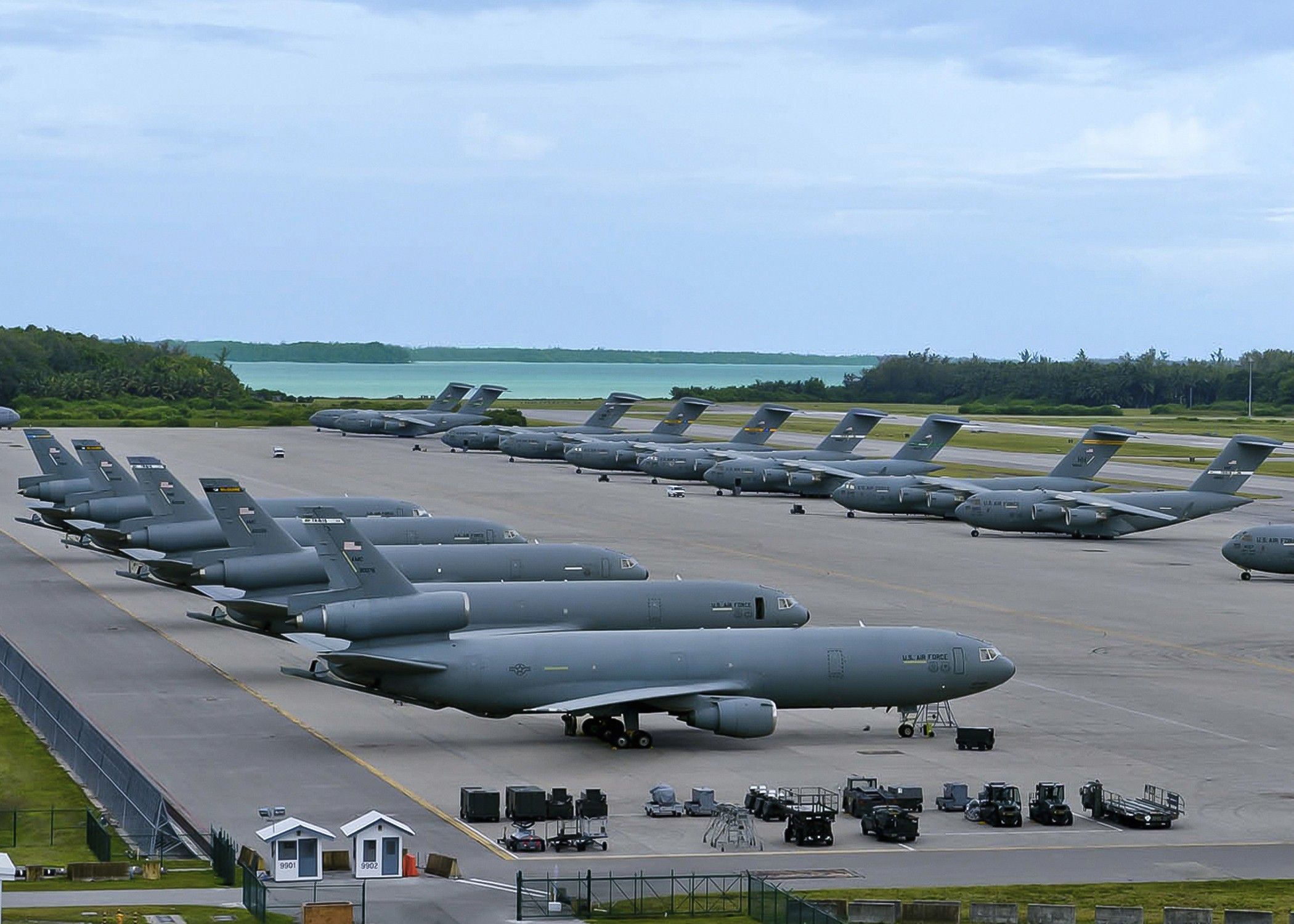
Despite declarations about the end of the nuclear race, the US begins in May to place its new B61-12 nuclear bombs in the bases it already has in Europe
In May, within 4 months, the US will begin large-scale production of its new B61-12 atomic bomb. This was announced by the NNSA, that is, the Nuclear Energy Administration of the US Department of Energy (U.S. Department of Energy’s National Nuclear Administration).
The evil and genocidal renewal is due to the new US fantasy doctrine of LIMITED NUCLEAR WAR which allows unlimited nuclear expansion and more trillions in disappearing budgets fpr the War Industry
What could possibly go wrong?
The fatal fantasy fallacy is that they can now use “LIMITED” nukes to enforce their hegemony and global blackmail.. Just another mindblowing doublethink based on their ‘exceptionalist’ psychosis.
Both China and Russia have very limited conventional forces (just one aircraft carrier and one or 2 overseas bases each, for example, the US has 750 such bases, bristling with missiles.) .
Therefore an attack or incursion by the USA can only be encountered by immediately going nuclear, i.e. the end of the world for humans.
As they leave the factory, the new US nuclear bombs will be delivered to the US Air Force, which in turn will send them to their bases in various European countries to replace the B61s already deployed there. .
The new US atomic bomb B61-12 is a multipurpose nuclear weapon that replaces three variants of its predecessor. It has a nuclear warhead with 4 different options of destructive power, selectable according to the target you want to destroy.
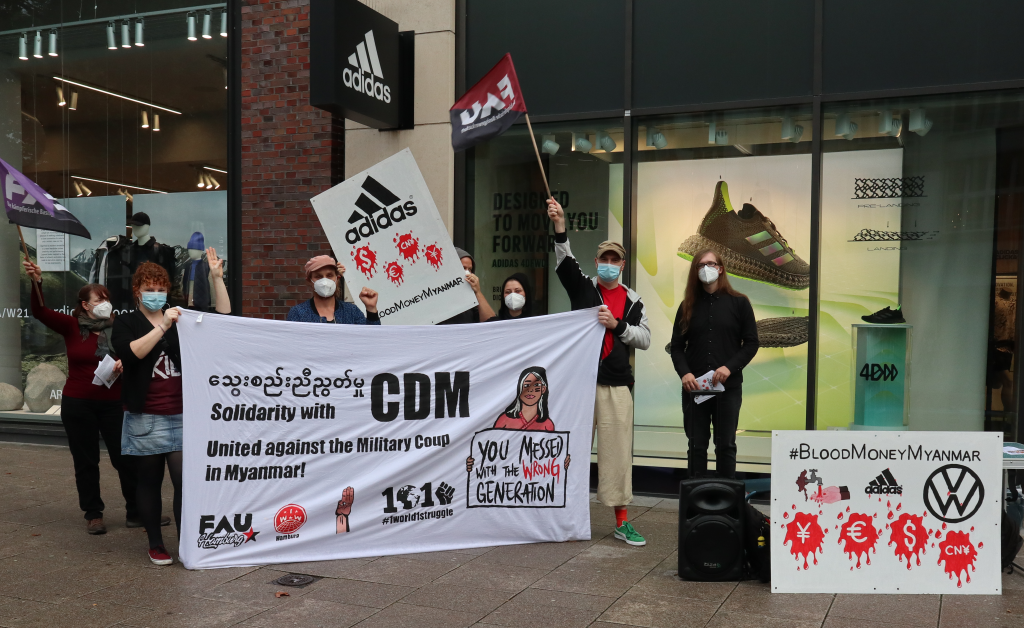
Millions of people continue to risk their life and livelihood by resisting the military coup.
Fascist military forces have killed close to 1,400 people and arrested more than 8,300 protestors to this day. Despite these grave threats, the people such as workers, women, youth and students in Myanmar keep resisting on the streets, in cities, in rural areas, and in some cases have fled into the jungles.
Help us to sustain the resistance, to restore workers’ rights and civil liberties.
On February 1st 2021, the Myanmar military junta staged a coup and forcefully took power from the elected government. Millions of people across the country have protested since the early days of the coup.
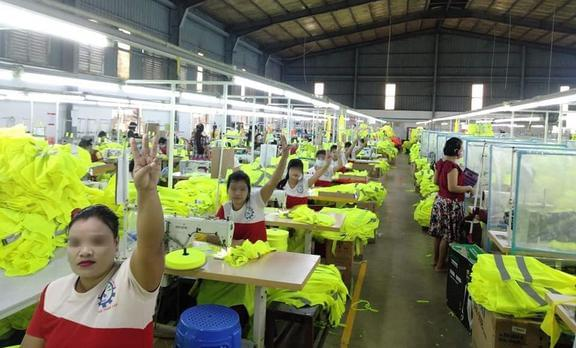
Doctors and nurses who participated in the earliest stages of the civil disobedience movement were soon joined by the teachers, students, railway workers and civil servants from different sectors. Especially thousands of garment workers took to the streets to protest the coup.
Throughout February, people rallied in mass protests and demonstrations on the streets. In retaliation, raids and arrests of protest leaders began. Starting in March, police crackdown on protesters intensified as they used rubber and live bullets, often aiming at the head.
The military junta also uses other strategies to suppress the movement. For example, they gather personal information of people and supporters who involved in the civil disobedience movement and protests through informants.
After the tip-off, the arrest and raids followed and sometimes family members, including children, are held as hostages if their primary targets are not found. The arrest and murder of protesters has been pervasive, close to 1,400 civilians have been killed while more than 8,300 are arrested, charged or sentenced as of December 31st . (source: aappb.org)
Yet, despite these grave dangers, people in different parts of the country continue to show their dissent in various ways. Since large rallies have been heavily policed also by military or plain-clothed cops in civilian cars – including attempts to arrest by driving into crowds – protesters have turned to “flash mob street protests”.
A statement on Rojava by the Federación Anarquista Uruguaya – FAU, Federación Anarquista de Rosario – FAR, Organización Anarquista de Córdoba – OAC, Union Communiste Libertaire, Embat – Organització Llibertària de Catalunya, Alternativa Libertaria – AL/fdca, Die Plattform – Anarchakommunistische Föderation, Organisation Socialiste Libertaire – OSL, Libertaere Aktion and the Aotearoa Workers Solidarity Movement – AWSM (Aotearoa / Neuseeland).
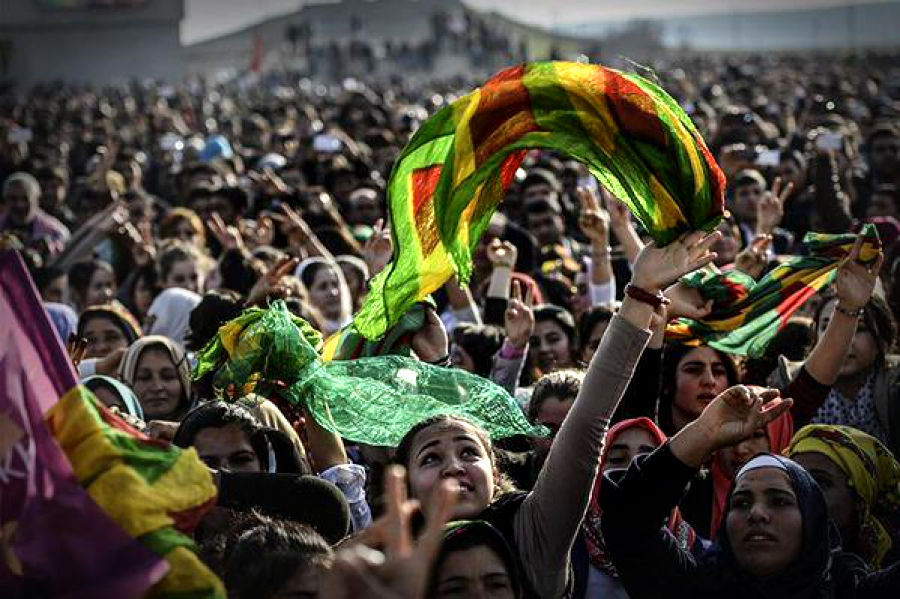
Embargo, cutting off water sources and air strikes against civilians have been some of the war crimes committed by the fascist Turkish state throughout this year against the revolution in Rojava.
While facing the internal political and economic crisis, the Erdogan government has to accept the failure of the military operations in the mountains of Kurdistan, appealing to the use of chemical weapons, in the face of the resistance of the Kurdish warriors of the revolution.
The intensification of the attacks last October, the flyers launched from the aeroplanes and the recent troop movements threaten a new invasion of the autonomous territories in the North and East of Syria.
At this delicate moment, we want to reaffirm our solidarity with our revolutionary comrades and all the peoples of Rojava and condemn once more the occupation of Rojava, the multiple aggressions and war crimes of the Turkish neo-fascist state and its jihadist allies, as well as their preparations for war.