

by Act for freedom now! [PDF for printing] [PDF for reading]
blog of the post capitalist transition.. Read or download the novel here + latest relevant posts

by Act for freedom now! [PDF for printing] [PDF for reading]
by Act for freedom now! [PDF for printing] [PDF for reading]
View original post 2,127 more words
por kaosenlared.net y Federación Anarquistas Gran Canaria

Por Redacción Canarias Semanal Publicado el 10 Jun, 2021
Ruymán Rodríguez, miembro del Sindicato de Inquilinas de Gran Canaria, explica para los lectores de Canarias-semanal el sangrante caso de las 28 familias de la comunidad La Marisma, del municipio grancanario de Gáldar. 70 personas, entre ellas 30 menores, que CaixaBank pretende desahuciar y a que, pese a los continuados llamamientos de este sindicato y de las propias familias, «han sido totalmente abandonadas por el ayuntamiento, el Cabildo y el Gobierno de Canarias»
Los vecinos, que fueron estafados por un supuesto promotor al que pagaron 100
euros como adelanto para acceder a lo que les dijeron que serían viviendas en alquiler, carecen de alternativa habitacional y luchan para no quedarse en…
View original post 1,040 more words
por kaosenlared.net y Federación Anarquistas Gran Canaria
Por Redacción Canarias Semanal Publicado el 10 Jun, 2021
Ruymán Rodríguez, miembro del Sindicato de Inquilinas de Gran Canaria, explica para los lectores de Canarias-semanal el sangrante caso de las 28 familias de la comunidad La Marisma, del municipio grancanario de Gáldar. 70 personas, entre ellas 30 menores, que CaixaBank pretende desahuciar y a que, pese a los continuados llamamientos de este sindicato y de las propias familias, «han sido totalmente abandonadas por el ayuntamiento, el Cabildo y el Gobierno de Canarias»
Los vecinos, que fueron estafados por un supuesto promotor al que pagaron 100
euros como adelanto para acceder a lo que les dijeron que serían viviendas en alquiler, carecen de alternativa habitacional y luchan para no quedarse en la calle.

Story by Reuters
Updated 11:09 PM ET, Mon June 7, 2021 A 2019 photo by National Oceanic and Atmospheric Administration of the Mauna Loa Atmospheric Baseline Observatory in Hawaii.
Despite a massive reduction in commuting and in many commercial activities during theearly months of the pandemic, the amount of carbon in Earth’s atmosphere in May reached its highest level in modern history, a global indicator released on Monday showed.Scientists from the National Oceanic and Atmospheric Administration (NOAA) and the Scripps Institution of Oceanography at the University of California San Diego,said the findings, based on the amount of carbon dioxide in the air at NOAA’s weather station on Mauna Loa in Hawaii, was the highest since measurements began 63 years ago.The measurement, called the Keeling Curve after Charles David Keeling, the scientist who began tracking carbon dioxide there in 1958, is a global benchmark for atmospheric…
View original post 375 more words
More than 1,200 girls in Rajasthan start a movement against child marriages, which saw a spike during the COVID pandemic.
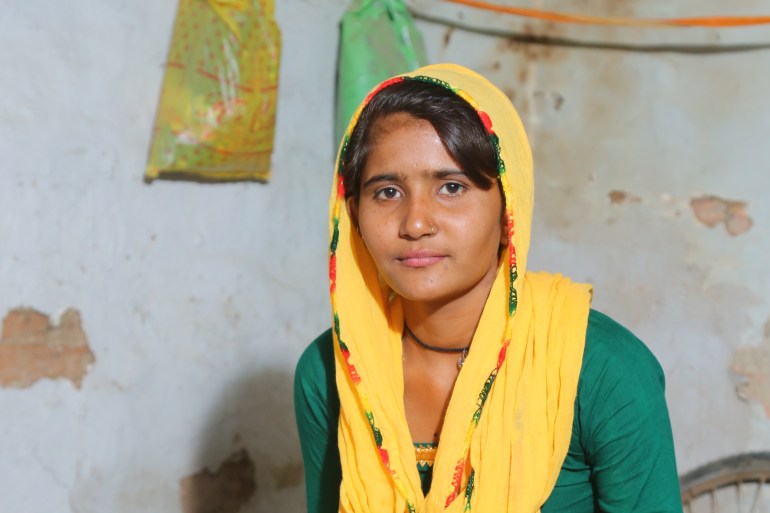
![Priyanka Berwa convinced her parents to put off her marriage and started a movement [Devendra Kumar Sharma/Al Jazeera]](https://www.aljazeera.com/wp-content/uploads/2021/06/Priynka-02.jpg?resize=770%2C513)
By Parth MN9 Jun 2021
Rajasthan, India – “I want to study at least up to 12th standard (grade)” was Saira Bano’s heartfelt cry when her parents started looking for a groom for her in October 2020.
It had been a tough year for her parents in their remote northwestern Indian village. Since a nationwide lockdown to check coronavirus was imposed in March 2020, Saira’s father has not been able to find much work. Keep reading‘Black fungus’ new scare in India as second COVID wave ebbsIndia’s Sunil Chhetri passes Lionel Messi in international goalsMuslims near India’s Hindu temple allege pressure to vacate homesPoverty, stigma behind bodies floating in India’s Ganges River
He earned about 1,200 rupees ($17) a week as a labourer in pre-COVID times, which barely kept the family afloat. And when that stopped too, he thought it was better to marry Saira off instead of spending the family’s limited resources on her education.
Saira is 17.
“We are six brothers and sisters,” she said over the phone from her village of Kudgaon in Rajasthan state’s Karauli district.
“We have always lived in poverty. After COVID, it has become even more difficult to sustain the household.”
Around the world, about 12 million girls a year are married off before they turn 18, according to the United Nations. Nearly 30 percent of South Asian women aged 20 to 24 were married before 18.
The coronavirus pandemic has only exacerbated the crisis.
While the Indian government has not maintained comprehensive data, international organisations say child marriages could be a major fallout of the pandemic.
By June last year, merely three months into lockdown, about 92,203 interventions had been made by ChildLine, an agency that protects children in distress and is part of the Ministry of Women and Child Development. Thirty-five percent of those interventions were about child marriages.
While Saira understood her father’s helplessness, she did not give in.
“I was really upset,” she said. “I want to be a teacher when I grow up. I want to help young girls become independent women. But I did not know how to convince my father.”
She soon became aware of a group of girls from marginalised communities who were starting a campaign to create awareness around child marriage in Karauli.
“That got my hopes up,” said Saira. “I attended their meeting, and learned that the state government has a scholarship scheme in place to ensure girls like me don’t drop out of school.”
She got the group and the activists supporting them to talk to her father.
“They explained the drawbacks of child marriages,” said Saira. “It took me two months to convince him. But he finally agreed. It has been six months now, and he has not talked about marriage to me.”
Were it not for that intervention, Saira’s father would not have come around. That group has saved more than one girl from child marriage in Karauli.
In October 2020, after convincing her parents to put off her marriage, Priyanka Berwa, 18, a Scheduled Caste girl from Ramthara village in Karauli, decided to keep going. Nine girls joined her and they started a campaign against child marriage called the Dalit Adivasi Pichhada Varg Kishori Shiksha Abhiyan (Movement for Education of Dalit Tribal Backward Groups’ Girls).
Dalits, formerly referred to as “the untouchables”, fall at the bottom of India’s complex caste hierarchy, while tribes and other so-called “backward groups” have been provided special protection by India’s constitution.
“We realised that almost every girl our age was facing the same challenge that we did,” said Priyanka.
“Nobody wants to educate girls after 10th grade (high school) here in any case. The pandemic made it worse. The schools are shut, not many here have smartphones for online education, and people are out of work. I was lucky to have convinced my parents.”
It was a brave step, for the state of Rajasthan is particularly notorious when it comes to the outlawed practice of child marriages.
According to the 2015-2016 National Family Health Survey, 35.4 percent of women between 20 and 24 in the state were married before they turned 18. The national average stood at 27 percent at that time.
Rajasthan’s initiative to provide free college education to girls aims to curb the practice.
Priyanka used to visit her mother, Urmila, 34, where she worked, cleaning the premises of a local NGO called Alwar Mewat Institute of Education and Development (AMIED).
“They always treated me with love and care,” said Priyanka. “They didn’t discriminate between boys and girls. I thought I could ask for their help.”
AMIED activists stepped in and explained to Urmila how early marriage and early pregnancy are related to malnutrition among young mothers, and contribute to premature deliveries and maternal death.
Urmila then convinced her husband, who is often ill, meaning Urmila supports the household.
“That probably made it easier to convince him,” she said. “My parents married me off at 14. I remember how scared and clueless I felt. I have spent more than half my life looking after my daughter. I don’t want her to live the kind of life that I have led. I want her to live for herself. I want her to follow her dreams.”
Priyanka also wants to be a teacher and ensure that girls in her area are able to study.
“I was fortunate to have had access to the activists at AMIED. What about those that didn’t?” she said.
“Therefore, slowly the 10 of us brought in two to three girls from each village, and they, in turn, convinced more girls from their villages to join us. When we had enough people, we started going from village to village, plastering slogans against child marriage and creating awareness through street plays.”
Priyanka is currently pursuing her bachelor’s degree in arts. Like her mother, she cleans homes to earn extra money. “I have managed my education while working,” she said. “But I want every girl in the state to study at least up to 12th standard.”
The movement that started with 10 girls has now become a force of 1,250 in Karauli – all aged between 13 and 18 and belonging to Scheduled Caste, Scheduled Tribe and Other Backward Class communities, which are among the most disadvantaged in India.

They managed to convince their parents and are now going door-to-door to convince more elders and community leaders in the villages.
“There are challenges,” said Noor Mohammad, founder of AMIED. “But the girls have started a conversation around child marriage, and we are seeing a serious pushback.”
Mohammad said the girls even set up email accounts and wrote personal stories to the state’s chief minister.
“So they are also creating pressure politically. They have reached out to people outside their district and are determined to make it a pan-Rajasthan movement. They are the leaders, we are just helping them out,” he said.
The growth of the movement has made the girls more confident, said Neelam Mahavar, 17, a Scheduled Caste girl who lives in Naroldam village in Karauli.
When the parents of her potential groom had come to see her, she told them she was not interested in getting married.
“I told them I want to study. The boy’s parents said: ‘She’s an arrogant girl,’ and walked off,” Neelam giggles.
“My parents thought if something happened to them, who would look after me and my sister. My father lost work as a tailor after the lockdown.”
However, Neelam and her 13-year-old sister Khushi have told their parents that marriage is the last thing on their mind and that they are more than capable of looking after themselves.
“My sister wants to become a collector (top bureaucrat in a district). She is hardworking and has faith in herself,” she says.
“And I want to be a teacher. Nobody thinks of boys as a burden. Even today, elders in the community believe that girls become wayward if they study more. I want to change that mindset. I want to tell the girls in Rajasthan that they are in no way inferior to boys.” Source: Al Jazeera
Global Research, June 08, 2021Vaccine Injury News 24 May 2021

First posted by GR on May 25, 2001
All Global Research articlescan be read in 51 languages by activating the “Translate Website”drop down menu on the top banner of our home page (Desktop version).
Visit and follow us on Instagram at @crg_globalresearch.
***
The Food and Drug Administration (FDA) was under intense political pressure to give emergency use authorization (EUA) to three experimental injections manufactured by Pfizer, Moderna, and Johnson & Johnson. Now that these experiments have been carried out on roughly one third of the US population, serious issues have emerged.
A well-cited petition has been filed by Children’s Health Defense and Millions Against Medical Mandates, calling on the FDA torevoke EUAs for all experimental covid vaccines. After a careful review of the evidence, the FDA is ethically obligated to pull covid injections…
View original post 722 more words


