British F-35s and Typhoons provided escort for US B-1s and B-52s during a Nuclear Bomber Task Force mission through the North Sea. Photo: NATO’s Allied Air Command.
Germany today caved to US pressure suspending approval for the -ready-to-go Nord Stream 2 gas pipeline. The move sent European gas prices, already at record highs, through the roof.
Germany then threatened Russia with “Extremely Serious Consequences” for allegedly moving its military towards the Ukrainian birder as a response to Ukrainian buildup with US and NATO support.
Ukraine tells EU leaders: Prepare for war with Russia — RT Russia & Former Soviet Union https://t.co/X7TaUnQwTD
The moves follow mounting political pressure to scrap the project in a further setback to the Kremlin-backed pipeline and an anti-migrant propaganda campaign over refugees camped on the Belarus/Polish border.
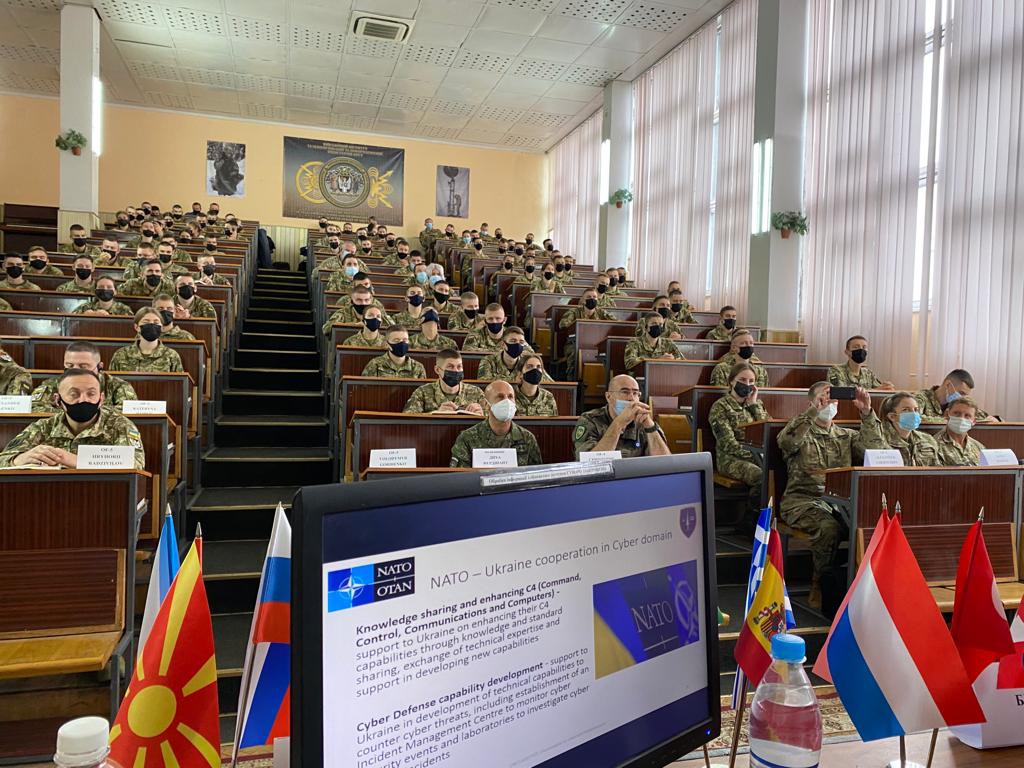
As full-scale war looms, Turkish admiral led NATO Days, inspections in Ukraine. U.S. nuclear bombers completed their latest deployment to the Baltic and Black Seas
Now, two Oklahoma doctors, Dr. John Sutton and Dr. David Jayne shared their stories about the use of Ivermectin as a treatment for their patients with COVID-19.
Dr. John Sutton is an Internal Medicine Specialist in Woodward, Oklahoma, and has over 38 years of experience in the medical field. He served three nursing homes in Woodward and Dewey county that experienced a COVID-19 outbreak. And Dr. Jayne works in Edmond, OK, and specializes in Family Medicine and Preventive Care.
The government’s intervention in treating COVID-19 patients greatly concerns the two doctors.
“The government is trying to overreach their authority… Doctors have been pretty autonomous ever since there was the first doctor. The doctor could think for himself and do what he thought was right for a patient. And I don’t think the government ought to be telling doctors how to practice medicine.” — Dr. John Sutton
Julia Conesa, daughter of José and Dolores was born in Oviedo, was a dressmaker and was 19 years old.
She lived in Calle Galería de Robles in the Malasaña neighborhood (Madrid), with her mother and her 2 sisters, Trinidad and Ángeles. She joined the JSU (Young Socialists) in 1936/1937 to monitor sports facilities as she was a great sports fan, becoming a sports secretary for the Western Sector.
When, during the war, the association’s premises were turned into a makeshift hospital, she lent a hand in those tasks. She soon had to go to work as a tram conductor as her family needed money.
Her mother Dolores was a widow. Antonio, her sister Trinidad’s husband, marched to the front and ended up in a concentration camp in Valladolid. Angeles, her other sister, lost her boyfriend at the war front, she fell into a deep depression and died that same year.
On May 5, 1939, the police pounded on the door of the Conesa family. They asked about 19-year-old Julia, they were supposed to be routine questions, after which Julia could return.
But Julia did not return, and her sister’s visits to the police station began. Julia was arrested along with a large group of JSU militants, accused, among other things, of placing banners in some Madrid streets that read: “Less Viva Franco and more white bread.”
Julia was put in the Ventas jail on May 18. The queues for family visits were endless, they were going to visit 4,000 inmates crammed into a prison built to house 450.
The excuse for the murder of Julia and her companions was the attack against the commander of the civil guard Eugenio Isaac Gabaldón Irauzun, his daughter and his driver on July 27, 1939 in Talavera de la Reina, an action attributed to 3 members of the JSU, and for which in retaliation 58 of the detainees were indicted.
The miserable paradox was that the Francoists refused to take into account that they were all already incarcerated when the attack occurred. It was an act of revenge for the Franco regime.
The intelligence of plants has long been a theme of literature, philosophy, and Indigenous narrative. Scientific research into the chemical interactions between plant species and other living things supports the idea.
In The Mind of Plants: Narratives of Vegetal Intelligence, writers and scientists add their personal perspectives in a rich collection of essays and poems, each dedicated to a different plant. In “White Pine,” excerpted here, Robin Wall Kimmerer describes Indigenous reverence for trees, which are “respected as unique, sovereign beings equal to or exceeding the power of humans.”
When I come beneath the pines, into that particular dappled light, time slows, and I fall under their spell. My science brain and my intuitive brain are both alight with knowing. Is it the spaciousness of the leafy vaulted ceiling? Maybe the terpenoids in pine vapors exert a psychological influence, producing an altered state of tranquil alertness. Perhaps it’s the quivering energy of electrical micro-discharge from the needles.
Maybe we are humbled simply by their size. Is it the sound of boughs rising and falling, like slow breathing? There’s something there we sense, but cannot name, a feeling akin to sitting quietly in the presence of an elder. So it is, with pines. You want to slip into their circle and listen.
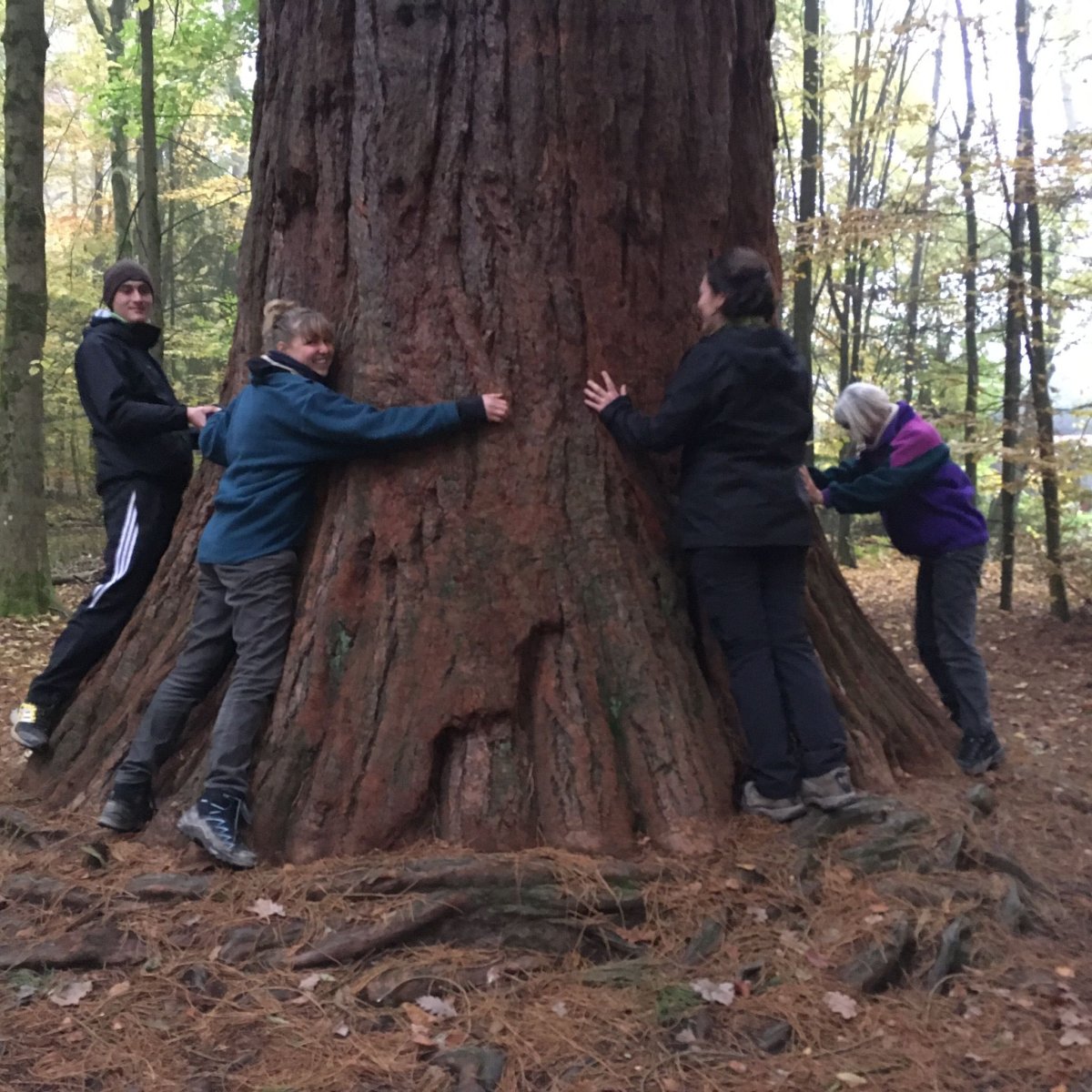
My favorite place to read on a summer day is leaning against the bole of a big old white pine. There’s almost always a hollow there, upholstered in a coppery brocade of pine needles with comfy armrests of the buttressed roots which hold up the pillar of pine rising two hundred feet above me.
These piney points above the lake’s water are beloved in the north woods, for the sand and granite below, sun and wind above, and a view across the lake, which at this moment is dancing up white caps in the breeze.
In this woodland library, I have one book on my lap and the other against my back. One written on cellulose, one written in cellulose. When I sit with white pines, I wordlessly come to know things that I didn’t know before.
Only about 1 in every 41 vaccine injuries gets reported to the VAERS database (lets do the Maths, new estimates reduced from 1 in 100 by Dr. Jessica Rose, )
There have now been 2,433 fetal deaths recorded in VAERS (Vaccine Adverse Event Reporting System) from pregnant women who have been injected with one of the COVID-19 shots. (Source.)
The vast majority of these have been from the Pfizer shot (1,862 deaths) and the Moderna shot (656 deaths.)
There have been more fetal deaths in the past 11 months following COVID-19 shots than there have been for the past 30+ years following ALL vaccines (2,198 – Source.)
Last month (October, 2021) the New England Journal of Medicine admitted that the original study used to justify the CDC and the FDA in recommending the shots to pregnant women was flawed. (Source.)
Since then, researchers in New Zealand have conducted a new study on the original data, and concluded:
A re-analysis of these figures indicates a cumulative incidence of spontaneous abortion ranging from 82% (104/127) to 91% (104/114), 7–8 times higher than the original authors’ results. (Source.)
see also: HOW TO BEAT COVID: Front Line COVID-19 Critical Care Alliance: Prevention and Treatment Protocols home: https://covid19criticalcare.com/ How to Get Ivermectin: see HERE ……
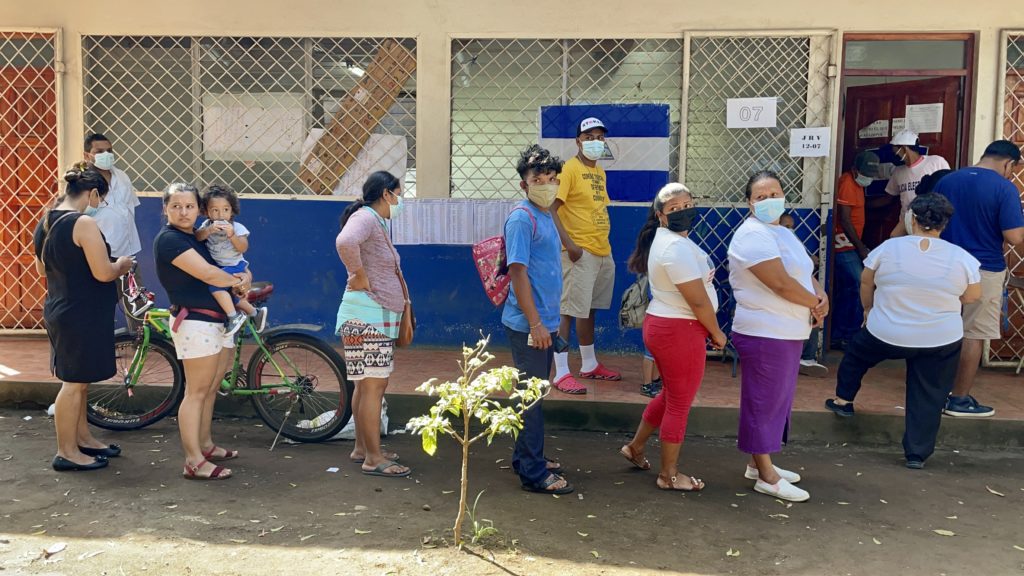
Many Nicaraguans expressed support for their country’s voting process on November 7 as 4.4 million people cast their votes for as many as 6 national parties / credit: Julie Varughese
Just three days after Sandinista revolutionary Daniel Ortega won his fourth term as Nicaragua’s president with 75.92 percent of the vote, U.S. President Joe Biden signed the RENACER Act.
An acronym for the “Reinforcing Nicaragua’s Adherence to Conditions for Electoral Reform Act of 2021,” RENACER slaps sanctions on Ortega government officials, attempts to restrict multilateral financing to Nicaragua, monitors Nicaragua’s relationship with Russia, punishes the country for alleged human-rights violations and targets reported corruption inside the country, among other items.
Then on November 12, 25 member states of the Organization of American States’ (OAS) Permanent Council voted in favor of a resolution that criticized the elections as not free and fair and urged further action.
The OAS resolution and fresh U.S. sanctions, as well as social media platforms suspending known Ortega supporters a week before the elections and corporate media outlets inaccurately reporting on Ortega make clear the United States is the primary contradiction in the Nicaraguan people’s struggle for liberation.
A view of Victoriano Potosme’s farm in San José de los Rios in Tecuatepe, Nicaragua. Peasants like Potosme won land ownership when Sandinistas took power in 1979 / credit: Julie Varughese
Social Markers Improve
Ortega, a militant in the Frente Sandinista de Liberación Nacional (the Sandinista National Liberation Front, or FSLN for short), was first elected president in 1984. His defeat in 1989 to neoliberal Violeta Chamorro, a scion of the landowning class, kicked off 16 years of neoliberal rule. During that time, Sandinista reforms were rolled back and social outcomes plummeted. That is why the era from 1990 to 2006 is referred to as the Neoliberal Period.
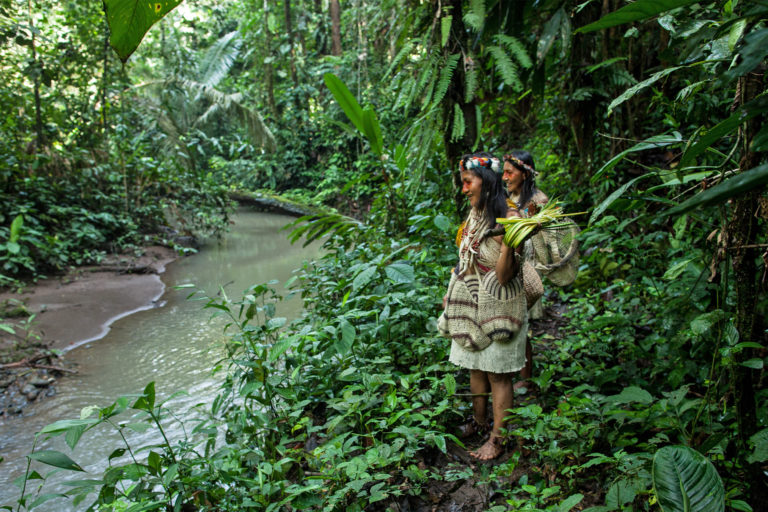
I leader indigeni di tutta l’Amazzonia hanno adottato una risoluzione per proteggere l’80% della foresta pluviale entro il 2025 al Congresso mondiale sulla conservazione dell’IUCN nel settembre 2021. Oggi, alla COP-26, continuano a chiedere ai governi, alle imprese e alle società finanziarie di tutto il mondo di porre fine ai finanziamenti per le industrie estrattive nella regione amazzonica.
«L’industria dei combustibili fossili ha passato decenni a negare e ritardare un’azione reale sulla crisi climatica, motivo per cui questo è un problema così grande. La loro influenza è uno dei motivi principali per cui 25 anni di colloqui sul clima delle Nazioni Unite non hanno portato a riduzioni reali delle emissioni globali.»
Global Witness – (Testimone Globale)
Delle circa 40.000 persone presenti alla COP-26, il governo brasiliano ha la più grande squadra ufficiale di negoziatori con 479 delegati, secondo le Nazioni Unite.









 The Free