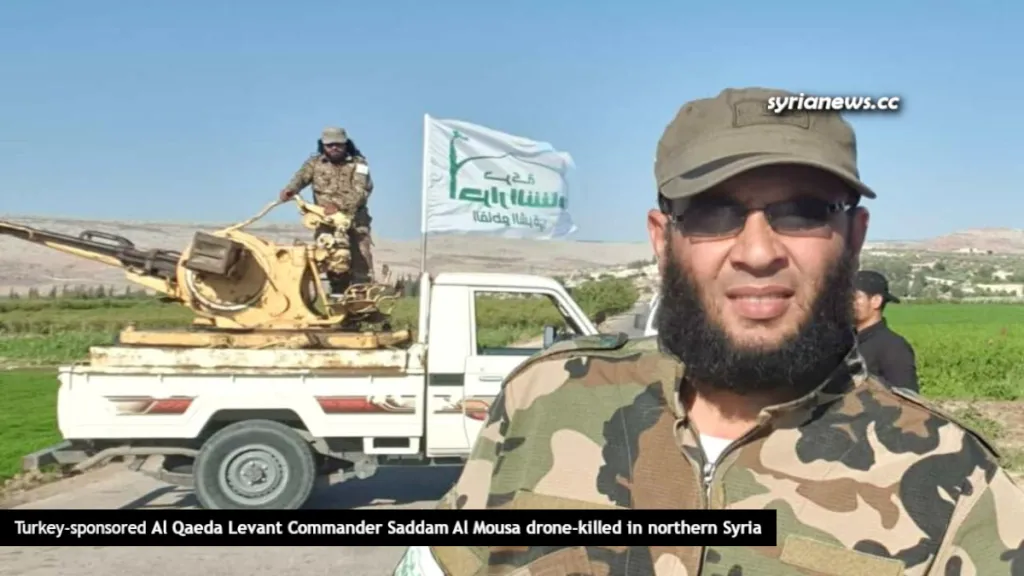
A NATO Turkey-sponsored Al Qaeda commander was killed along with some sheep in a bombing by a drone in a village in the eastern countryside of Aleppo, north of Syria Wednesday, 25 January 2023.
Local sources in Al Bab city in the eastern countryside of Aleppo said that so far, nobody claimed responsibility for the killing of the Al Qaeda commander Saddam Al Mousa aka Abu Adi, and at least 2 sheep near his house in the village of Al Hadath in the early evening hours of Wednesday.
The bombed terrorist had earned many enemies throughout his terrorist career, and any of those enemies are capable of drone-killing him with the sheep.
Some of the local sources in Al Bab said the terrorist was eliminated after refusing to share the spoils he extorted from the Syrian locals crossing at the Al Hamran makeshift checkpoint in the same…
Unlike the stagnant political quagmires and latter-day Goebbels & Co. media complexes that maintain tight control over the State, the economy, international relations, and all public discussion and debate over these topics in most of Europe, North America and other NATO bastions of the ‘free world’, there is never a dull moment in Latin American politics where there is a long tradition of military coups (usually in close collaboration with the traditional political and economic elites and the United States), along with animated public debate, mass social mobilization, rebellions and revolutions by ‘the people’ in most countries. In Peru, after a pause during the Christmas – New Year period, the mass social protests resumed on the 4th of January, with more social sectors and political factions and groups adding their voices to the opponents of the coup d’etat. The situation also remains tense and volatile in Brazil, where pro-Bolsonaro/ military groups continue trying to destablilize and overthrow the government of Lula da Silva.
Ongoing mass protests and social mobilization in Peru
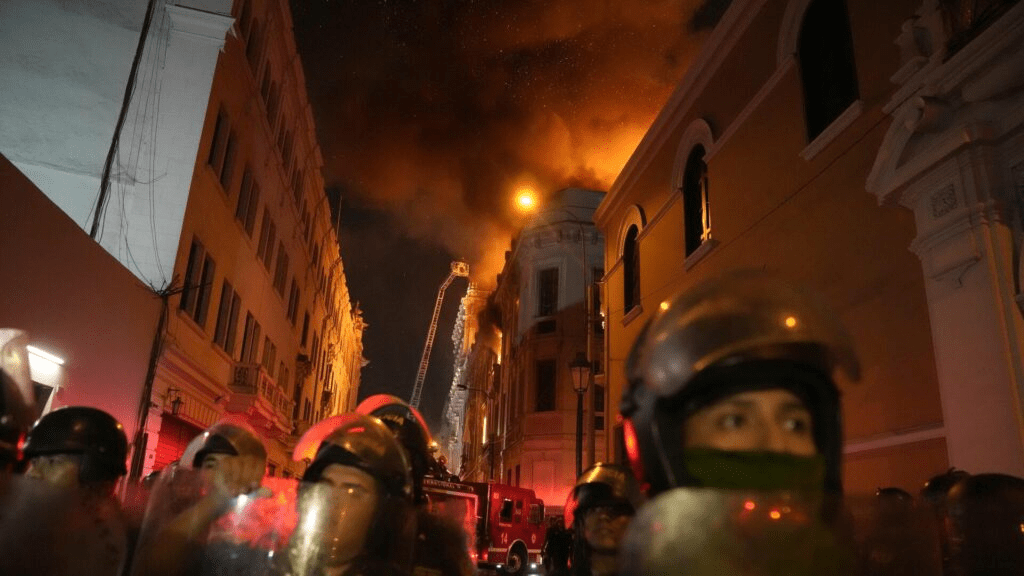
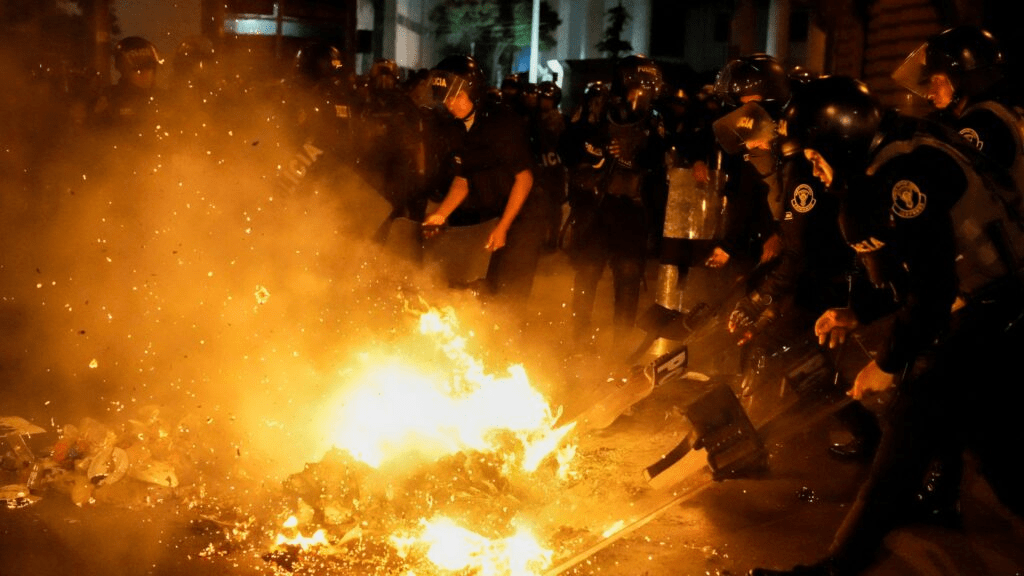
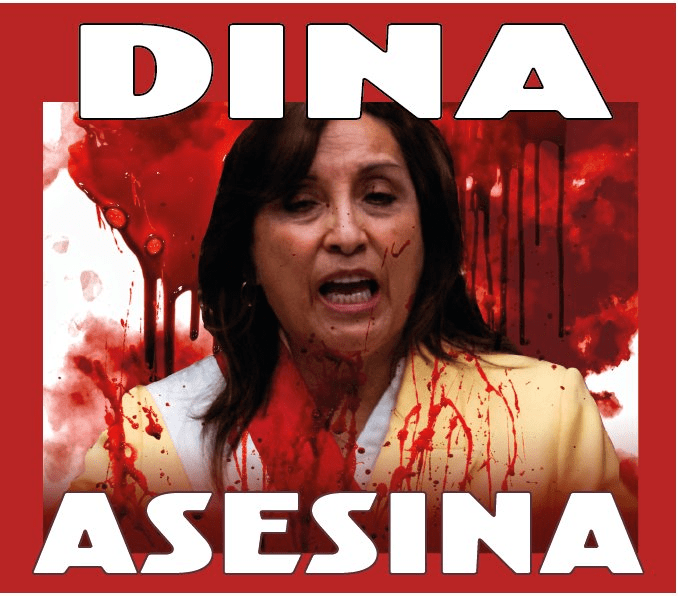
In Peru, the post-coup regime nominally headed by Dina Boluarte – but largely based on and controlled by the remnants and successors of the political factions that ruled Peru with an iron fist during the Fujimori dictatorship, buttressed and enforced by the military and police – is still refusing to budge and appears determined to cling to power at any cost, trying to smash the protests by brute force whilst claiming to be a democratic expression and legitimate representative of the same people it is wantonly massacring. This uncompromising attitude has been encouraged and supported by the United States.
Although there are major discrepancies between official accounts and those of independent observors and civil society organizations, it is estimated that around 55-60 protestors have been killed during the protests and blockades of key transport routes and infrastructure (most of the victims unarmed protestors who died from bullet wounds fired by the ‘security forces’) with many hundreds of others seriously injured, and hundreds of protestors have been arrested.
The military and police forces that have been deployed to contain, disperse and if possible quash the protests and all political opponents (at the same time protecting the vast properties and privileges of the oligarchs, landlords, and foreign investors that they serve – the latter particularly active in the lucrative mining sector, which operates with little or no regard for social and environmental standards) are particlarly vicious and deadly when groups of protestors try to occupy or surround airports, presumably because the airports enable the privileged sectors of society to continue with their luxurious jet-setting lifestyles largely uninterrupted and undisturbed by the misery, suffering and turmoil afflicting the rest of the country (apart from their strategic importance to the military and police forces to deliver weapons and equipment and redeploy their forces rapidly to crush and disperse the protestors at key social mobilization points).
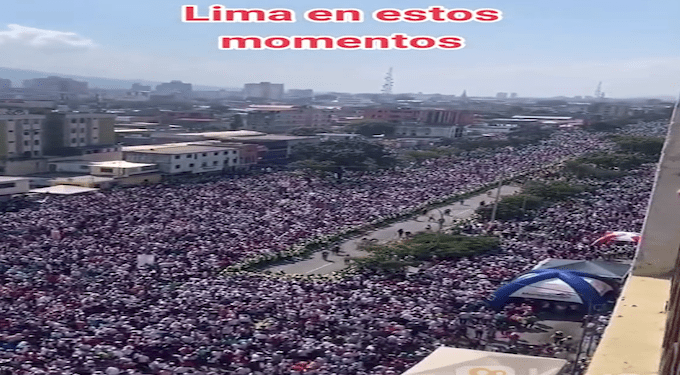
Over the last week the protests and mass social mobilization have become a massive nationwide avalanche that may yet sweep away the coup regime and its collaborators through sheer force of numbers, with most of the country’s major trade unions, student and professional associatons and rural and Indigenous organizations and social movements joining the protests, with the latter organizing caravans in regional areas headed for Lima vowing to ‘occupy the capital’ until Boluarte resigns.
While the strategy of ruthless oppression and attrition being waged by the coup regime could achieve the intended result of crushing and exhausting the mobilized sectors as the physical, emotional and economic costs of the protests and social mobilization become increasingly unbearable, it is possible that if the coup regime refuses to give ground and agree to dialogue and negotiations over a transitional power-sharing arrangement, it might simply harden the resolve and determination of the protestors, and could even trigger the onset of another catastrophic civil war in the country.
The country suffered from a devastating civil war that peaked from 1980-2000 with the rise of two armed insurgent movements, the Shining Path (Sendero Luminoso) and Tupac Amaru Revolutionary Movement (Movimiento Revolucionario Tupac Amaru). In 2003 a Truth and Reconciliation Commission established to investigate the killings, massacres, and other war crimes and human rights violations that occurred between 1980 and 2000 reported that the total number of people killed during the height of the civil war, whether by the insurgent groups or the armed forces, was approximately 70,000.
Alberto Fujimori was president from 1990 to 2000. Although he was elected to an unprecedented third term, he subsequently fled to Japan when the director of the secret police and one of his closest advisors, Vladimir Montesinos, was jailed for bribing a member of Congress and it seemed that his arrest would soon follow. He returned to neighbouring Chile in 2005 where he was later detained pursuant to outstanding warrants for a long list of corruption, war crimes and human rights abuses committed during his presidency and subsequently extradited to Peru.
After a protracted series of legal proceedings, challenges and appeals he was sentenced to more than 35 years’ imprisonment. In March 2022 the Constitutional Court (whose members are appointed by the Congress) ruled by 4:3 to grant Fujimori a medical pardon; Pedro Castillo later appealed against the decision, lodging a complaint with the Inter-American Court of Human Rights. Alberto’s daughter Keiko Fujimori is a veteran politician and is the leader of the political party Fuerza Popular; she was Pedro Castillo’s opponent in the 2021 presidential campaign, losing by a narrow margin.
Presumably, during his detention Alberto Fujimori’s prison cell resembled the facilities that Pablo Escobar built for his incarceration following his agreement to surrender to the authorities in Colombia, or the luxury resort enclave encconced with the notorious La Picota Prison complex in Bogota housing the politicians arrested in the aftermath of the parapolitics scandal for their links to the death squads that have killed many thousands of people in Colombia as part of the counter-insurgency campaign, also terrorizing and forcibly displacing hundreds of communities to make way for sprawling cattle ranches, sugar and African palm plantations or resource development projects. Also with the full support and backing of the US.
The key demands of the opponents of the coup d’etat have not chamged – the immediate resignation of Dina Boluarte and the dissolution of the Congress followed by elections as soon as possible, and the immediate release from prison of ousted president Pedro Castillo – though other demands have been added, namely that those responsible for the deaths of the protestors be duly investigated and prosecuted and the convocation of a constituent assembly to draft a new Constitution (the current constitution was adopted in 1993 during the Alberto Fujimori dictatorship).
Although it remains too early to know what the final result will be, the strategy of embarking on a ferocious crackdown to disperse the protests by brute force appears to have backfired as it has persuaded many other political factions, social sectors and provincial regions who initially remained aloof or undecided to join the protestors. As a consequence, pressure is rapidly building on the members of the coup regime and the National Congress to resign – or, perhaps, to seek a negotiated compromise solution to the political crisis – as the protests have spread to other regions (initially protests and transport blockades were limited to only a few regions and social sectors, mainly in the impoverished and rebellious south of the country, where the inhabitants have a long list of grievances against the traditional ruling elites who have directed the plunder and devastation of their region from their mansions and estates in or around Lima).
You Tube, like the regulating agencies (*CDC and FDA), politicians and media, are CAPTURED by Big Pharma! Because they’re directly bought out, or have lucrative shares, or are just scared to step out of line.
But this video, which SMASHES the whole vaccine criminal scam, is shared ALL OVER THE INTERNET already with at least 30 MILLION views.
YouTube has deleted an undercover video by Project Veritas that showed a Pfizer director of research and development make comments about an idea he calls “directed evolution.”
“YouTube has taken down our Pfizer DirectedEvolution bombshell. It had 800K views,” O’Keefe announced on Twitter. “Pfizer is scrambling today per sources inside.”
“Project Veritas channel has been given a ‘strike’ and ability to upload ANY new videos is ‘restricted’ for a week with threats of future ‘permanent removal’ Project Veritas announced.
March for the Vaccine Injured in London.. ‘We are not going away! WE ARE THE INJURED & BEREAVED!‘
The subject of the video, Jordan Trishton Walker, Pfizer’s director of research and development strategic operations, was later approached by O’Keefe and his team in a New York restaurant and asked about the comments he made in the undercover video.
Lula da Silva had previously said that Kiev deserves some blame for the current conflict
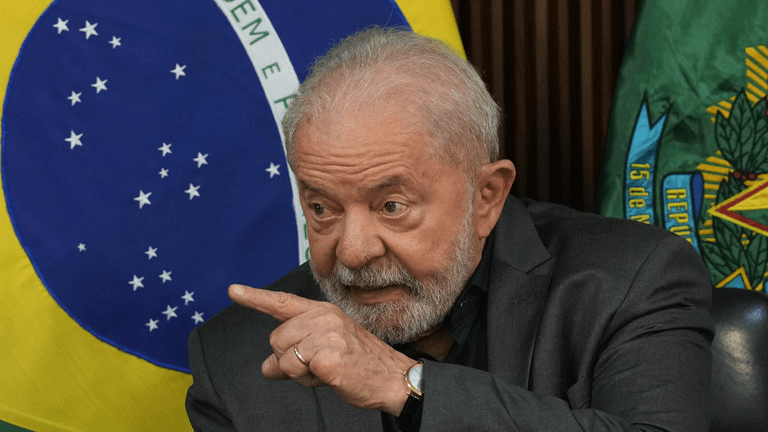
Lula da Silva points during a meeting with governors and leaders
Brazilian President Lula da Silva shot down an offer to sell tank ammunition to Germany for use in Ukraine, Brazilian newspaper Folha de Sao Paulo reported on Friday. A vocal critic of the West’s policy toward Ukraine, Lula has striven to remain neutral on its conflict with Russia.
The president allegedly rejected the request at a meeting with Brazilian defense chiefs and Defense MInister Jose Mucio last week.
According to the paper’s sources, since-dismissed army commander Julio Cesar de Arruda told Lula that Germany wished to purchase just under $5 million worth of shells for its Leopard 1 tanks.
Lula reportedly considered asking Berlin to guarantee that it would not send the ammunition to Ukraine, but ultimately declined the offer, “arguing that it was not worth provoking the Russians,” as Folha de Sao Paulo put it.
Less than a week later, Germany formally announced that it would donate a company-sized force of Leopard 2 main battle tanks to Ukraine, and would allow other countries operating the tanks to transfer them to Kiev.
It is unclear whether the ammunition referenced by Folha is compatible with both generations of Leopard tank.
Like his right-wing predecessor, the left-wing Lula has taken a neutral position on the conflict in Ukraine. While Jair Bolsonaro’s government formally condemned Moscow at the UN General Assembly over its military operation, neither president has imposed sanctions on Russia, and each has partially blamed Ukrainian President Vladimir Zelensky for the outbreak of hostilities.
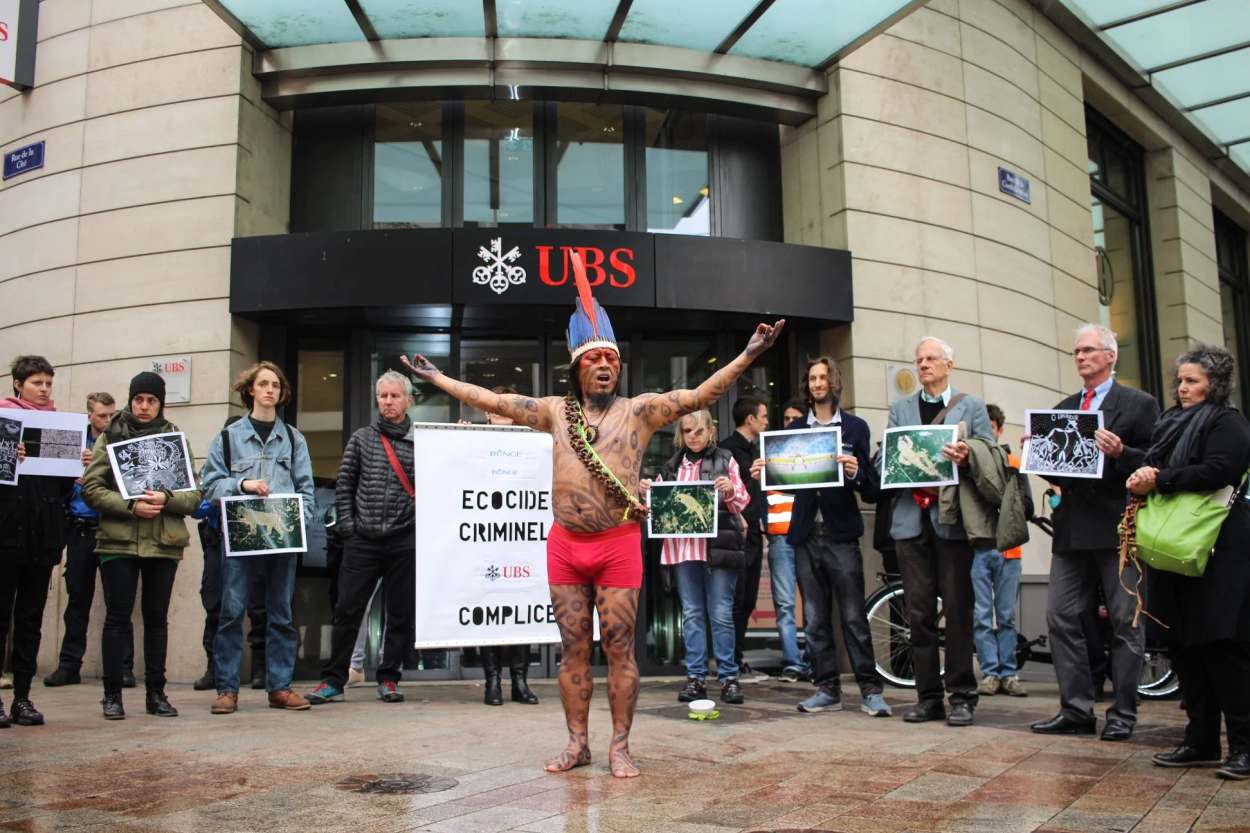
“More than a humanitarian crisis, what I saw in Roraima was a genocide. A premeditated crime against the Yanomami, committed by a government impervious to the suffering of the Brazilian people,” newly-elected President Lula said the day after visiting a health clinic crowded with Yanomami patients in Boa Vista, the capital of Roraima’s state.
He accused his predecessor, Bolsonaro, of encouraging the tens of thousands of wildcat gold miners who invaded Yanomami Lands during Bolsonaro’s 2019-2022 term and ignoring Indigenous communities’ repeated appeals for help.
In the midst of the questioning of the brutal repression, the government decided to reward the police with an economic bonus.
The amount was not announced. It was reported by the head of the ministerial cabinet, Alberto Otárola, upon leaving a meeting with the president of Congress, José Williams, a retired general accused of human rights violations. The meeting was at the Legislative headquarters.
The joint presentation of both before the press was an apology for the repression and they did not accept questions.
With a disastrous death toll from shots fired by security forces, hundreds injured, beatings and arbitrary arrests, Otárola and Williams coincided in praising the behavior of the police, calling it “very professional” and even “heroic”.
“We will request a loan to grant a special bonus for the heroic police,” declared Otárola, the most visible face of government authoritarianism.
“They have it well earned,” said the former military accused of the massacre of 69 peasants who is now president of Congress.
from La Jornada
*******
PERÚ. El gobierno títere premia con un bono a la policía por su acción represiva y asesinatos
The war party in Washington has floated possible terms of concession to Russia’s security objectives explicitly and directly, without the Ukrainians or its NATO vassals in the way.
David Ignatius, a mouthpiece for the US State Department has just been called in by the current Secretary of State Antony Blinken to convey this urgent new message to President Vladimir Putin, the Security Council, and the General Staff in Moscow.
The terms Blinken has told Ignatius to print appeared in the January 25 edition of the Washington Post. The paywall can be avoided by reading on here.
The territorial concessions Blinken is tabling include Crimea, the Donbass, and the Zaporozhye, Kherson “land bridge that connects Crimea and Russia”. West of the Dnieper River, north around Kharkov, and south around Odessa and Nikolaev, Blinken has tabled for the first time US acceptance of “a demilitarized status” for the Ukraine.
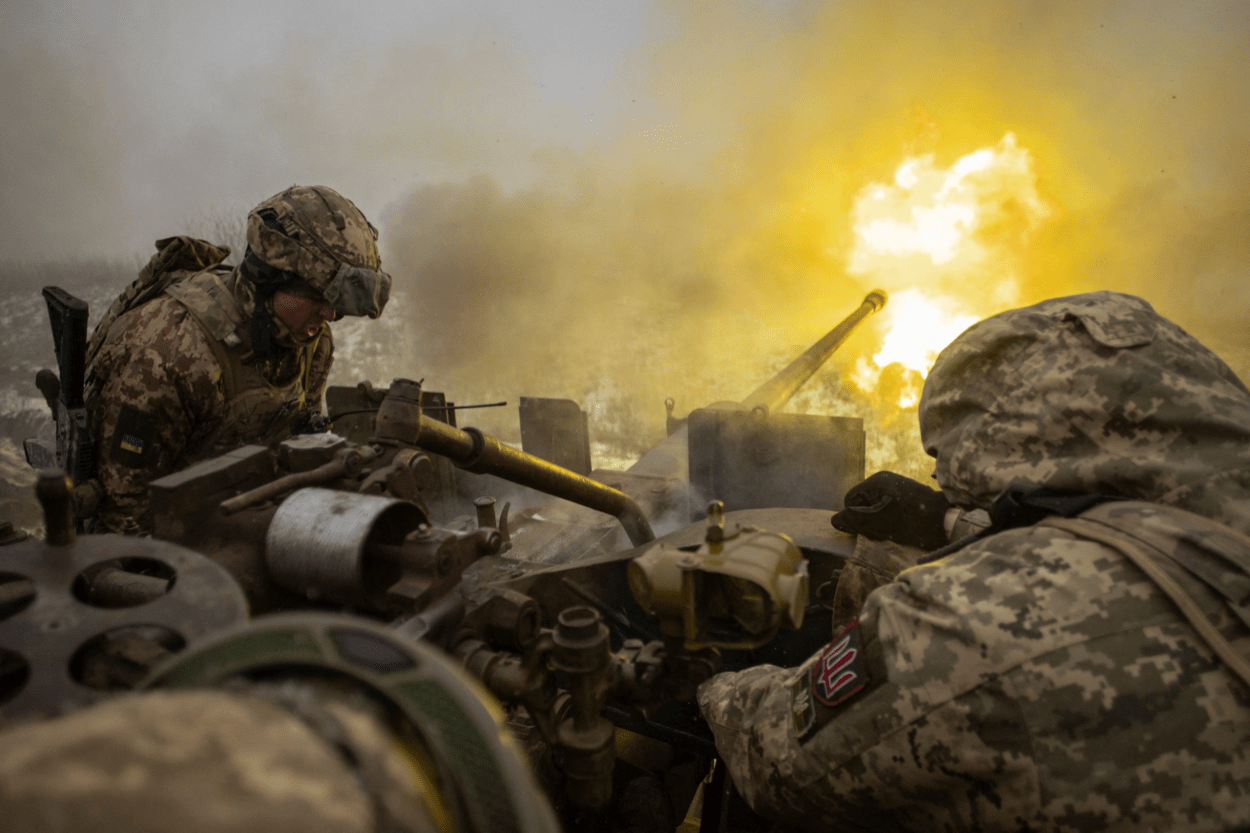
Also, US agreement to restrict the deployment of HIMARS, US and NATO infantry fighting vehicles, and the Abrams and Leopard tanks to a point in western Ukraine from which they can “manoeuvre…as a deterrent against future Russian attacks.”
This is an offer for a tradeoff – partition through a demilitarized zone (DMZ) in the east of the Ukraine in exchange for a halt to the planned Russian offensive destroying the fortifications, rail hubs, troop cantonments, and airfields in the west, between the Polish and Romanian borders, Kiev and Lvov, and an outcome Blinken proposes for both sides to call “a just and durable peace that upholds Ukraine’s territorial integrity”.











 The Free