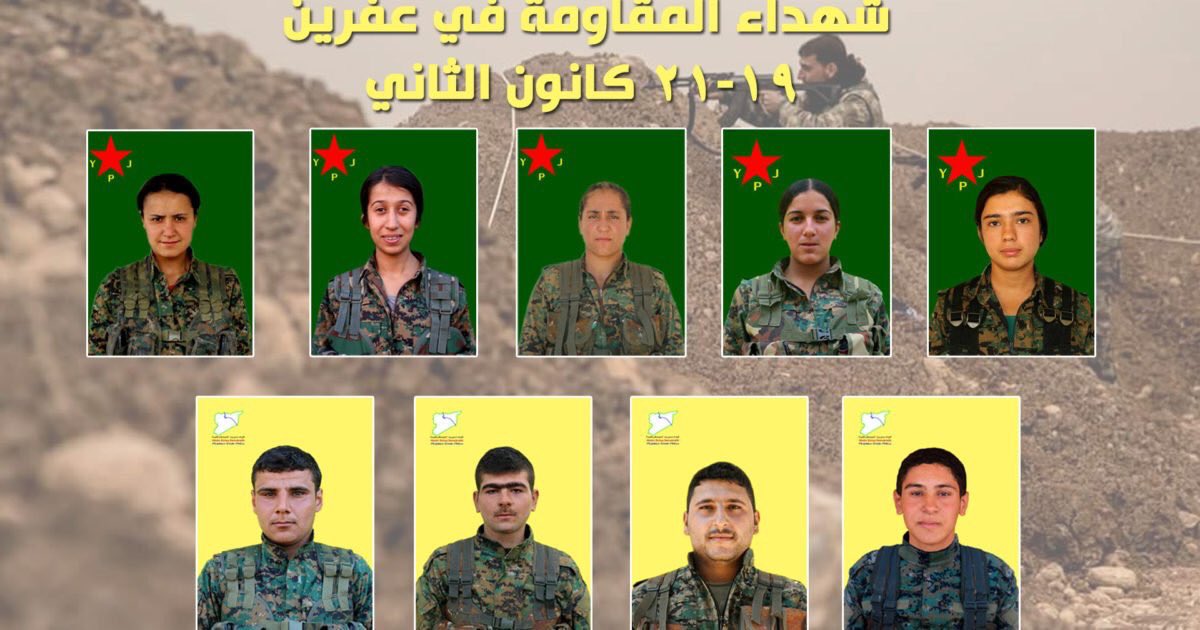
”Updated balance of SDFs of Turkish terrorist attacks with 405 deaths up to Saturday, January 27, 2018.” The SDF detail 308 ‘Turkish and mercenary’ and 97 local deaths so far ” But Erdogan’s invading forces proudly claim to have murdered nearly 500 local people.
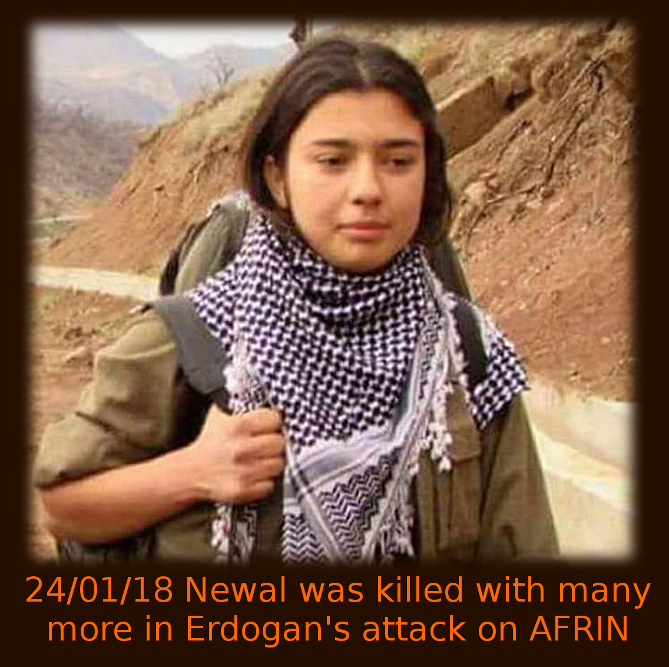
some of the volunteers from the self defense forces killed by the Turkish invasion
from Forces Democràtiques Sirianes ”The Central Command of the Syrian Democratic Forces (SDR) has issued a STATEMENT on the ongoing confrontations with the Turkish army. In the same he reports that in the last seven days 308 Turkish soldiers and mercenaries, including four officers and a leader of the Turkish bands, died. 54 civilians died and 134 were injured by terrorist attacks by the Turkish army. Finally, 43 SDF combatants lost their lives during the fighting.
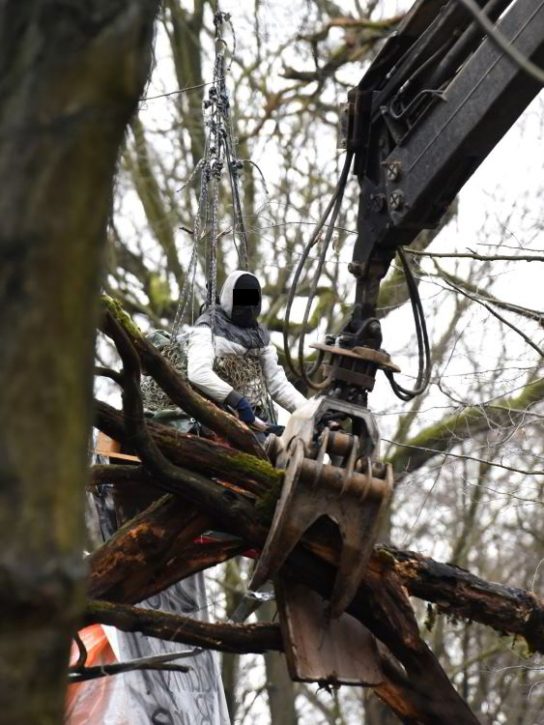
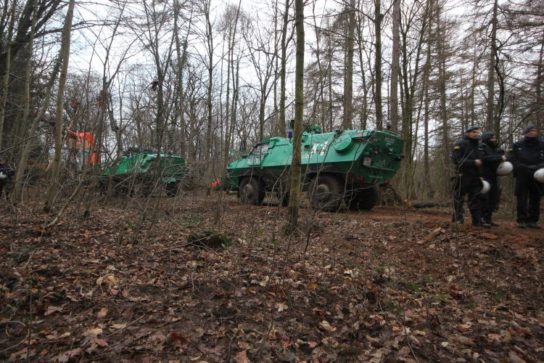
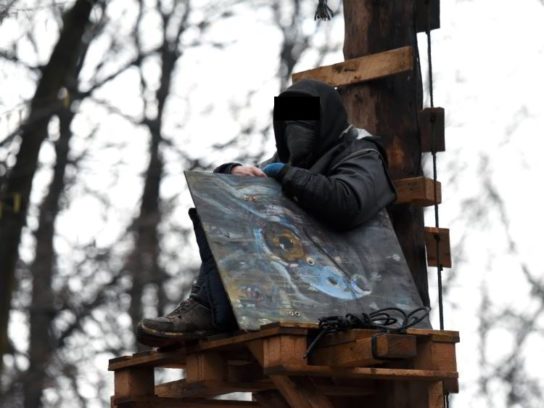
Arriving early in the morning, the cops were met with activists occupying blockading-infrastructure, including 2 tripods, 3 monopods, a skypod, and a 3 meter deep tunnel.
The cutting of the Hambacher Forest was officially stopped early this season, on a court-decision, postponing cutting until October 1st 2018, however the risk of eviction of the occupation is as great as ever.
The ‘Hambi 9’ would love to get mail! Exact information, including addresses and languages, can be found on the blog of ABC Rhineland.
For the last several years, anarchists, anti-capitalists, and many people on the Left have been supporting the ongoing struggle and evolving movement in Rojava, as an autonomous region in Kurdistan began to take shape, making up parts of Turkey, Syria, and Iraq.
There, both a sea change has taken place in the form of growing support for “Democratic Confederalism,” which embraces many aspect of anarchism, ecology, and feminism, as well as in the fierce resistance by the YPG and the YPJ against ISIS. In the battle against the Islamic State, many anarchists and anti-capitalists have also joined in the struggle and given their lives.
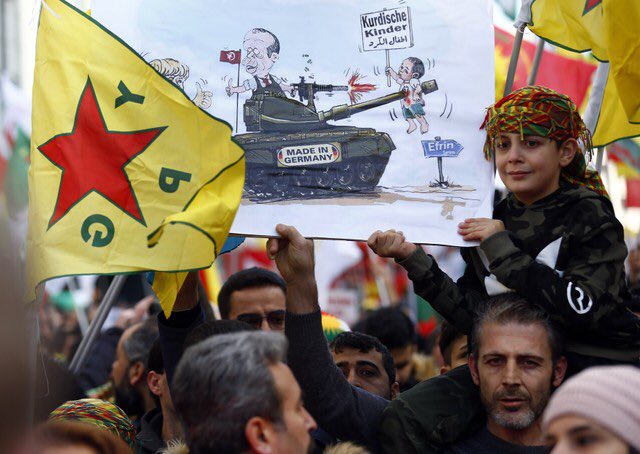
However, after the fall of ISIS in Raqqa, the Turkish state quickly moved to attack the Kurdish forces, and began a campaign of bombing and attacking various cities starting with Afrin.
Does this mean the death of the Rojava Revolution, and with it, a hope of an anti-capitalist and anti-Statist way of life? Will our comrades in the YPG and YPJ, as well as our anarchist sisters and brothers be slaughtered?
How can we act in solidarity with those on the ground? These are hard questions of which we do not have answers, but already people .. are rallying in support of the Kurdish struggle for autonomy and freedom.
note: hundreds of journalists have been jailed in Turkey and exiled reporters have received death threats on state TV.. “Blow the brains out of three or five of them. Look how frightened they’ll be,” (see link below post). This post is shared public information and does not necessarily reflect the views of the blogger.
Turkish terrorist aviation attacked the people of Jilbir. Located in the district of Sherawa, Jilbir has been the victim of an overwhelming massacre of which the victims have not yet totaled. Several children have been charred by the Turkish terrorist bombs in which it is possibly the worst terrorist massacre of what we endure in 2018. And the terrorists are the second NATO armyHundreds of aerial bombings have been reported. . … more photos of Turkish atrocities in Afrin. HERE http://kurdiscat.blogspot.com.es/2018/01/turquia-comet-una-matanca-de-criatures.html
SDF: Turkish attacks on Afrin repelled and the area was cleared of gangs
AFRIN (ANF) – Syrian Democratic Forces General Command released a statement about the latest situation in the Turkish state’s invasion operation against Afrin Canton of Rojava. Full text of the statement is as follows; “Turkey tries to realize its plans on the region by deceiving the peoples of the region. Turkish occupation army, with the mercenaries it has long been training in Turkey, wants to sow the seeds of hostility between Arab and Kurdish entities of Afrin. Turkish occupation army and its mercenaries tried to invade parts of Afrin under the cover of Turkish air force, tanks and artillery shelling.
The local YPG volunteers proudly post a video of the destruction of an invading Turkish tank. But Turkey has the 2nd army in Nato with 1000’s of tanks and has been given a free hand by Russia for round the clock aerial bombing.
Our forces have been carrying out a special operation on Turkish troops and terrorists in the last few hours. As the operation and clashes continue heavily, current results are as following; The operation has been taking place in five different areas. Adah Manli, Shadia and Surka villages of Raju district and Shinkal village of Bulbul district have been fully cleared off Turkish troops and the mercenaries. Intense clashes at some parts of the border area are continuing. Turkish occupation army and its mercenaries’ attempts to enter Afrin once again failed. Turkish occupation army, who failed advance into Afrin on the ground, once again targeted civilians with multiple airstrikes. The bombardment carried out on Rubar IDP camp, Cilbir village of Sherawa district and the area surrounding Afrin city center caused many civilian deaths. Turkish occupation army attacks Reyhanli district of Hatay city itself only to legitimate the ongoing massacre and blames our forces for this. We once again stress that we have nothing to do in shelling civilian settlements. We never target the territory outside of our borders. We once again stress that the social media rumors and the allegations delivered by some media outlets should not be trusted unless officially confirmed by General Command statements. SDF General Command will keep the public up to date about the results of the battle and resistance. During the clashes that are still going on, a number of Turkish soldiers and its mercenaries were killed. Detailed statement on theresults of the attacks and our resistance is going to be issued later.” from .. http://kurdishdailynews.org/2018/01/21/sdf-turkish-attacks-afrin-repelled-area-cleared-gangs/
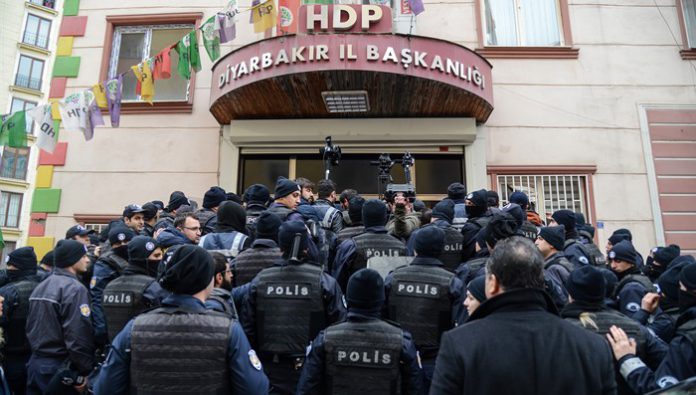
Turkish anti riot police officers block People’ Democracy Party’s (HDP) headquarter as HDP members call a protest against Turkey’s “Olive Branch” operation in Syria on January 21, 2018 in Diyarbakir. Turkey on January 20 launched operation “Olive Branch”. 35 people were ordered arrested for posting tweets against the invasion. President Recep Tayyip Erdoğan on Sunday warned the HDP not to take to the streets to protest the operation in Afrin: “You are being closely followed. If you try to take to the streets, know that our security forces will be at your neck.” “If anyone is in the streets upon calls [from the HDP], they will pay dearly for it. This is a national fight, and whoever opposes us will be crushed.” Erdoğan added. from: https://www.turkishminute.com/2018/01/21/erdogan-threatens-hdp-over-afrin-whoever-opposes-us-will-be-crushed/
Erdoğan’s news agency targets exiled journalists over Afrin messages
”Aydın Ünal, a former speechwriter of President Erdoğan and current Justice and Development Party (AKP) deputy, warned Turkish journalists in exile of extrajudicial killings in a column published on Dec. 4 in the pro-Erdoğan Yeni Şafak daily.
The AKP deputy listed the names of journalists to be targeted: Ekrem Dumanlı, Adem Yavuz Arslan, Celil Sağır, Bülent Keneş, Abdülhamit Bilici, Erhan Başyurt, Emre Uslu, Akın İpek and Can Dündar.” ”In an undated video of a live TV program shared last month on social media, journalists Cem Küçük and Fuat Uğur, staunch supporters of President Erdoğan, called on the Turkish intelligence service to assassinate former Zaman daily Editor-in-Chief Ekrem Dumanlı and columnists Emre Uslu, Abdullah Bozkurt and İhsan Yılmaz: “Blow the brains out of three or five of them. Look how frightened they’ll be,” he said. from https://www.turkishminute.com/2018/01/22/erdogans-news-agency-targets-exiled-journalists-over-afrin-messages/
Mercenary-terrorists confess being trained in Turkey
”Turkey has been training thousands of terrorists to attack the Kurds, many of them forced to join up as their salaries (via Saudi, Qatar, the US, etc) have been cut as the Syrian war winds down. A number of them are thought to be ex ISIS jihadists. .. earlier report:… Terrorist Mohammad Aqel Akk said U.S, Qatari and Saudi personnel trained them for 45 days in Salqin, Idleb and later they went to complete their training in Turkey where every trainee was given USD 200.
“We then returned to Aleppo and commenced a huge attack on army posts in Aleppo, but our operation was a failure and we got caught,” he added. https://syrianfreepress.wordpress.com/2015/07/07/terrorists-confession
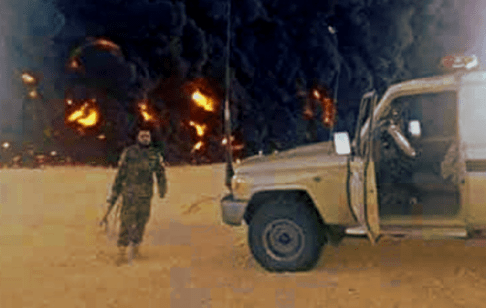
Una explosión sacudió un oleoducto de crudo que alimenta la terminal marítima de Es Sider en Libia, dijo una fuente petrolera en el país.
IN ENGLISH HERE El puerto mediterráneo de Es Sider es el mayor depósito de petróleo de Libia. La explosión ocurrió cerca de Marada, en el oleoducto perteneciente a la compañía petrolera Waha, dijo la fuente a Reuters.
El puerto está controlado ahora por las fuerzas del General Hafter. los ‘últimos noticias son que el petróleo había sido redirigido a otro oleoducto y que se perderán menos de 100.000 barriles por día en exportaciones durante aproximadamente una semana. Sin embargo, los precios del petróleo en los Estados Unidos alcanzaron un nuevo récord después de la noticia. una foto en Twitter del oleoducto.. 26 de diciembre 17
“Una fuente militar dijo a RIA Novosti que la” gran “explosión en el oleoducto fue el resultado de un ataque terrorista” Los combatientes pertenecían a las Brigadas de Defensa de Benghazi (afiliadas a Al Qaeda) o al Estado Islámico (IS, anteriormente ISIS / ISIL) ya que son terroristas que llevan a cabo desvíos para paralizar las instalaciones de producción petrolera “. Russia Today Reportuna foto en Twitter del oleoducto.. 26 de diciembre 17
“En marzo del 2017 las fuerzas leales al comandante militar de Libia, Khalifa Haftar, recapturaron Es Sidar y reanudaron las operaciones”.
Repsol sigue saqueando Libia … Las ganancias se disparan mientras que los vecinos Tuareg y Tebu pasan hambre
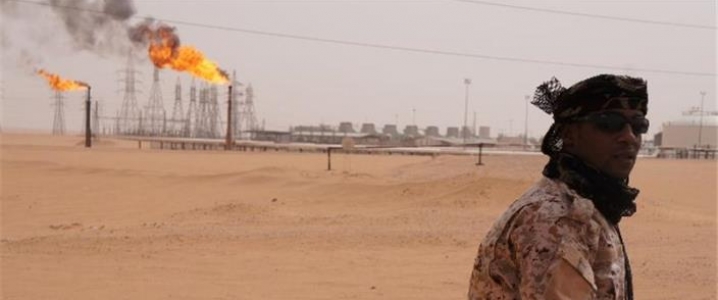
El sabotaje de Es Sider, sin embargo, no interrumpirá las exportaciones del yacimiento petrolífero de Sharara, donde la empresa española Repsol tiene la mayor participación del 60%. Sharara ahora exporta casi 300.000 barriles de petróleo por día, lo que le da enormes ganancias a Repsol.El inmenso campo petrolero de Sharara. El gas metano se quema, desperdiciando un recurso no renovable para obtener ganancias más rápidas. No les importa la creciente emergencia climática del planeta, al contrario el Repsol se jacta del incremento de la extracción y la gente local se queján del racismo y que no han recibido nada.Continue reading “Repsol Sigue Saqueando Libia: el último Sabotaje de un Oleoducto no le Afecta.”
An explosion has rocked a crude oil pipeline that feeds the Es Sider sea terminal in Libya, an oil source in the country said.
The Mediterranean port of Es Sider, the largest oil depot in Libya. The blast occurred near Marada, on the pipeline belonging to the Waha oil company, the source told Reuters.
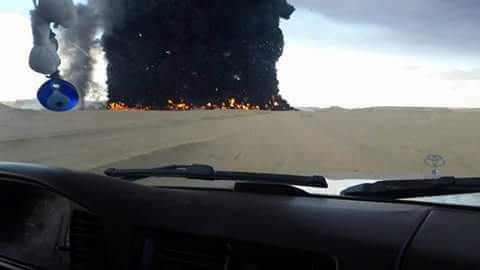
The port is now controlled by the powerbroker General Hafter’s forces. Later reports said that oil had been re-routed and less than 100,000 barrels a day in exports will be lost for about a week. Nevertheless oil prices in the US hit a new high on the news. a twitter photo of the export pipeline 26 Dec 17
”A military source told RIA Novosti that the “large” explosion at the pipeline was the result of a terrorist attack“The fighters belonged to either (al-Qaeda-affiliated) Benghazi Defense Brigades or Islamic State (IS, formerly ISIS/ISIL) as they are terrorists who carry out diversions to cripple oil production facilities.” Russia Today Report
The news of the Libyan blast saw oil prices spike to above $65 a barrel on Tuesday, Reuters reported.”In March ’17 … Es Sidar was recaptured by forces loyal to Libya’s eastern-based military commander, Khalifa Haftar, and resumed operations”.
Repsol still looting Libya… Profits Soar while local Tuareg and Tebu go Hungry
The explosion will not however disrupt exports from the Sharara oilfield where Spanish company Repsol has the biggest 60% stake. Sharara now exports nearly 300.000 barrels of oil a day, making enormous profits for Repsol.
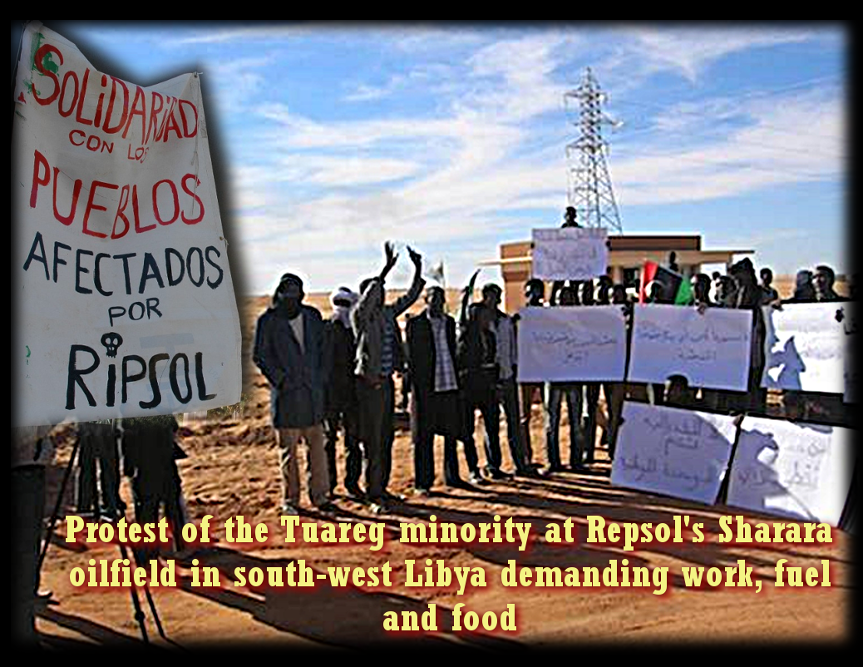
Protest of the Tuareg minority at the Sharara oilfield in south-west Libya demanding work, fuel and food
Chief Executive Officer – Josu Jon Imaz boasted that its ‘upstream’ profits soared by $69 million when the pipeline from Sharara to the port came back online after protest Blockades in the second quarter of 2016. (source Repsol).
Google map image of part of Repsol’s Sharara oil extraction
Repsol’s local company has contributed nothing that we know of to alleviate the extreme suffering of the impoverished local people suffering racist discrimination in the Ubari area next to the oilfield. Instead it is concentrating on trying to boost its profits by pumping out Libyan oil even faster, aiming for 330,000 barrels a day in the near future .
Repsol is joint operator with both the National Oil Corporation (NOC), France’s ‘imperialist’ Total, and Austria’s OMV which also have stakes in what is currently Libya’s biggest oilfield.The Sharara oilfield is situated in the middle of what was once Lake Megafezzan, once bigger than the UK, which is now dried up, it may not rain for 5 years in the area. . All that is left are a dozen small salt lakes near Ubari fed from the extensive Sahara aquifer beneath, which may be already damaged or in imminent danger from Repsol’s oil extraction. The Tuareg eat the red shrimps which thrive in the ultra salty water.Continue reading “Repsol Looting Libya: profits unaffected by Pipeline Sabotage:”
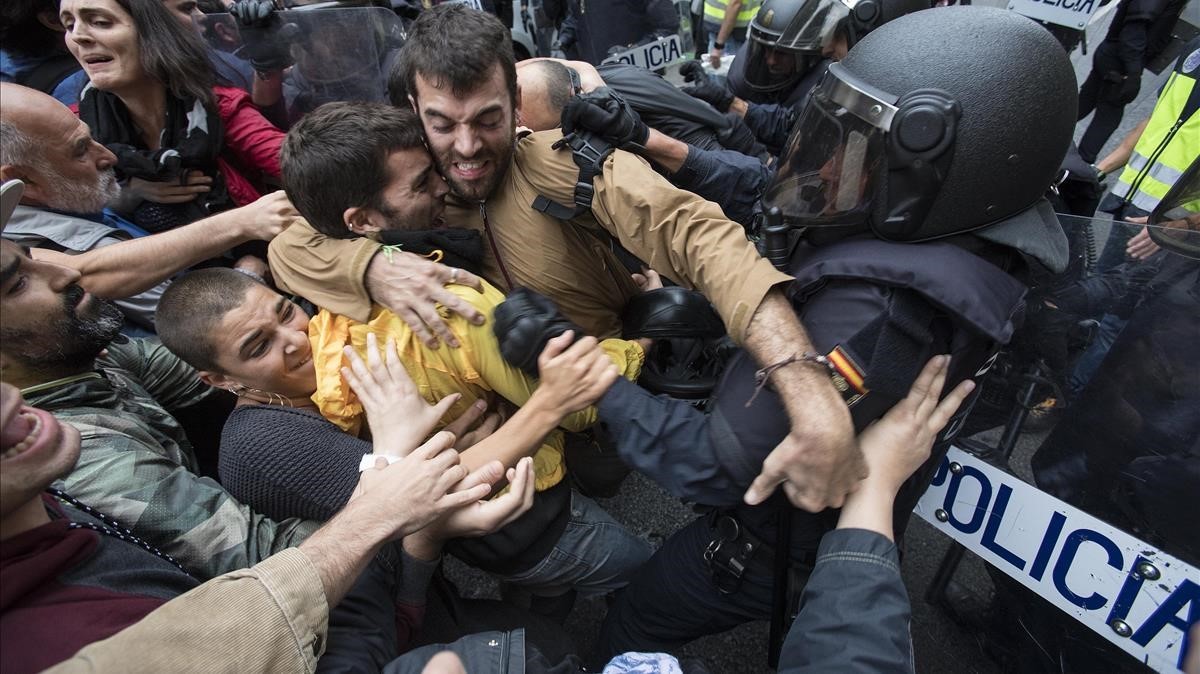
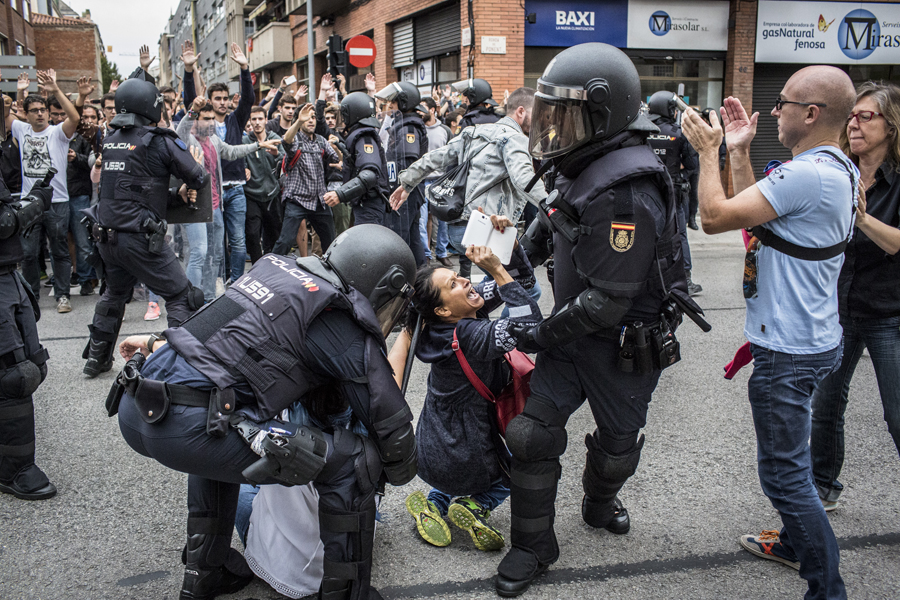
Barcelona 01 10 2017 Politica Referendum 1-O elecciones la policia nacional ha intentado desalojar a las personas concentradas en las puertas del colegio electoral Ramon Llull Foto Ferran Nadeu
by Àngel Garcia and Anna Celma That the state has repressive mechanisms to curb dissent and control the population is something widely known among social movements and activists. Cases like Pandora or Piñata, the 4-F (see Ciutat Morta docu), the imprisonment of Alfon, among many others, have led to the activation of a police, political and judicial apparatus and the creation of a speech that builds an “internal enemy” like the anti-systemites or the perroflautas. What is not yet so visible is how patriarchy and state social control tools are bundled together. To look into this, from Novact and with the support of entities and groups members of the platform ‘Defender of those who Defend‘ ( like Center Irídia, Calala and Stop Represión Granada, among others ) have prepared a report on the relationship between repression and gender, which was presented at the University of Barcelona. As the professor of law philosophy Encarna Bodelón says, “the fight against patriarchy has also been the story of multiple repressions,” individual or collective. The authors of the report gave an overview of the social and feminist mobilizations to study how repression is legitimated through the idea of ”citizen security”.For them, “the gender system and the dominant neoliberal ideology in the State are two structures of a mutually constitutive nature” and as such, they must be considered together.
Citizen security and family protection are two areas where the patriarchal state works to “repress and discipline” the bodies that are seen as non-normative
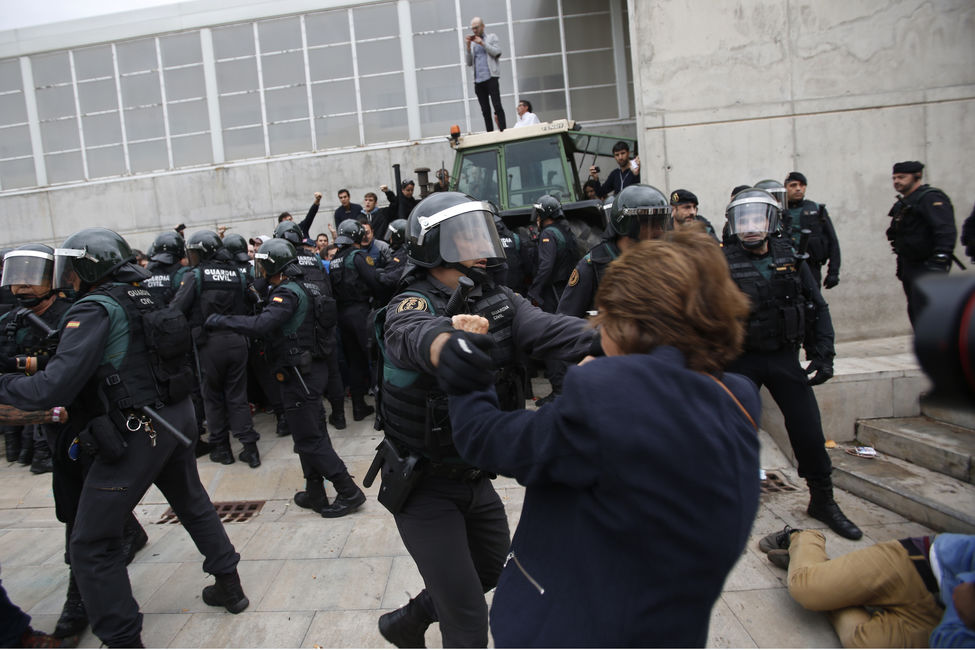
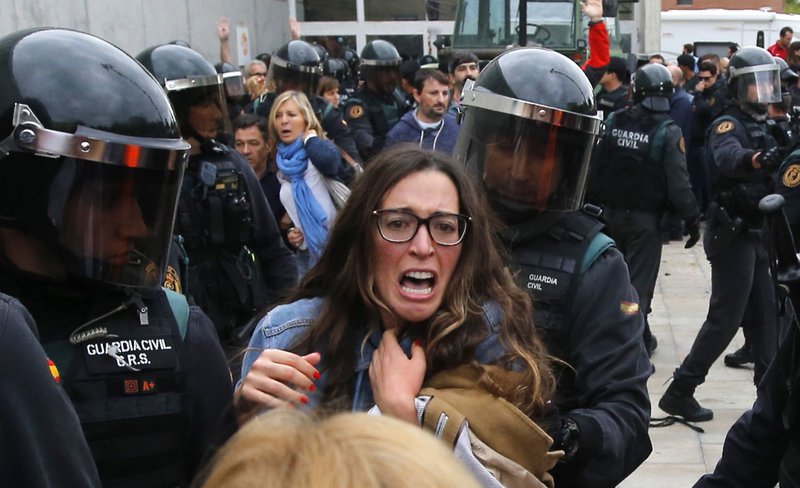
TOPSHOT – People clash with Spanish Guardia Civil guards outside a polling station in Sant Julia de Ramis, where Catalan president was supposed to vote, on October 1, 2017, on the day of a referendum on independence for Catalonia banned by Madrid.
The report is low in the feminist perspective to understand the phenomenon of repression exerted by the State. With this starting point, it addresses the psychosocial impacts and underlines the importance of putting care in the center as a mechanism of repair and support driven from the gender perspective.
At the same time, the impact of state repression on women and feminist movements is analyzed, and it analyzes whether the punitive system acts differently depending on gender or sexual orientation in protest contexts and in the face of social movements.Citizen security (public domain) and the protection of the family (private area) are two areas where the patriarchal state works to “repress and discipline” the bodies that are read as non-normative.
Women have experienced various offenses against their bodies, either from the attempts to impose legislation that violates their sexual and reproductive rights – such as the “Counter-Counter Gallardon” of abortion – or directly, suffering from violence when they occupy and politicize public spaces.
The report also highlights how the expansion of the criminal system in Spanish territory has been parallel to the restriction of welfare policies. These cuts suffer more, again, women. In view of all this, the authors argue that a logic of feminist analysis opens the door to rethink how to deal with the actions of the criminal system. “While for men there are socially accepted models of transgression, which can even be seen as an emblem of masculinity, for women the transgression is transformed into stigma and rejection.
This causes dissent to be more easily assumed by men, as they are more compatible with social and family roles that require less obligations, “concludes the document. Before that, however, they now identify a flight of the “figure of the hero” and the images of heroicity and victimism.
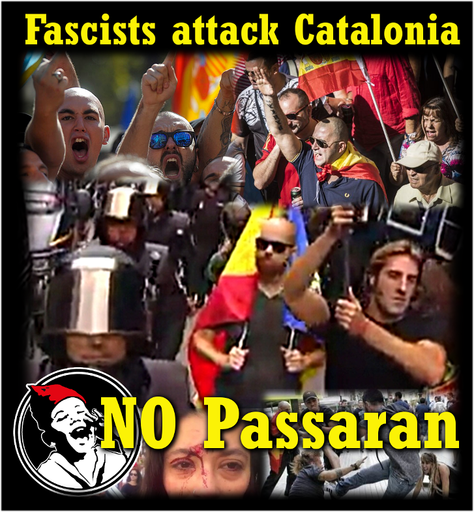
Since the Referendum on Oct 1st 120 attacks by Spanish nationalist fascists have been documented in Catalonia.
When repression arrives, there is also a phenomenon of feminization of the response. When time goes by and the repressive process continues, with people pending trial or imprisonment, for example, those who remain within the anti-prescription and support groups are women. This, for the authors of the report, implies that in the end it ends up giving more importance to the care in these environments.
A space is allowed to express everything that the “message of heroicity” does not allow: fears, pains, shortcomings or insecurities. Also, the effects of repressive violence that do not always arise at the first moments, such as depression, anxiety, less frequent psychotic disorders … All in all, consequencesof post-traumatic stress disorder. This means that, from experience, a logic of prevention, care and co-responsibility has begun: preparation before the repression arrives to have more room for action and the ability to receive the violence. Sexual repression On October 1, between various songs, there was “without the girls, there is no revolution.”
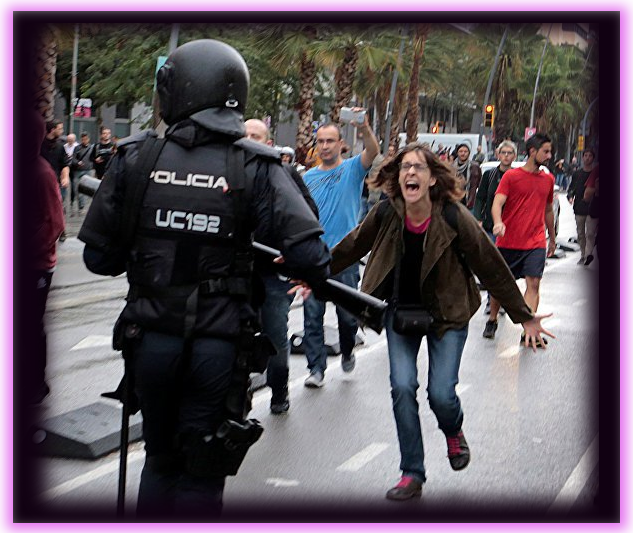
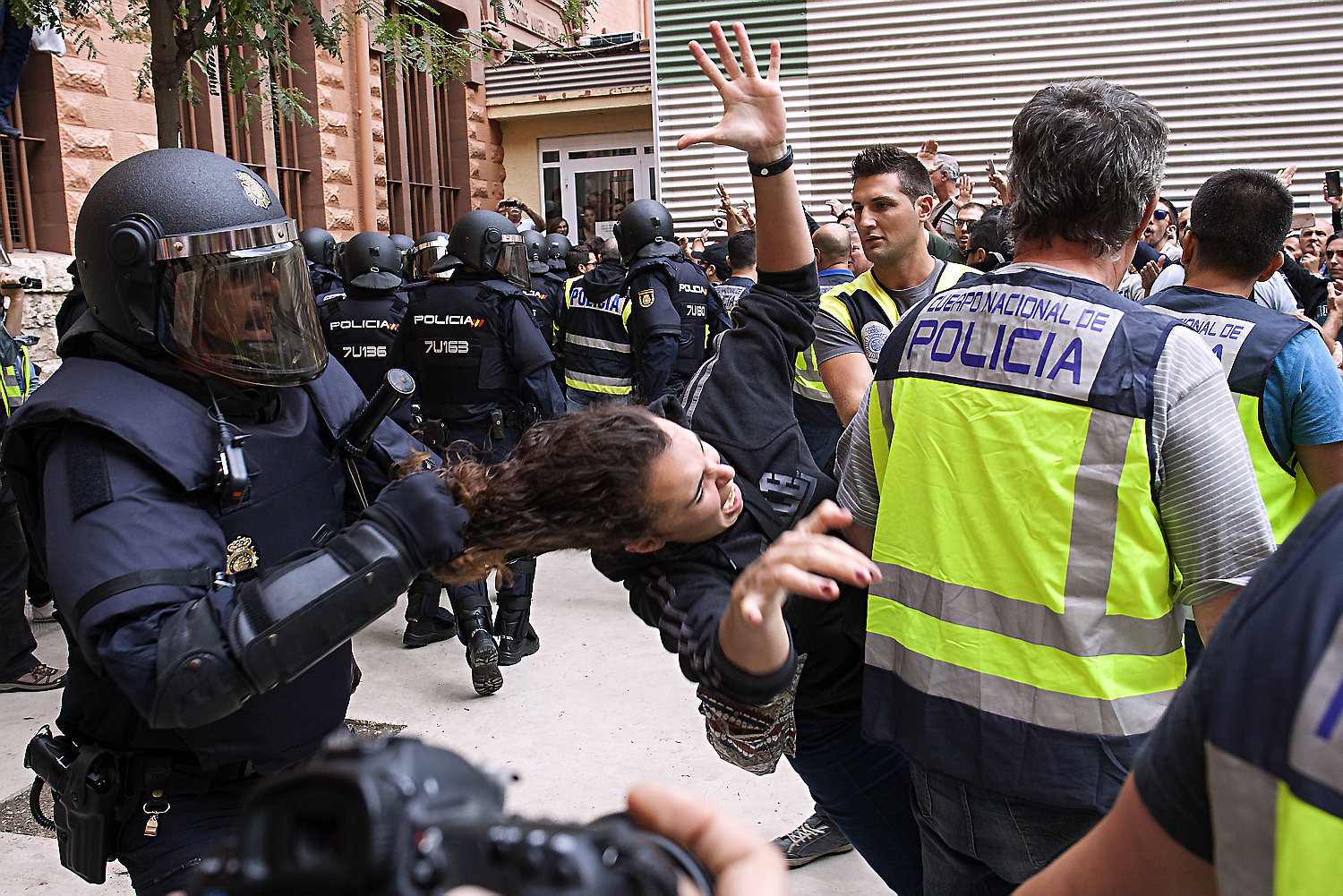
These screams resounded while the police forces of the National Police Force (CNP) and the Civil Guard entered their constituencies to prevent voting during the Catalan referendum. During the day, repression became universalized and jumped from the creation of the “internal enemy” on a small scale to extrapolate it to the entire Catalan population mobilized in defense of the referendum. In this context, the report indicates that it is he produced “again the body of the woman to mean the masculine dominion”.
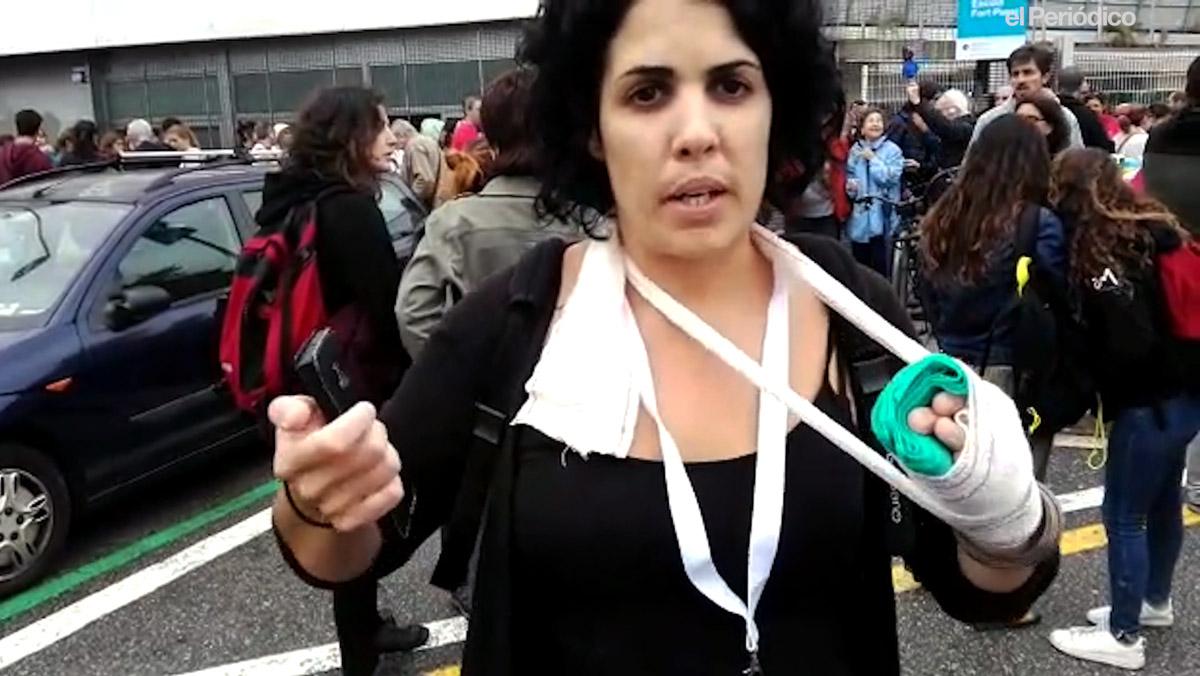
Martra Torrecilla had her fingers snapped by National Spanish Police
On October 1 there were cases of “sexuada repression”, in which the woman’s body is a receptacle of punitive mechanisms that want to redirect and highlight what must correspond to femininity, one band, and that at the same time uses violence that expresses the message of the domination of men. This is the case, for example, of the aggressions by which Marta Torrecillas filed a complaint.
The report indicates that “once again the body of women” became “to mean male dominance.” On October 1 there were cases of “sexuada repression” On October 25, Torrecillas denounced the sexual violence that was submitted by the CNP to the IES Pau Claris – recorded on video and that ran for the Nets. Torrecillas accuses them of twisting their fingers, touching the breasts and throwing her dow the stairs.
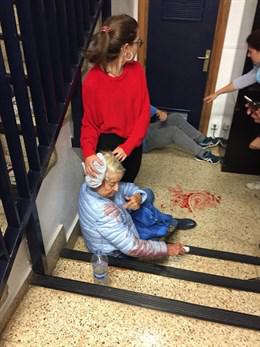
Many women, to a lesser or greater extent, suffered this police violence at first hand, also elderly women. The authors of the report, at the same time, study how sexual repression is exercised from patriarchy against men to impose their patriarchal domain.
For example, they analyze the sexual violence used by the police forces in the French State against a young person in Paris: on February 1, 2017, in a “routine” drug control in the neighborhood Aulnay-sous-Bois, four agents of the French police arrested some guys to ask for their documentation.
Théo, aged 22, suffered aggression when the agents were searching his anus, aggressions from which he had to be operated on in the hospital’s emergency department. In response to this police violence, there were disturbances in this peripheral zone of the French capital for several nights.
A similar strategy, although with much lower intensity, is anmalysed in the conversation between police, fortuitously recorded during the transfer of Oriol Junqueras to the prison center of Estremera. The agents mocked the possibility that the vice president of the Generalitat could suffer rape in prison.All the repressive logic of sexual violence was reproduced, in this case, as a tool by men in a situation of domination against a man in a situation of vulnerability.
The report, by Novact and Defend Who Defends, allows us a first approach to analysing the relationship between state, patriarchy and repression.
Novact i la plataforma Defender a Quien Defiende publiquen un informe que analitza des de la perspectiva de gènere el fenomen de les repressions. El document evidencia com poder punitiu i patriarcal es cohesionen per preservar l’ordre social
Imatge de la repressió davant d’una seu electoral a Sabadell el dia 1 d’octubre
Novact i la plataforma Defender a Quien Defiende publiquen un informe que analitza des de la perspectiva de gènere el fenomen de les repressions. El document evidencia com poder punitiu i patriarcal es cohesionen per preservar l’ordre social
Que l’Estat té mecanismes repressius per frenar la dissidència i controlar la població és quelcom àmpliament conegut entre els moviments socials i l’activisme. Casos com Pandora o Piñata, el cas 4-F, l’empresonament d’Alfon, entre molts altres, han comportat l’activació dels aparells policials, polítics i judicials en la creació d’un discurs que construeix un “enemic intern”, com l’antisistema o el perroflauta.
El que encara no és tan visible és com el patriarcat i les eines estatals de control social estan entortolligades. Per evidenciar-ho, des de Novact i amb el suport d’entitats i col·lectiu membres de la plataforma Defender a Quien Defiende– com Centre Irídia, Calala i Stop Represión Granada, entre altres- han elaborat un informe sobre la relació entre repressió i gènere, que aquest dijous 16 de novembre s’ha presentat a la Universitat de Barcelona.
“des de Novact i amb el recolzament d’entitats i col·lectius membres de la plataforma Defender a Quien Defiende, com Centre Irídia, Clala i Stop Represión Granada, entre altres.”
Com diu en el pròleg la professora de filosofia del dret Encarna Bodelón, “la lluita contra els patriarcats ha estat també la història de múltiples repressions”, individuals o col·lectives. Les dones autores de l’informe han fet una panoràmica de les mobilitzacions socials i feministes per estudiar com es legitima la repressió a través de la idea de “seguretat ciutadana”. Per a elles, “el sistema de gènere i la ideologia neoliberal dominant a l’Estat són dues estructures de caràcter mútuament constitutiu” i com a tal, han d’examinar-se juntes.
La seguretat ciutadana i la protecció de la família són dos àmbits en què l’estat patriarcal treballa per “reprimir i disciplinar” els cossos que són llegits com a no normatius
L’informe es bassa en l’òptica feminista per a comprendre el fenomen de la repressió exercida per l’Estat. Amb aquest punt de partida, atén els impactes psicosocials i subratlla la importància de posar en el centre les cures com a mecanisme de reparació i acompanyament impulsat des de la visió de gènere.
Alhora, radiografia l’impacte de la repressió estatal envers les dones i els moviments feministes, i analitza si el sistema punitiu actua de manera diferent en funció del gènere o les orientacions sexuals en els contextos de protesta i enfront dels moviments socials./ Pau Fabregat
Davant de tot això, les autores defensen que una lògica d’anàlisi feminista obre les portes a repensar com fer front a les actuacions del sistema penal. “Mentre que per als homes hi ha models socialment acceptats de transgressió, que fins es poden lluir com a emblema de masculinitat, per a les dones la transgressió es transforma en estigma i rebuig.
Això fa que les dissidències puguin ser més fàcilment assumides pels homes, ja que a més resulten més compatibles amb uns rols socials i familiars que requereixen menys obligacions”, conclou el document. Davant d’això, però, identifiquen avui dia una fugida de la “figura de l’heroi” i de les imatges d’heroïcitat i victimisme.
Quan arriba la repressió, també es produeix un fenomen de feminització de la resposta. Quan el temps passa i el procés repressiu continua, amb persones pendents de judici o empresonades, per exemple, qui es manté a dins dels grups antirepressius i de suport són les dones. Això, per a les autores de l’informe, implica que al final s’acabi donant més importància a les cures en aquests entorns.S’habilita un espai per expressar tot allò que el “missatge de l’heroïcitat” no permet: pors, dolors, mancances o inseguretats. També els efectes de la violència repressiva que no sempre afloren als primers moments, com ara depressió, ansietat, trastorns psicòtics amb menys freqüència… Tot plegat, conseqüències del trastorn d’estrès post- traumàtic. Això fa que, des de l’experiència, es comenci a instaurar una lògica de la prevenció, de la cura i de corresponsabilitzar: preparar-se abans que arribi la repressió per tenir més marge d’actuació i capacitat per rebre el cop.
La repressió sexuada
L’1 d’octubre, entre diversos càntics, hi havia el de “sense les iaies, no hi ha revolució”. Aquests crits ressonaven mentre les forces policials del Cos Nacional de Policia (CNP) i de la Guàrdia Civil entraven a les seus electorals per impedir les votacions durant el referèndum català. Durant la jornada, la repressió es va universalitzar i va saltar de la creació de “l’enemic intern” a petita escala a extrapolar-lo a tota la població catalana mobilitzada en defensa del referèndum.En aquest context, l’informe assenyala que es va produir “altra vegada el cos de la dona per significar el domini masculí”. L’1 d’octubre es va haver-hi casos de “repressió sexuada”, aquella en què el cos de la dona és receptacle d’uns mecanismes punitius que volen reconduir i remarcar el que ha de correspondre a la feminitat, d’una banda, i que alhora empra unes violències que cosifiquen i expressen el missatge de la dominació dels homes. És el cas, per exemple, de les agressions per les quals Marta Torrecillas va presentar una querella.
El 25 d’octubre, Torrecillas va denunciar la violència sexual a què va ser sotmesa pel CNP a l’IES Pau Claris – gravada en vídeo i que va córrer per les xarxes. Torrecillas els acusa de torçar-li els dits, tocar- li els pits i llançar-la per les escales. Moltes dones, a menor o major mesura, van patir aquesta violència policial de primera mà, també dones grans.Les autores de l’informe, alhora, estudien com la repressió sexuada s’exerceix des del patriarcat contra els homes per arrabassar-los el domini patriarcal. Per exemple, analitzen la violència sexual emprada pels cossos policials a l’Estat francès contra un jove a París: l’1 de febrer del 2017, en un “rutinari” control de drogues al veïnat Aulnay-sous- Bois, quatre agents de la policia francesa van aturar uns nois per demanar-los la documentació.
Théo, de 22 anys, va ser agredit quan els agents van “introduir una porra per l’anus, agressions fruit de les quals va haver de ser operat a l’hospital d’urgència”. Com a resposta davant d’aquesta violència policial, hi va haver disturbis en aquesta zona perifèrica de la capital francesa durant diverses nits.
Una estratègia similar, tot i que de molt més baixa intensitat, es troba en la conversa entre policies, gravada fortuïtament durant el trasllat d’Oriol Junqueras al centre penitenciari d’Estremera. Els agents feien mofa de la possibilitat de què el vicepresident de la Generalitat patís una violació a presó.
Es reproduïa tota la lògica repressiva de la violència sexuada, en aquest cas, com una eina d’homes en situació de dominació contra homes en situació de vulnerabilitat. Per tant, l’informe, impulsat per Novact i Defender a Quien Defiende, permet fer una primera aproximació a l’abast de la relació entre estat, patriarcat i repressió.

 some of the volunteers from the self defense forces killed by the Turkish invasion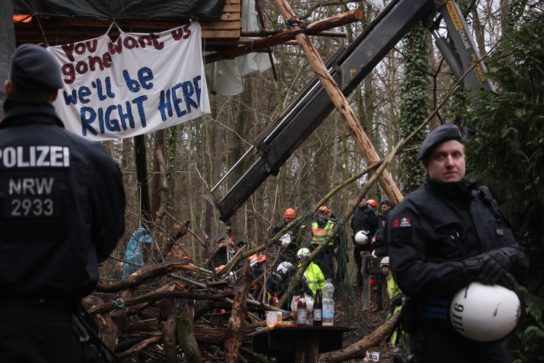













 The Free
