Chief Theresa Spence is now on Day 13 of her hunger strike. Too weak to leave the teepee she is living in on Victoria Island, a mere stone’s throw from Parliament, she called for a round dance yesterday at 24 Sussex Drive in Ottawa, Prime Minister Harper’s residence.
Throughout the duration of her hunger strike, Harper has maintained a chilly silence around the grassroots Indigenous movement now widely known as Idle No More, taking to Twitter instead to share his jokes about bacon with the Canadian electorate.
”Preventing climate breakdown – the four, five or six degrees of warming now predicted for this century by green extremists like, er, the World Bank, the International Energy Agency and PriceWaterhouseCoopers (1 , 2 , 3 , ) – means confronting the oil, gas and coal industry.”
The only realistic way to do this is by making further development unprofitable. This seems impossible, even if extraction were to be limited by a world agreement, scarcity would drive prices up and make evasion eminently profitable, to companies who are anyway more powerful than many nation states.
As the Maya calendar ends, a new cycle of struggle begins with thousands of Zapatistas peacefully and silently occupying town squares across Chiapas.
The Zapatistas are back! Flowing like the water of the river that beats the sword. And while some were anticipating the Christmas holidays, some others the end of the Maya calendar, and others still the new Communiqué from the Comandancia General of the EZLN that was announced back in November, the main cities of Chiapas woke up today with memories of 1994. Continue reading “50,000 Mayan Zapatistas march for New Era”
Currently enduring their fifth day of incarceration after barricading themselves inside the Keystone XL pipeline. Help get them out with a donation to their legal fund.
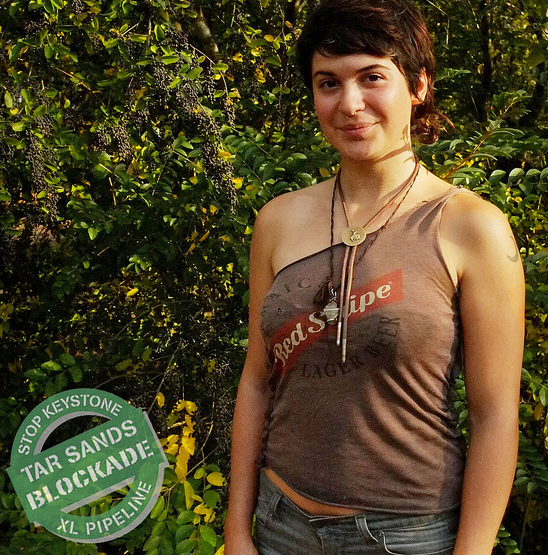
WINONA, TX – MONDAY, DECEMBER 3, 2012 7:30 AM – Several protestors with Tar Sands Blockade sealed themselves inside a section of pipe destined for the Keystone XL tar sands pipeline to stop construction of the dangerous project. Using a blockading technique never implemented before, Matt Almonte and Glen Collins locked themselves between two barrels of concrete weighing over six hundred pounds each, aided by Isabel Indigo Brooks who went in with them .
Located twenty-five feet into a pipe segment waiting to be laid in the ground, the outer barrel is barricading the pihttp://tarsandsblockade.org/pe’s opening and neither barrel can be moved without risking serious injury to the blockaders.
Matt Almonte
The barricaded section of the pipeline passes through a residential neighborhood in Winona, TX. If TransCanada moves ahead with the trenching and burying of this particular section of pipe, it would run less than a hundred feet from neighboring homes.
Tar sands pipelines threaten East Texas communities with their highly toxic contents, which pose a greater risk to human health than conventional crude oil. TransCanada’s existing tar sands pipeline, Keystone XL’s predecessor, has an atrocious safety record, leaking twelve times in its first year of operation.
“TransCanada didn’t bother to ask the people of this neighborhood if they wanted to have millions of gallons of poisonous tar sands pumped through their backyards,” said Almonte, one of the protesters now inside the pipeline. “This multinational corporation has bullied landowners and expropriated homes to fatten its bottom line.”
Recently, over 40 communities worldwide planned actions with Tar Sands Blockade during a week of resistance against extreme energy extraction and its direct connection to the climate crisis. A growing global movement is rising up against the abuses of the fossil fuel industry and its increasingly desperate pursuit of dangerous extraction methods.
“I’m barricading this pipe with Tar Sands Blockade today to say loud and clear to the extraction industry that our communities and the resources we depend on for survival are not collateral damage,” said Collins, another blockader inside the pipe and an organizer with Radical Action for Mountain Peoples Survival (RAMPS) and Mountain Justice, grassroots campaigns in Appalachia working to stop mountaintop removal coal mining.
“This fight in East Texas against tar sands exploitation is one and the same as our fight in the hollers of West Virginia. Dirty energy extraction doesn’t just threaten my home; it threatens the collective future of the planet.”
Glen Collins
“At this late stage, doing nothing is a greater danger than the risks of taking direct action to stop destructive projects like Keystone XL,” said Ron Seifert, a spokesperson for Tar Sands Blockade. “That’s why folks working with groups like RAMPS, the Unist’ot’en Camp fighting a natural gas pipeline in British Columbia and Tar Sands Blockade are willing to use everything including their own hands and feet to ensure we all have a safe climate and healthy, thriving communities.”
HUNGER STRIKE CONTINUES
Today also marks day 5 of the Houston Hunger Strike in which Gulf Coast activists with Tar Sands Blockade are going without food to demand that Valero divest entirely from the Keystone XL pipeline and invest in the health and wellbeing of the communities it’s poisoning.
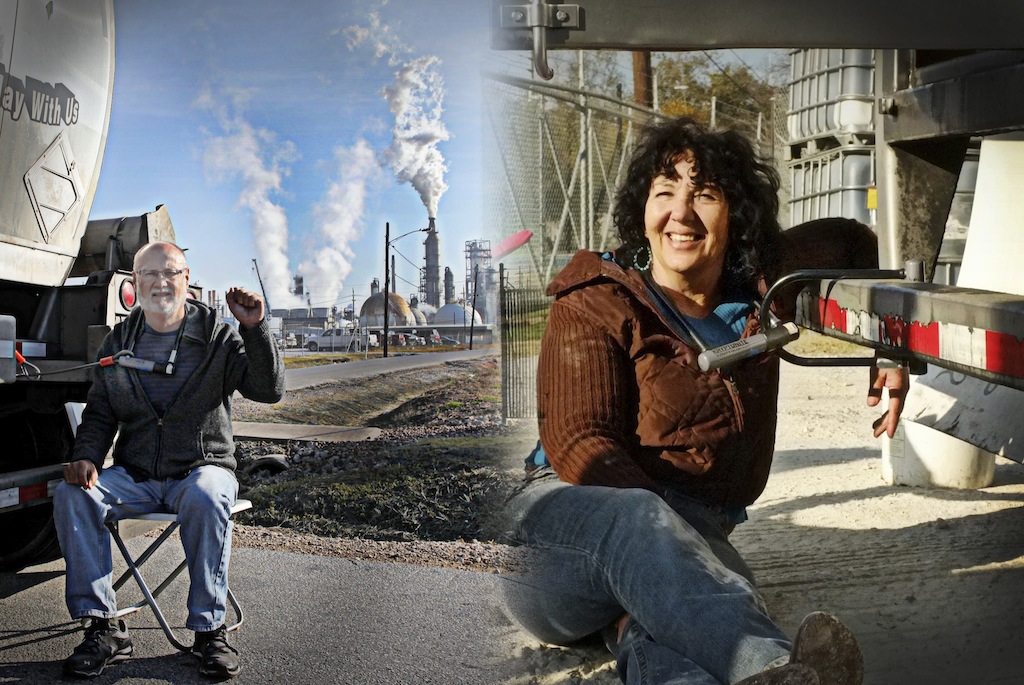
Diane Wilson and Bob Lindsey still on hunger strike in prison..
Diane Wilson and Bob Lindsey are undertaking a sustained hunger strike in solidarity with the Manchester community in Houston. Their hunger strike began with an act of civil disobedience on November, 29th when they locked their necks to tanker trucks attempting to enter the Valero refinery in Manchester. They refuse to eat until the following demands are met:
1. Velero completely divest from Keystone XL and all forms of tar sands exploitation
2. Velero invest in the health and well being of the Manchester community
3. Valero refinery shut down and vacate the Manchester community
UPDATES HERE:::BAIL MONEY STILL NEEDED:::WRITE TO PRISONERS:::NEW ACTIONS:::
Ben Franklin once said that nothing in this world is certain except death and taxes; clearly he wasn’t a jellyfish man. As scientists discovered in 1996, Turritopsis dohrnii, also known as the “immortal jellyfish,” has in fact figured out a way to escape death (and reportedly paid no taxes this year, either).
At any stage in its development, this jelly can turn back into a polyp, growing younger and younger and then starting over again. As you might expect, immortality has allowed it to spread far and wide in what one biology professor has called “a silent invasion.”
What does the jelly’s curious secret mean for people? According to Shin Kubota, a Japanese scientist who’s devoted himself to the species for years — and become a famous jellyfish songwriter in the process — “Once we determine how the jellyfish rejuvenates itself, we should achieve very great things. My opinion is that we will evolve and become immortal ourselves.” Kubota’s not sure that’s a good thing, though — he doesn’t think humans are ready for eternal life.
Check out this video of Kubota singing praises to the immortal jellyfish: Jellyfish
We’d planned to go on free-bikes, but I was much too wrecked. And Lucy could hardly sit down. We called an air-cab. As we were waiting we watched a high yellow crane, swinging the green head of a windmill above the clinic.

 Change the conversation, support rabble.ca today.





 The Free