Grecia se encuentra en un punto de inflexión y suceden muchos y críticos cambios tanto en la sociedad como en la política y la economía. La desarticulación y la disolución del, hasta el momento presente, modelo de autoridad y de explotación es más que 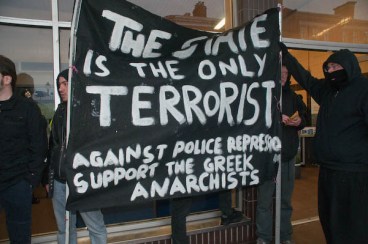 evidente y hace más concreto lo que de forma general se denomina “crisis”. Lo que estamos viviendo en definitiva es el fracaso absoluto de un sistema que no pudiendo hacer nada más para asegurar el consenso social, se lanza a un ataque frontal, sin condiciones y sin disculpas de ningún tipo.Cuando comenzó la coyuntura de lo que se llamó “crisis”, la agresión se hizo manifiesta en términos materiales. Con la depreciación del trabajo, la reducción de los salarios, la flexibilización de las condiciones laborales, la institucionalización de la inestabilidad, el aumento de los precios de los artículos de primera necesidad y de las facturas de los bienes de interés común, el aumento de los impuestos y la reducción de los servicios de bienestar. Al mismo tiempo comenzaron la liquidación a “particulares” de la riqueza pública, la presencia generalizada de la policía en las calles, las subastas, el aumento del paro… De forma paralela a todo lo anterior se articuló además un ataque propagandístico sin precedentes. A ritmo frenético de publicación, con los medios de comunicación controlados por el estado y el capital, de escenarios de catástrofe y de calendarios con fechas “apocalípticas”, del tipo “…si no se aprueba la siguiente inyección del préstamo por parte de la troika, estamos terminados…”. Con todo esto el mecanismo de comunicación de la autoridad consigue es enturbiar la vista continuamente, conservando un estado de terrorismo permanente y asegurando en definitiva la parálisis, mediante la coacción, del cuerpo social. evidente y hace más concreto lo que de forma general se denomina “crisis”. Lo que estamos viviendo en definitiva es el fracaso absoluto de un sistema que no pudiendo hacer nada más para asegurar el consenso social, se lanza a un ataque frontal, sin condiciones y sin disculpas de ningún tipo.Cuando comenzó la coyuntura de lo que se llamó “crisis”, la agresión se hizo manifiesta en términos materiales. Con la depreciación del trabajo, la reducción de los salarios, la flexibilización de las condiciones laborales, la institucionalización de la inestabilidad, el aumento de los precios de los artículos de primera necesidad y de las facturas de los bienes de interés común, el aumento de los impuestos y la reducción de los servicios de bienestar. Al mismo tiempo comenzaron la liquidación a “particulares” de la riqueza pública, la presencia generalizada de la policía en las calles, las subastas, el aumento del paro… De forma paralela a todo lo anterior se articuló además un ataque propagandístico sin precedentes. A ritmo frenético de publicación, con los medios de comunicación controlados por el estado y el capital, de escenarios de catástrofe y de calendarios con fechas “apocalípticas”, del tipo “…si no se aprueba la siguiente inyección del préstamo por parte de la troika, estamos terminados…”. Con todo esto el mecanismo de comunicación de la autoridad consigue es enturbiar la vista continuamente, conservando un estado de terrorismo permanente y asegurando en definitiva la parálisis, mediante la coacción, del cuerpo social.
A pesar de todo lo expuesto, nunca ha cesado la resistencia de grupos de la sociedad griega y del proletariado. Las escasas convocatorias de huelgas generales se enmarcan en un contexto definido en mayor o menor medida por personas que resisten y expresan su intención de luchar en contra de las condiciones que imponen estado y capital.
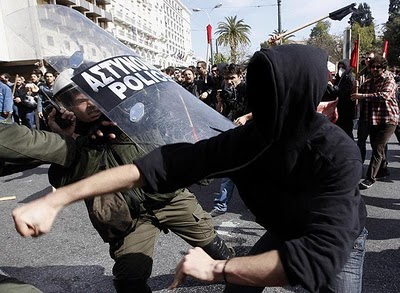
A la manifestación de la huelga del 11 de mayo en Atenas acudieron de nuevo miles de manifestantes que expresaban su oposición a las nuevas medidas antisociales del gobierno, que ahogan a trabajadorxs y al conjunto de la población. Durante la manifestación, y mientras una parte de la misma iba dejando atrás el congreso para finalizar, los maderos atacaron sin miramientos y llenos de rabia los blocks de los manifestantes de posicionamiento más radical; en los blocks de anarquistas y antiautoritarixs, de las asambleas de barrio, de las corporaciones obreras de base y de la izquierda extraparlamentaria. Golpeando con gran dureza y utilizando gran cantidad de agentes químicos, diluyeron los mencionados blocks. Más de cien manifestantes fueron trasladados a hospitales, y algunxs de ellxs fueron sometidos a intervenciones quirúrgicas.
El compañero Giannis es el manifestante que se encuentra en peor situación. Habiendo recibido un ataque asesino por parte de los  maderos, y con gravísimos traumatismos craneoencefálicos, fue trasladado en situación cercana a la muerte (según el comunicado de los médicos) al hospital. Allí se vio el alcance real de la hemorragia interna en la cabeza, fue operado rápidamente y se halla ingresado, entubado y en situación crítica en la unidad de cuidados intensivos. Su estado es crítico pero estable, y no ha superado todavía el peligro de muerte o de daños irreversibles para su salud. maderos, y con gravísimos traumatismos craneoencefálicos, fue trasladado en situación cercana a la muerte (según el comunicado de los médicos) al hospital. Allí se vio el alcance real de la hemorragia interna en la cabeza, fue operado rápidamente y se halla ingresado, entubado y en situación crítica en la unidad de cuidados intensivos. Su estado es crítico pero estable, y no ha superado todavía el peligro de muerte o de daños irreversibles para su salud.
Es evidente que estas agresiones asesinas en contra de los manifestantes huelguistas del miércoles tenían un único objetivo: atemorizar al pueblo y a cuantxs resisten ante las agresiones de la autoridad estatal y económica. Fue una acción ejemplificadora con el objetivo de subyugar a la gente y que parecía tener este mensaje: quedaos en vuestras casas y permaneced tranquilos y disciplinados. En su marco de acción el poder enrola, cada vez de forma más continua, a sus cachorros ultraderechistas o/y paraestatales. Los brotes de violencia racista, que se multiplican últimamente en todo el país, tuvieron su punto cumbre la semana pasada. Con la excusa del asesinato a sangre fría de un residente del centro de Atenas cuando intentaban robarle, del cual se hizo responsable a los inmigrantes, se extendió un pogrom sin precedentes en contra de los inmigrantes. Grupos de fascistas, organizados o no, de racistas y de ultraderechistas encontraron su oportunidad; se concentran cada tarde y atacan a inmigrantes, hiriendo a muchos, y parece que el asesinato de un inmigrante económico se debe a los mismos. Paralelamente, neonazis junto con la policía atacan ocupas del centro de Atenas, conduciendo a lxs compañerxs a una situación en la que debemos defendernos ante el peligro de perder la propia vida, en contra de la brutalidad policial y de la barbarie fascista.
Lo crítico de la situación es evidente. En el momento en que la sociedad recibe un golpe sin precedentes en términos materiales, sus sectores políticos más radicalizados, y principalmente el entorno anarquista, se encuentran en el punto de mira (y esta vez literalmente, a juzgar por la manía asesina) de policía y fascistas.
¡Por ello hacemos una llamada urgente a la solidaridad internacionalista!
La solidaridad ha sido siempre un valor fundamental de lxs anarquistxs. En ella nos hemos basado siempre para apoyar nuestras luchas y para enfrentarnos a la lógica del aislamiento y de lo propio que impulsa la autoridad estatal, así como al individualismo y a la descomposición de lo colectivo que antepone el capitalismo.
En estos momentos en que la sociedad griega y el proletariado sufren una presión creciente, con un empeoramiento de las condiciones de vida no visto hasta el momento; en estos momentos en que lxs anarquistxs recibimos tal golpe represivo que tiene las dimensiones de un intento de asesinato en sí; en estos momentos en que el entorno político anarquista se encuentra en el punto de mira de la violencia estatal y de la amenaza fascista; en estos momentos necesitamos ver a nuestrxs compañerxs de todo el mundo actuar y mantenerse solidarixs con nuestra lucha.
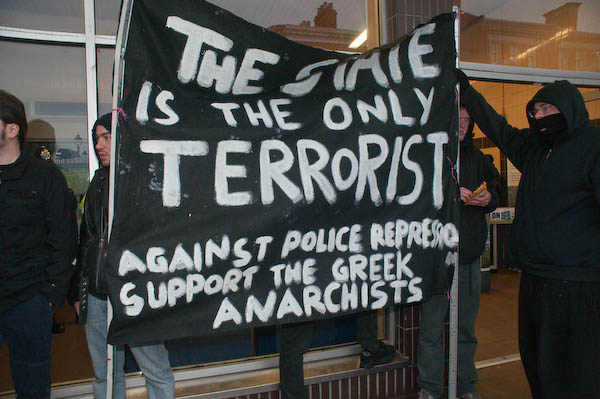
Mediante jornadas, manifestaciones, marchas, protestas, textos, mediante palabras y mediante hechos, del modo que lxs compañerxs juzguen más oportuno. Cualquier muestra de solidaridad revolucionaria que sólo lxs anarquistxs conocen y quieren mostrar, nos  subirá la moral y nos fortalecerá en nuestras luchas. subirá la moral y nos fortalecerá en nuestras luchas.
Un saludo, compañerxs.
Grupo de Comunistas Libertarios (Atenas)
Eutopia journal
See also the following internet links:
http://en.contrainfo.espiv.net/ additional information about recent
events in Greece
http://athens.indymedia.org/front.php3?lang=el&article_id=1288989
video: police attacks the demonstration
http://athens.indymedia.org/front.php3?lang=el&article_id=1290982
video: fascists and police in co-operation attack immigrants
http://www.demotix.com/photo/688561/demonstration-stabbed-greek-turns-ri
photos: nazis attack immigrants
http://athens.indymedia.org/front.php3?lang=el&article_id=1288923
photos: police attacks the demonstration
http://athens.indymedia.org/front.php3?lang=el&article_id=1289018
photos: police attacks the demonstration
http://athens.indymedia.org/front.php3?lang=el&article_id=1289114
photos: police attacks the demonstration |


 Published: May 21, 2011 17:47 by maqui & px | Share






 The Free