Black Lives Matter and the Future of Humanity

A look at how the Black Lives Matter movement, through ideas and action, gives rebels tools in which to engage in social struggle.

by Paul Messersmith-Glavin from Its Going Down shared with thanks.. illustrations added
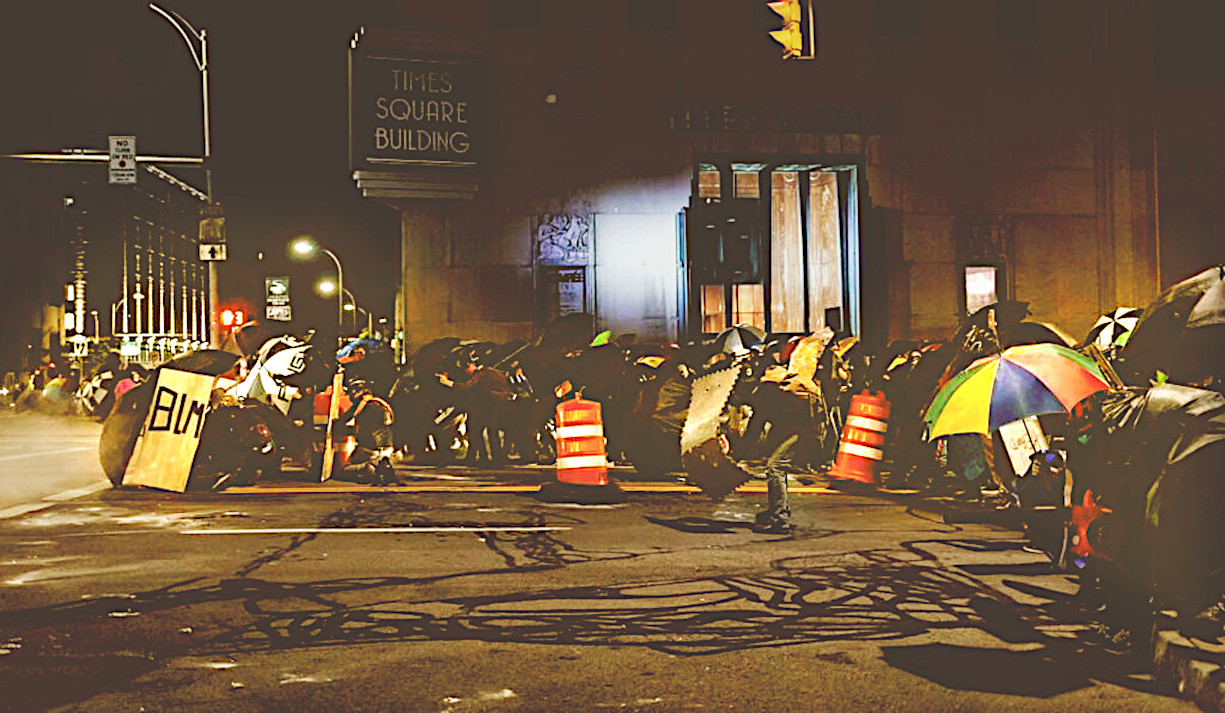
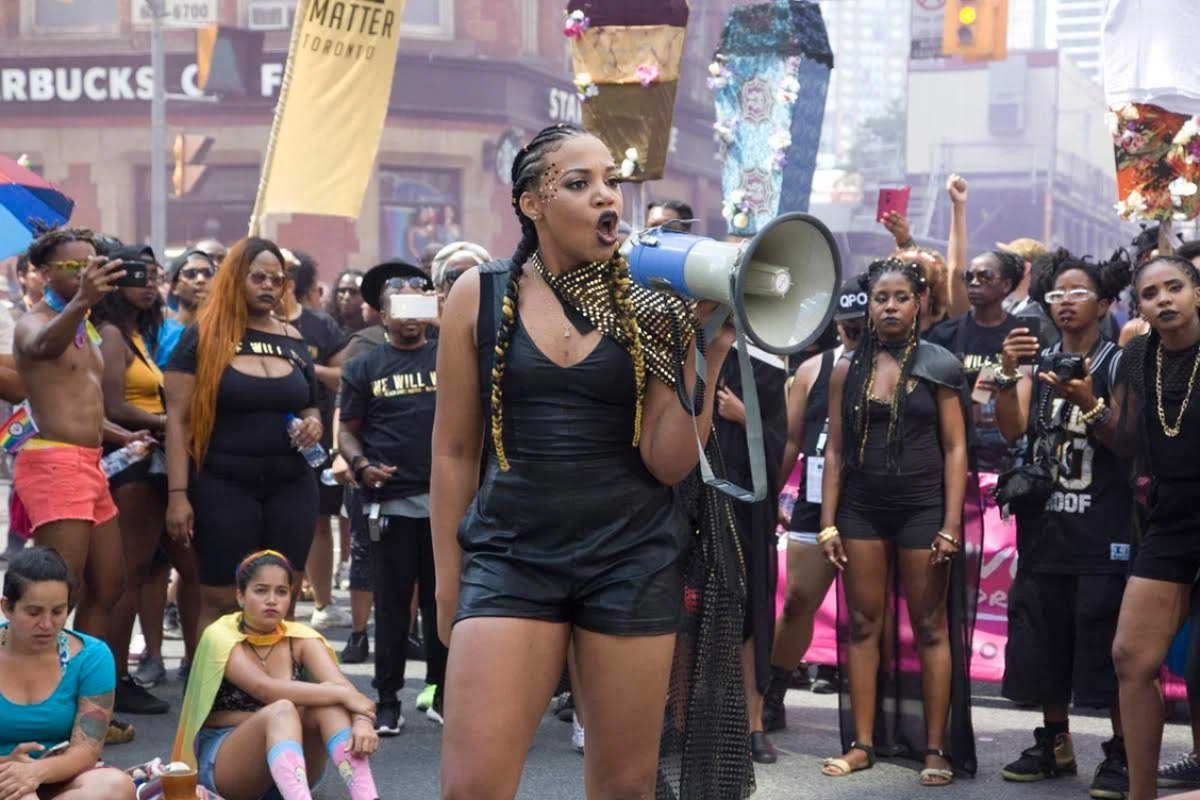
photo via: @MaranieRae

Using an intersectional, anarchist analysis we can see how racism, patriarchy, and class society are intertwined producing a society that actively is changing the climate. We can begin to untangle these relationships, digging into the history of white supremacy to see how it reinforces capitalist social relations producing the ecological crisis we confront. The Black Lives Matter movement offers us the chance, both through its critique and methods, to move closer to a society that no longer changes the climate.

Anonymous Contributor

If we view various forms of domination as forming a ball of twine, we can see how pulling on one string can start to unravel the whole thing. Approaching racism, patriarchy, and class exploitation, for example, as interlocking and mutually reinforcing, organizing against any one of these might begin to reveal connections and relationships to the whole. Each is a potential entryway to understanding the complexity and interconnection of contemporary hierarchies. Better comprehending these relationships offers the possibility of beginning to detangle them. In this way we can relate the movement for Black lives, for instance, to the movement for climate justice.

As with police violence, pollution disproportionately impacts Black and poor communities. For instance, a recent study found that Black people are exposed to twice the particulate matter as white people, and that Hispanics had more exposure than non-Hispanic whites. The study also found that people in poverty had more exposure than people not in poverty. That the people of Flint, Michigan, almost half of whom live in poverty, were drinking lead contaminated water is only one of the more well-known recent examples.
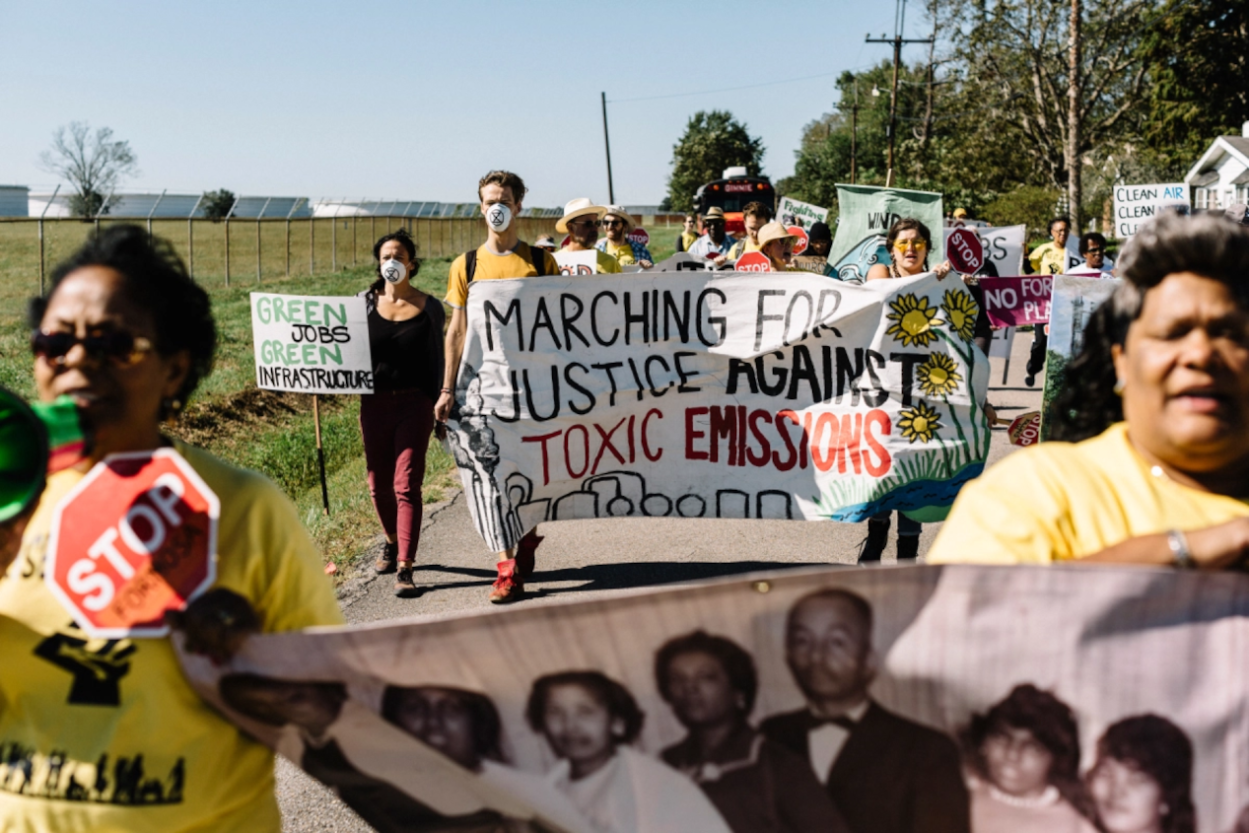
In Texas, environmental racism is in our FACE

Continue reading “Black Lives Matter and the Future of Humanity”
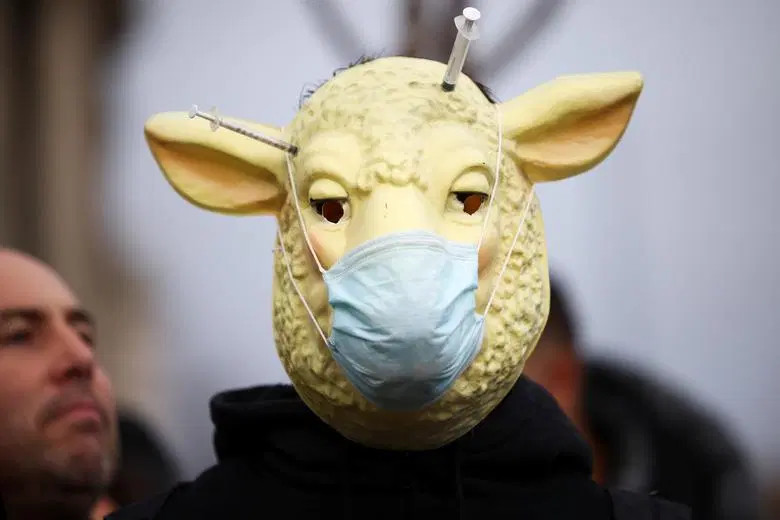
The Acorn – 62.. December 2020 by winter oak … We will prevail!… Naming theEnemy… Shattering illusions


In this issue:

  1. We will prevail!
  2. Naming the enemy
  3. Shattering illusions
  4. Here comes Santa Klaus!
  5. Jaime Semprun: an orgrad inspiration
  6. Acorninfo
Bristol Nov 14

1.  We will prevail!

It was back in March 2020 that we first reported signs of resistance against the Covid-themed totalitarian coup.

We hoped back then that this would quickly develop into a largescale uprising that would quickly see off this unprecedented global power grab.

Things didn’t quite work out that way, though, and opposition has been much slower to build than we would have imagined.

But now, as 2020 draws to an end, things in England and elsewhere are finally hotting up.

People who were pro-lockdown are seeing through the illusion, and GPs and hospital staff are voicing their huge concerns about the mRNA vaccine and so-called hospital statistics.

Continue reading “The Acorn – 62.. December 2020 by winter oak … We will prevail!… Naming theEnemy… Shattering illusions”

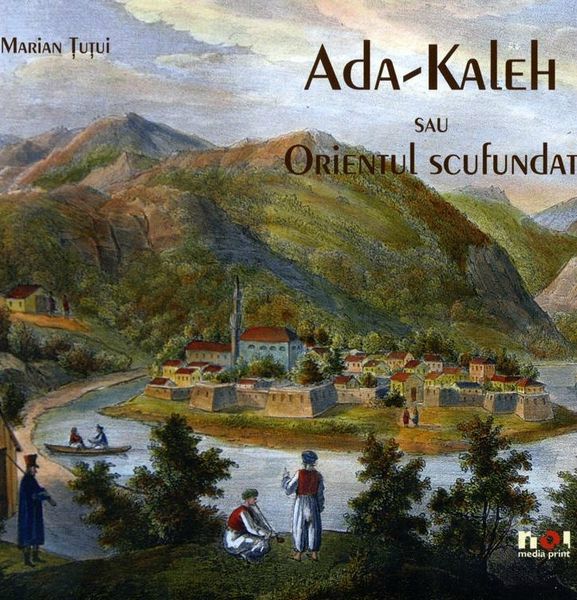
Ada Kaleh: the Balkan island where once people lived without a state, nor a master. Eng/Esp/Fr

A river island that was literally forgotten as rapacious nation States gobbled up the defeated Ottoman Empire

I chose to translate this text as it reads like a story. There I saw the beautiful travel diary of a Macedonian-Bulgarian anarchist from the 19th century. The travel diary does not claim objectivity. He can make us travel through his words, make us think and make us conceive a little elsewhere. This takes us out of authoritarian structures, to a freer world observed by the author of it through his contact with the environment.

Ada-Kaleh: The lost island of souls - Sarah in Romania

Surely such a story could not serve as basic material for historians, but its strength lies elsewhere. Summons our imagination to escape the authoritarian world and its oppressive relationships. It broadens our vision of the world and helps us to see better what is being built in our struggles. I believe that the imagination is a powerful weapon when it is not in the hands of the ruling classes.

Petar Georgiev Mandzhukov (1878–1966) was a Macedonian Bulgarian revolutionary and anarchist, member of the Internal Macedonian-Adrianople Revolutionary Organization and of the Supreme Macedonian-Adrianople Committee. The following is an excerpt from Mandzhukov’s memoir ‘Harbingers of Storm’ (Sofia: FAB, 2013):

Continue reading “Ada Kaleh: the Balkan island where once people lived without a state, nor a master. Eng/Esp/Fr”

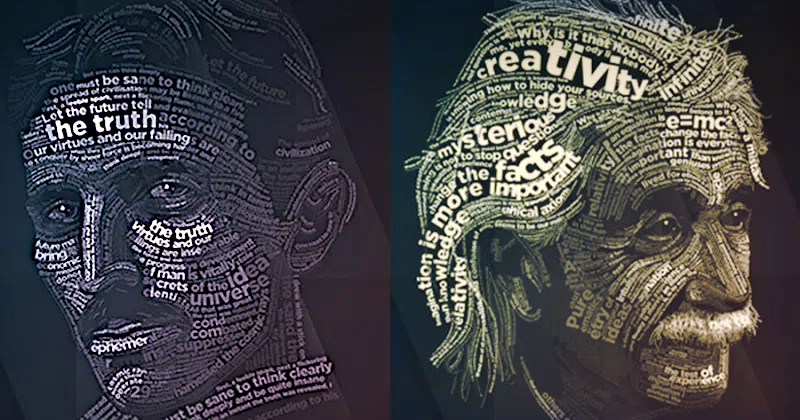
‘Tesla vs. Einstein’, The Ether and the Birth of a New Physics – By Marc Seifer

Source – marcseifer.com at RIELPOLITIK shared with thanks!

“…Tesla understood ether theory a lot better than Einstein did, but obviously, Tesla also did not truly understand the ramifications of Einstein’s famous equation E=mc2. He dismissed it as mathematical poppycock. Had he lived a few more years to see the explosion of the atom bomb, Tesla would have been forced to re-evaluate what he had discarded, and had Einstein re-evaluated the full ramifications of Tesla’s ether theory, he may have been able to achieve his grand dream of unifying gravity with electromagnetism, a process explainable by a full understanding of ether theory”

Tesla vs. Einstein: The Ether & the Birth of the New Physics – By Marc Seifer

Nikola Tesla (1856-1943) was an electrical inventor, well known as a competitor of arch rival Tom Edison. Where Edison’s inventions include the light bulb, the microphone in the telephone and the phonograph, Tesla’s inventions include fluorescent lighting, the AC hydroelectric power system and wireless communication. Tesla is therefore mostly billed as an inventor.

The fact is, Tesla was also a physicist who studied in college such courses as analytic geometry, experimental physics and higher mathematics.1 In his early 1890s lectures at Columbia University, the Chicago World’s Fair and at Royal Societies in Paris and London, building on the ideas of Isaac Newton and Lord Kelvin, Tesla demonstrated and discussed the structure of atoms as being similar to solar systems and wave-like and particle-like aspects to what later became known as the photon. Colleagues he lectured before and corresponded with included many Nobel Prize winners like Wilhelm Roentgen, J.J. Thompson, Lord Raleigh, Ernst Rutherford and Robert Millikan and other scientists such as Elmer Sperry, Sir William Crookes, Sir Oliver Lodge, Lord Kelvin, Heinreich Hertz and Hermann von Helmholtz.

Quantum Entanglement & Other Technologies that Should Be On Your Radar |  designnews.com

SPOOKY ACTION FASTER THAN LIGHT!

As far as I know, no standard text on the history of physics mentions Tesla even though these ideas would lead to Nobel Prizes when they were further developed by Rutherford and Bohr (with their solar-system description of the atom with electrons orbiting the nucleus) and Einstein’s discovery of the photoelectric effect, which was equivalent to Tesla’s wave and particle-like description of light.

Continue reading “‘Tesla vs. Einstein’, The Ether and the Birth of a New Physics – By Marc Seifer”

ensayo: Imaginando una Revolución Anarquista : The Free de M. Gilliland .. por Dr. Daniel P. Jaeckle


nota: traducción del inglés. Ofrecemos este traducción del ensayo de Dr Jaeckle porque da un sumario de la novela The Free que solo existe en el inglés, y que puede ser interesante.

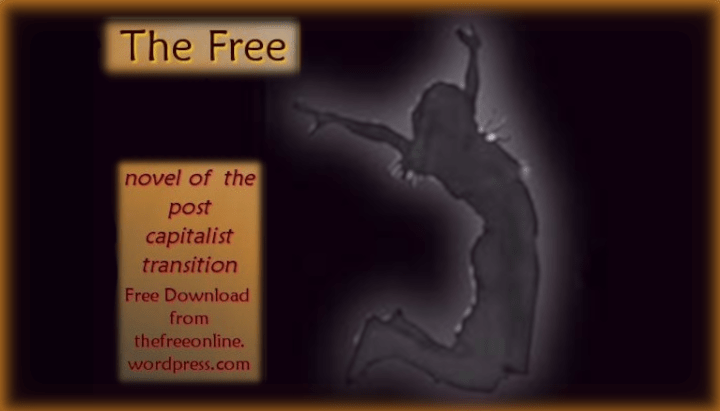
the free


“El tratamiento ficticio más detallado del movimiento de un mundo reconociblemente como el nuestro a una sociedad anarquista que he leído … imaginado con la suficiente fuerza como para permitir que los lectores crean que los eventos podrían suceder de esta manera”.

El Dr. Daniel P. Jaeckle es autor de Embodied Anarchy en The Dispossessed de Ursula K. Le Guin

This image has an empty alt attribute; its file name is image-2.png


Uno de los temas más espinosos que enfrentan los anarquistas es imaginar un proceso viable mediante el cual el mundo contemporáneo de dominación y opresión pasa a un mundo de libertad e igualdad. ¿El proceso debe ser evolutivo o revolucionario, y si es lo último, debe ser violento o no violento? Curiosamente, no hay muchas ficciones anarquistas dedicadas a describir un proceso tan transformador. La mayoría asume que la sociedad anarquista ya existe y prestan poca atención a cómo surgió, o postulan algún evento catastrófico que acaba con el antiguo orden y permite que surja uno nuevo.


Rara vez un autor esboza pacientemente un proceso de transformación que muestre un progreso continuo desde algo parecido al estado actual de la sociedad a uno anarquista. 1*


Es por esta razón que The Free de M. Gilliland merece un ensayo aquí.
Es el tratamiento de ficción más detallado del movimiento de un mundo reconociblemente como el nuestro a una sociedad anarquista que he leído. Más importante aún, se imagina con la suficiente fuerza para permitir que los lectores crean que los eventos podrían suceder de esta manera. Es decir, da respuestas plausibles a las dos preguntas más importantes con respecto a tal transformación: ¿bajo qué condiciones previas es probable que ocurra y, una vez que comience, qué factores contribuyen más a su éxito? Después de un breve resumen de la trama, trazo las respuestas que The Free da a estas preguntas.3*

Continue reading “ensayo: Imaginando una Revolución Anarquista : The Free de M. Gilliland .. por Dr. Daniel P. Jaeckle”

essay : Imagining an Anarchist Revolution in M. Gilliland’s The Free. by Dr Daniel P. Jaeckle

the most detailed fictional treatment of the movement from a world recognizably like our own to an anarchist society that I have read.. imagined strongly enough to allow readers to believe that events could happen this way.

Dr Daniel P. Jaeckle is author of Embodied Anarchy in Ursula K. Le Guin’s The Dispossessed .

One of the thorniest issues faced by anarchists is imagining a viable process by means of which the contemporary world of dominance and oppression passes into a world of freedom and equality. Is the process to be evolutionary or revolutionary, and if the latter, is it to be violent or non-violent? Interestingly, not many anarchist fictions are dedicated to describing such a transformative process. Most either assume that the anarchist society already exists and devote little attention to how it came about, or they posit some catastrophic event that ends the old order and allows a new one to emerge.

Rarely does an author patiently outline a process of transformation that shows a continuous progress from something like the current state of society to an anarchist one. 1*

It is for this reason that M. Gilliland’s The Free merits an essay here.2.*

It is the most detailed fictional treatment of the movement from a world recognizably like our own to an anarchist society that I have read. More importantly, it is imagined strongly enough to allow readers to believe that events could happen this way. That is to say, it gives plausible answers to the two most important questions regarding such a transformation: under what preconditions is it likely to occur, and once it starts what factors most contribute to its success? After a brief summary of the plot, I trace the answers that The Free gives to these questions. 3*…

Continue reading “essay : Imagining an Anarchist Revolution in M. Gilliland’s The Free. by Dr Daniel P. Jaeckle”

Major Covid Vaccine Glitch Emerges: Most Europeans, Including Hospital Staff, Refuse To Take It — The Most Revolutionary Act

BY TYLER DURDEN Zero Hedge All is not going according to plan in the biggest global rollout of what is arguably the most important vaccine in a century, and it is not just growing US mistrust in the covid injection effort that was rolled out in record time: an unexpected spike in allergic reactions to […]

Major Covid Vaccine Glitch Emerges: Most Europeans, Including Hospital Staff, Refuse To Take It — The Most Revolutionary Act