Kurdish political prisoners accused of supporting the Kurdistan Workers’ Party (PKK) and the Kurdistan Free Life Party (PJAK), in over 121 prisons in Turkey, are on Day 21 of their indefinite hunger strikes to break the isolation of the Kurdish leader Abdullah Öcalan.
The Kurdish political prisoners began their hunger strike on 27 November 2020, the anniversary of the formation of the PKK, and are organising the hunger strikes on a 5 day rotation. The prisoners presented statements and the demands of their hunger strikes to the governors of each prison in which they are carrying out the political actions.
Kurdish women from Afrin, slaves of Erdogan’s militias
Shocking details recounted by Kurdish women fleeing the city of Afrin about the brutal rape crimes committed by pro-Ankara terrorist militias since the occupation of the city in March 2018.
From left: Keira Bell, Laila Mickelthwait, Yesnia Zamudio, Kim Jayeon, Kaya Szulczewska
I think a lot of us are feeling pretty blue right now. COVID, stressful political transitions, lockdowns, having to wear a mask everywhere we go (and hardly ever leaving the house!)… I could go on.
But if there’s one bright spot in the midst of all this misery, it’s been the remarkable success of feminism worldwide — in particular, radical feminism. Don’t get me wrong: feminism still has its work cut out for it, whether in the ongoing fight for abortion rights in Argentina or the fight against spycam pornography in South Korea. But in these dismal times, some wins for the global women’s movement might cheer you up.
Radical feminism continues to grow in South Korea
Few places around the world have seen a radical feminist resurgence quite like South Korea. Earlier this year, Jen Izaakson and Tae Kyung Kim reported on the intense protests against molka, a particularly invasive form of spycam pornography. Although South Korea has made this form of voyeurism illegal, enforcement of the law has been virtually nonexistent. By 2016, when a woman was murdered by an incel in a mixed sex bathroom, South Korean women had had enough. Since 2018, over 360,000 women have participated in massive protests against molka, femicide, and other forms of male violence.
The writer Gulgeş Deryaspî, arrested in an operation in Bitlis a year and a half ago, is sentenced to 6 years and 3 months in prison.
Gulgeş Deryaspî, a Kurdish writer and PEN member, was arrested in the political genocide operations that took place in Tatvan and Güroymak districts in Birlis in June 2019.
Deryaspî was detained for five days and was then sent to Bitlis Type E closed prison on June 30, 2019 on terrorism charges for her participation in demonstrations and rallies. She was released 9 months later.
The latest hearing in the trial against the Kurdish writer was held at the 2nd Bitlis Criminal Court on Thursday.
While the writer and her lawyer Burhan Aksoy rejected her accusations and asked for her acquittal, the court sentenced her to 6 years and 3 months in prison, accusing her of “belonging to an illegal organization” with no evidence.
Deryaspî is an international PEN member, graduated from the Department of Kurdish Language and Literature at Alparslan University in Muş.
PEN International Writers in Prison Committee is a founding member of the IFEX – International Freedom of Expression Exchange Network , a global network of 90 non-governmental organisations that monitors censorship worldwide and defends journalists, writers, internet users and others who are persecuted for exercising their right to freedom of expression
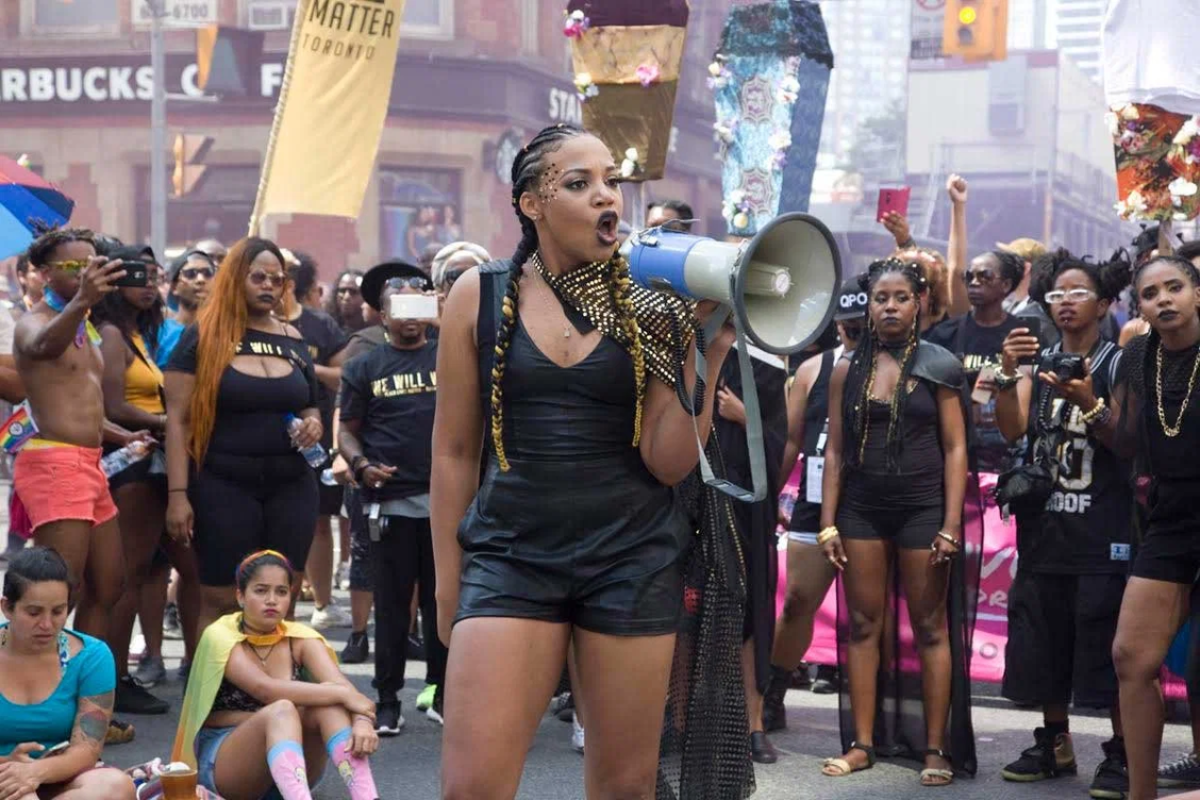
A look at how the Black Lives Matter movement, through ideas and action, gives rebels tools in which to engage in social struggle.
by Paul Messersmith-Glavin from Its Going Downshared with thanks.. illustrations added
photo via: @MaranieRae
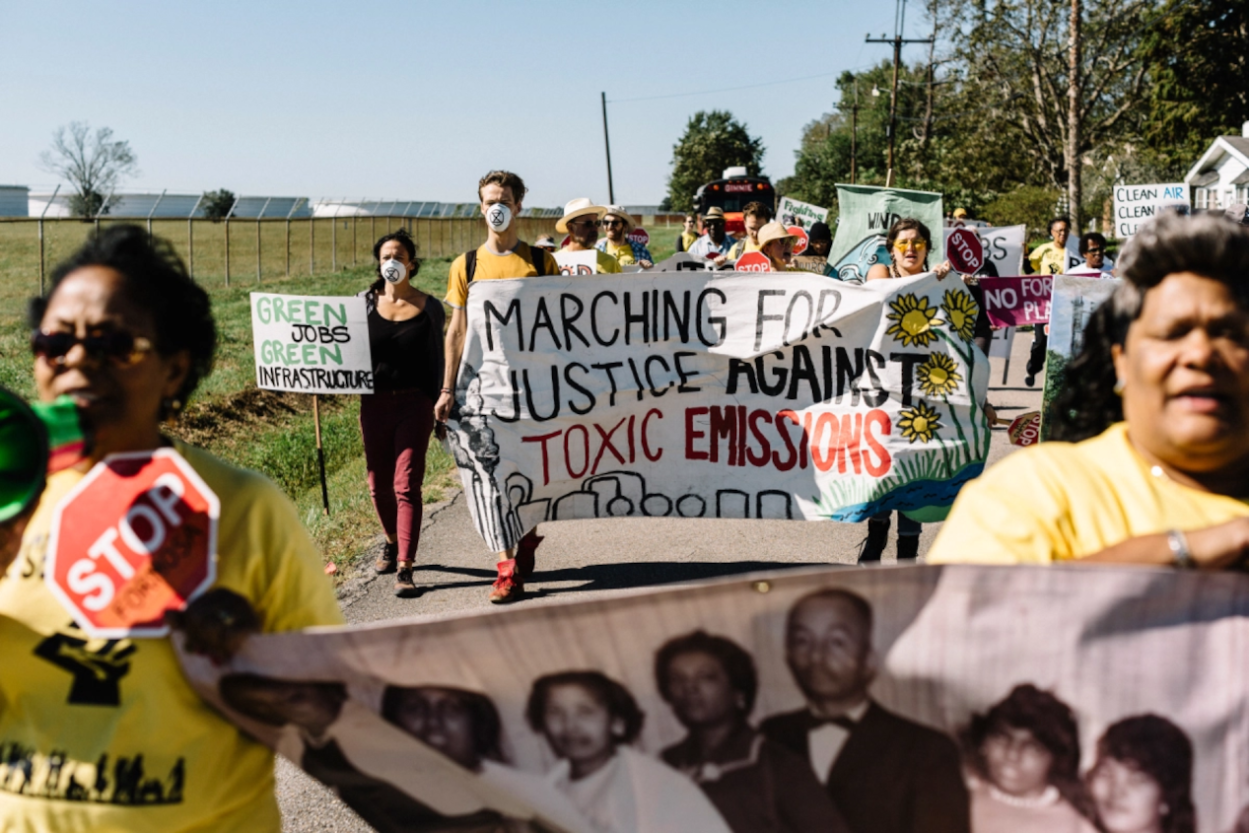
Using an intersectional, anarchist analysis we can see how racism, patriarchy, and class society are intertwined producing a society that actively is changing the climate. We can begin to untangle these relationships, digging into the history of white supremacy to see how it reinforces capitalist social relations producing the ecological crisis we confront. The Black Lives Matter movement offers us the chance, both through its critique and methods, to move closer to a society that no longer changes the climate.
If we view various forms of domination as forming a ball of twine, we can see how pulling on one string can start to unravel the whole thing. Approaching racism, patriarchy, and class exploitation, for example, as interlocking and mutually reinforcing, organizing against any one of these might begin to reveal connections and relationships to the whole. Each is a potential entryway to understanding the complexity and interconnection of contemporary hierarchies. Better comprehending these relationships offers the possibility of beginning to detangle them. In this way we can relate the movement for Black lives, for instance, to the movement for climate justice.
As with police violence, pollution disproportionately impacts Black and poor communities. For instance, a recent study found that Black people are exposed to twice the particulate matter as white people, and that Hispanics had more exposure than non-Hispanic whites. The study also found that people in poverty had more exposure than people not in poverty. That the people of Flint, Michigan, almost half of whom live in poverty, were drinking lead contaminated water is only one of the more well-known recent examples.
It was back in March 2020 that we first reported signs of resistance against the Covid-themed totalitarian coup.
We hoped back then that this would quickly develop into a largescale uprising that would quickly see off this unprecedented global power grab.
Things didn’t quite work out that way, though, and opposition has been much slower to build than we would have imagined.
But now, as 2020 draws to an end, things in England and elsewhere are finally hotting up.
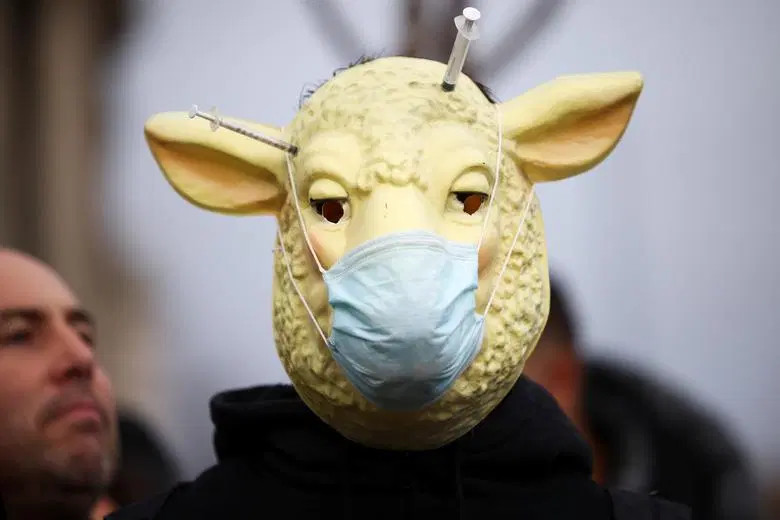
People who were pro-lockdown are seeing through the illusion, and GPs and hospital staff are voicing their huge concerns about the mRNA vaccine and so-called hospital statistics.
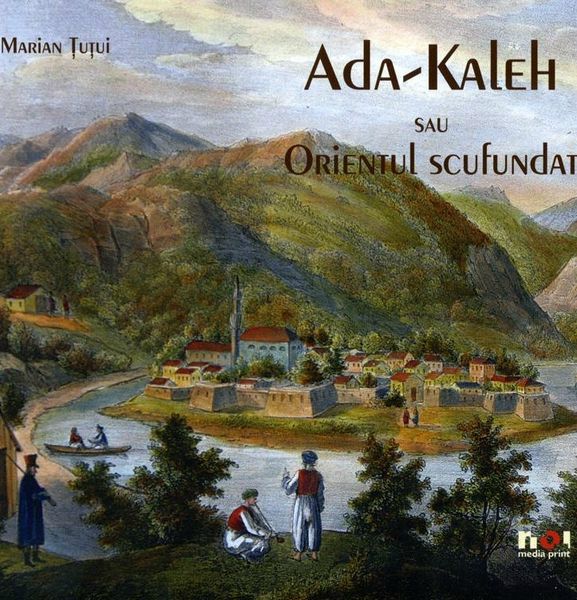
A river island that was literally forgotten as rapacious nation States gobbled up the defeated Ottoman Empire
I chose to translate this text as it reads like a story. There I saw the beautiful travel diary of a Macedonian-Bulgarian anarchist from the 19th century. The travel diary does not claim objectivity. He can make us travel through his words, make us think and make us conceive a little elsewhere. This takes us out of authoritarian structures, to a freer world observed by the author of it through his contact with the environment.
Surely such a story could not serve as basic material for historians, but its strength lies elsewhere. Summons our imagination to escape the authoritarian world and its oppressive relationships. It broadens our vision of the world and helps us to see better what is being built in our struggles. I believe that the imagination is a powerful weapon when it is not in the hands of the ruling classes.
Petar Georgiev Mandzhukov (1878–1966) was a Macedonian Bulgarian revolutionary and anarchist, member of the Internal Macedonian-Adrianople Revolutionary Organization and of the Supreme Macedonian-Adrianople Committee. The following is an excerpt from Mandzhukov’s memoir ‘Harbingers of Storm’ (Sofia: FAB, 2013):