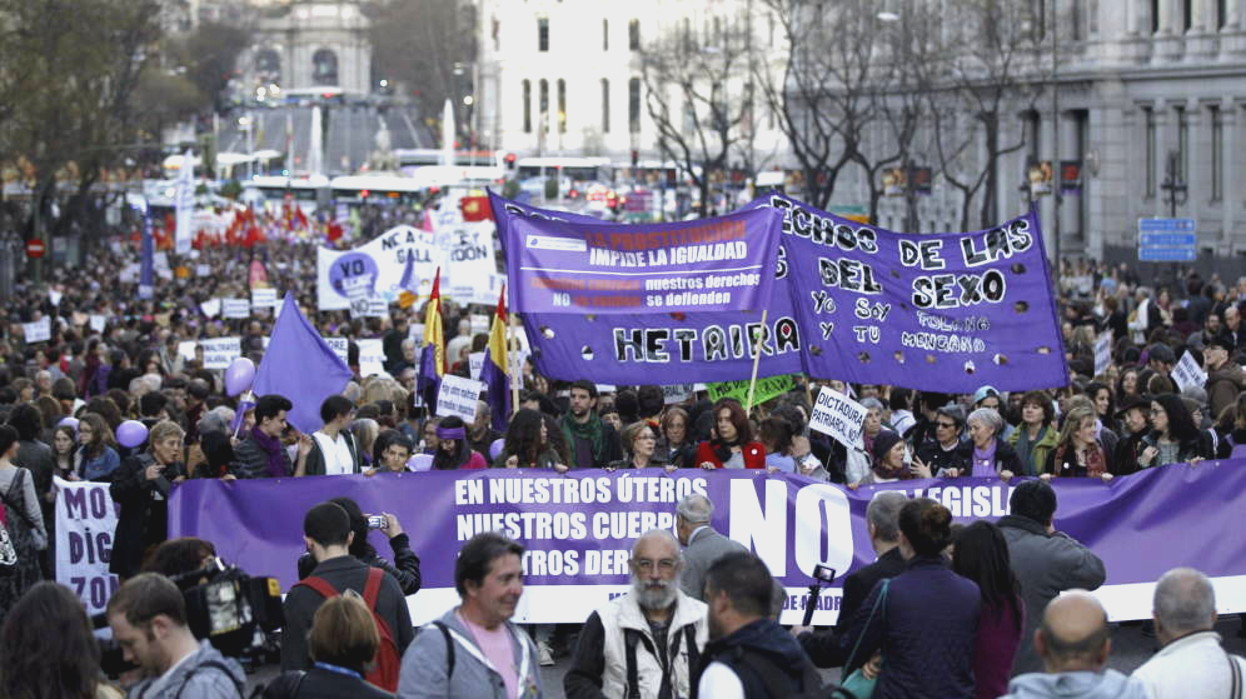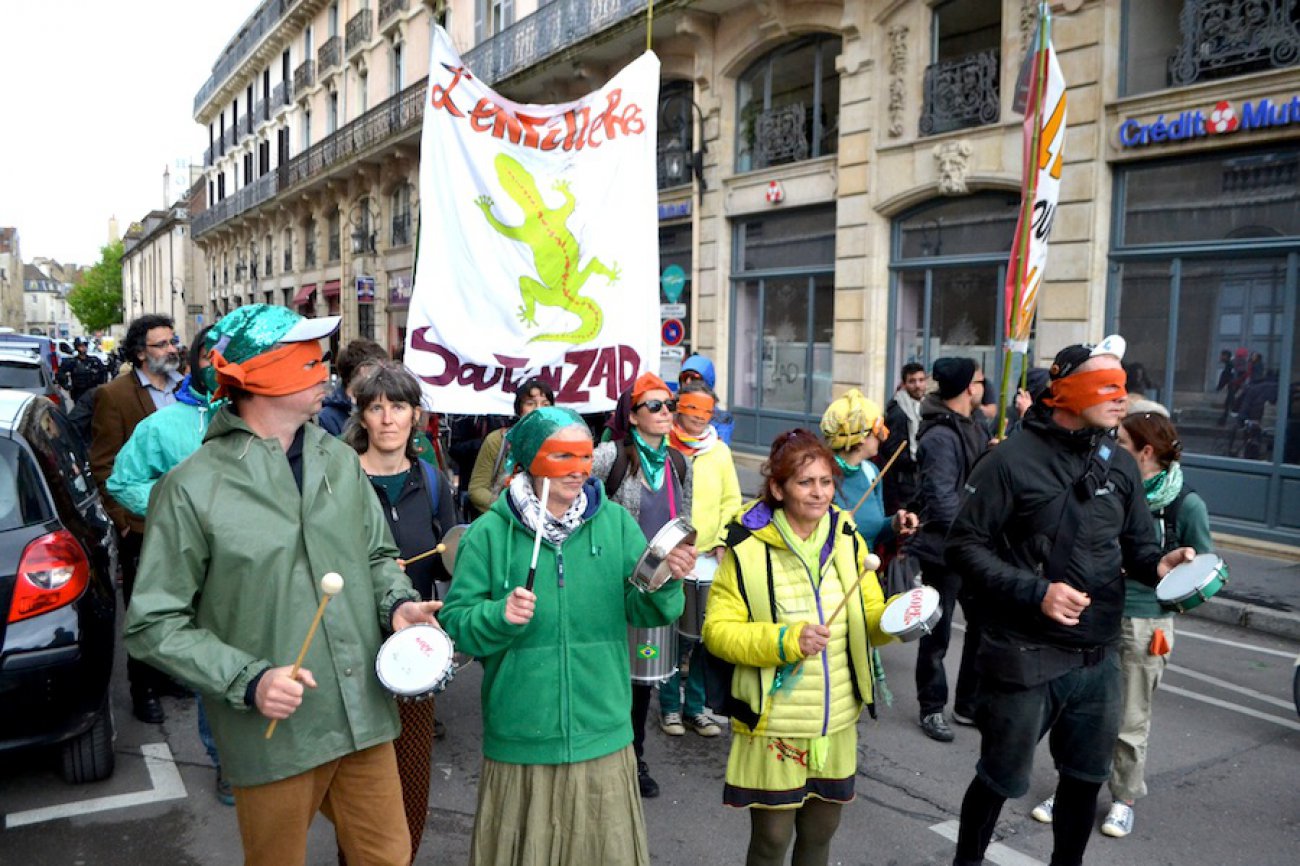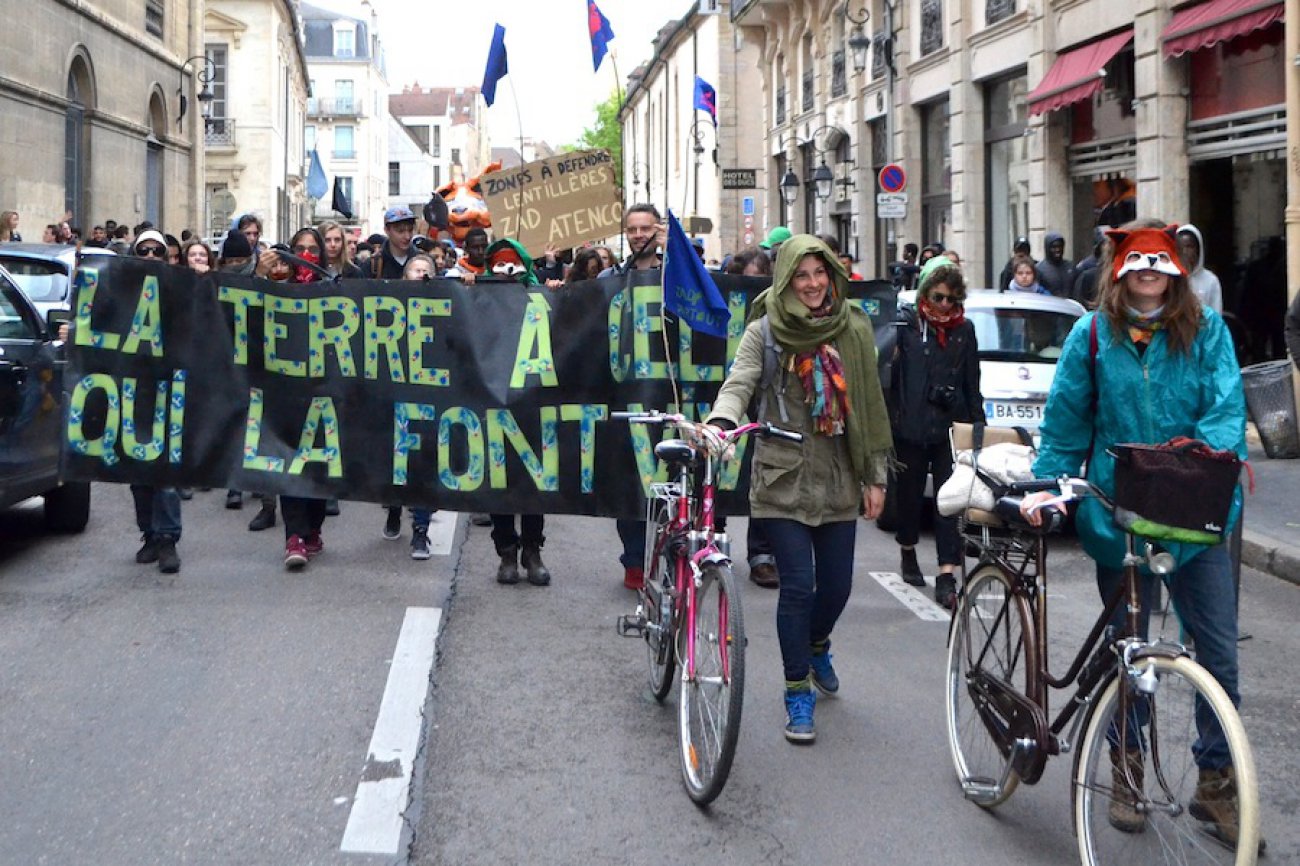
When the State is Unjust, we may Use Violence as one Tactic

When the state is unjust, citizens may use justifiable violence
by Jason Brennan   from Aeon with thanks. (Inserts and illustrations added)

If you see police choking someone to death – such as Eric Garner, the 43-year-old black horticulturalist wrestled down on the streets of New York City in 2014 – you might choose to pepper-spray them and flee.

You might even save an innocent life. But what ethical considerations justify such dangerous heroics? (After all, the cops might arrest or kill you.) More important: do we have the right to defend ourselves and others from government injustice when government agents are following an unjust law?

I think the answer is yes.

Image result for the failure of non violence Peter Gelderloos pdf ...

But that view needs defending. Under what circumstances might active self-defence, including possible violence, be justified, as opposed to the passive resistance of civil disobedience that Americans generally applaud?

Civil disobedience is a public act that aims to create social or legal change. Think of Henry David Thoreau’s arrest in 1846 for refusing to pay taxes to fund the colonial exploits of the United States, or Martin Luther King Jr courting the ire of the authorities in 1963 to shame white America into respecting black civil rights. In such cases, disobedient citizens visibly break the law and accept punishment, so as to draw attention to a cause.


..’The police are not your friends..–..More police come and push a lot of people back. As there is still nowhere to go people trip over and collapse and soon have police standing on them as they try to grab their targets. I am grabbed by the arms by two officers whist a third punches me in the face three times. I think he is trying to knock me unconscious so I’ll be easier to drag out of the crowd. There is a lot of screaming. A woman to my left shouts ‘someone is going to die…’/


But justifiable resistance need not have a civic character. It need not aim at changing the law, reforming dysfunctional institutions or replacing bad leaders. Sometimes, it is simply about stopping an immediate injustice­. If you stop a mugging, you are trying to stop that mugging in that moment, not trying to end muggings everywhere. Indeed, had you pepper-sprayed the police officer Daniel Pantaleo while he choked Eric Garner, you’d have been trying to save Garner, not reform US policing.Related image

Generally, we agree that it’s wrong to lie, cheat, steal, deceive, manipulate, destroy property or attack people. But few of us think that the prohibitions against such actions are absolute. Commonsense morality holds that such actions are permissible in self-defence or in defence of others (even if the law doesn’t always agree). You may lie to the murderer at the door. You may smash the windows of the would-be kidnapper’s car. You may kill the would-be rapist.

Here’s a philosophical exercise. Imagine a situation in which a civilian commits an injustice, the kind against which you believe it is permissible to use deception, subterfuge or violence to defend yourself or others.


The Failure of Related imageNonviolence  .. Peter Gelderloos ..’A diversity of methods is necessary in our struggle because none of us have the answer regarding the one true strategy for revolution; because there is no one size that fits all and each of us must develop a unique form of struggle for our respective situations; and because in fact our movements are harder to repress when we replace a party-line unity with a broad solidarity, when we attack as a swarm and not as an opposing army. Whether that army is pacifist or combative, the discipline required to coerce or intimidate everyone into following one set of pre-approved tactics, and to exclude those who fall out of line, is authoritarian. In such a contest, whichever army won— the army of the government or the army of the movement—the State would triumph..’.

For instance, imagine your friend makes an improper stop at a red light, and his dad, in anger, yanks him out of the car, beats the hell out of him, and continues to strike the back of his skull even after your friend lies subdued and prostrate. May you use violence, if it’s necessary to stop the father?

Now imagine the same scene, except this time the attacker is a police officer in Ohio, and the victim is Richard Hubbard III, who in 2017 experienced just such an attack as described. Does that change things? Must you let the police officer possibly kill Hubbard rather than intervene?Related image

Most people answer yes, believing that we are forbidden from stopping government agents who violate our rights. I find this puzzling. On this view, my neighbours can eliminate our right of self-defence and our rights to defend others by granting someone an office or passing a bad law.

On this view, our rights to life, liberty, due process and security of person can disappear by political fiat – or even when a cop has a bad day. In When All Else Fails: The Ethics of Resistance to State Injustice (2019), I argue instead that we may act defensively against government agents under the same conditions in which we may act defensively against civilians.

In my view, civilian and government agents are on a par, and we have identical rights of self-defence (and defence of others) against both.

<p><em>Photo by Samuel Corum/Anadolu Agency/Getty Images</em></p>

We should presume, by default, that government agents have no special immunity against self-defence, unless we can discover good reason to think otherwise. But it turns out that the leading arguments for special immunity are weak.

Some people say we may not defend ourselves against government injustice because governments and their agents have ‘authority’. (By definition, a government has authority over you if, and only if, it can oblige you to obey by fiat: you have to do what it says because it says so.) But the authority argument doesn’t work.

It’s one thing to say that you have a duty to pay your taxes, show up for jury duty, or follow the speed limit. It is quite another to show that you are specifically bound to allow a government and its agents to use excessive violence and ignore your rights to due process. A central idea in liberalism is that whatever authority governments have is limited.Image result for the failure of non violence Peter Gelderloos pdf ...

Others say that we should resist government injustice, but only through peaceful methods. Indeed, we should, but that doesn’t differentiate between self-defence against civilians or government. The common-law doctrine of self-defence is always governed by a necessity proviso: you may lie or use violence only if necessary, that is, only if peaceful actions are not as effective. But peaceful methods often fail to stop wrongdoing. Eric Garner peacefully complained: ‘I can’t breathe,’ until he drew his last breath.

Another argument is that we shouldn’t act as vigilantes. But invoking this point here misunderstands the antivigilante principle, which says that when there exists a workable public system of justice, you should defer to public agents trying, in good faith, to administer justice. So if cops attempt to stop a mugging, you shouldn’t insert yourself.

But if they ignore or can’t stop a mugging, you may intervene. If the police themselves are the muggers – as in unjust civil forfeiture – the antivigilante principle does not forbid you from defending yourself. It insists you defer to more competent government agents when they administer justice, not that you must let them commit injustice.Image result for the failure of non violence Peter Gelderloos pdf ...

Some people find my thesis too dangerous. They claim that it’s hard to know exactly when self-defence is justified; that people make mistakes, resisting when they should not. Perhaps. But that’s true of self-defence against civilians, too. No one says we lack a right of self-defence against each other because applying the principle is hard. Rather, some moral principles are hard to apply.

However, this objection gets the problem exactly backwards. In real life, people are too deferential and conformist in the face of government authority. Image result for police kill black man

They are all-too-willing to electrocute experimental subjects, gas Jews or bomb civilians when ordered to, and reluctant to stand up to political injustice.

If anything, the dangerous thesis – the thesis that most people will mistakenly misapply – is that we should defer to government agents when they seem to act unjustly. Remember, self-defence against the state is about stopping an immediate injustice, not fixing broken rules.Image result for the failure of non violence Peter Gelderloos pdf ...

Of course, strategic nonviolence is usually the most effective way to induce lasting social change. But we should not assume that strategic nonviolence of the sort that King practised always works alone.

Two recent books – Charles Cobb Jr’s This Nonviolent Stuff’ll Get You Killed (2014) and Akinyele Omowale Umoja’s We Will Shoot Back (2013) – show that the later ‘nonviolent’ phase of US civil rights activism succeeded (in so far as it has) only because, in earlier phases, black people armed themselves and shot back in self-defence.

Once murderous mobs and white police learned that black people would fight back, they turned to less violent forms of oppression, and black people in turn began using nonviolent tactics. Defensive subterfuge, deceit and violence are rarely first resorts, but that doesn’t mean they are never justified.

Image result for the failure of non violence Peter Gelderloos pdf ...

Jason Brennan is professor of strategy, economics, ethics, and public policy at Georgetown University. He is the author, together with Peter Jaworski, of Markets Without Limits (2015), and his latest book is When All Else Fails: The Ethics of Resistance to State Injustice (2018).

authoritarianism, Conservative Moral Hierarchy, identity politics, Philosophy, Violence


VIDEO de la Mani d’okupació a Barcelona,

Quatre detinguts en la manifestació ‘okupa’ al centre de Barcelona
La protesta ha estat convocada contra la gentrificació i l’especulació

Manifestació ‘okupa’ al centre de Barcelona.

Els Mossos d’Esquadra han detingut quatre persones aquest dissabte durant la manifestació okupa que s’ha produït al centre de Barcelona.

Unes 25 furgonetes dels Mossos d’Esquadra han envoltat una concentració contra la gentrificació i l’especulació convocada pel moviment okupa a la plaça Universitat de Barcelona.

A la manifestació, que portava per lema “Ara més que mai okupa tu també”, ha acudit unes 400 persones i 500 policies,. amb càrregues policials pels carrers del Raval.

George H.W. Bush’s Complicity in the 1991 “Highway of Death” Massacre.

see also> Hated Politician Beloved By All/

 —“As is custom when someone dies, we must put aside our opinion of what a racist sack of child-murdering garbage he may or may not have been, and focus instead on how funny it was when he said he didn’t like broccoli” read one eulogy to the beloved prick…..

…”Bush turned hospitals into death rows for infants. He widely used depleted uranium, causing cancer rates to skyrocket. He made Iraq a mass graveyard. And the killing hasn’t stopped since. Bush was a mass murderer. That is his legacy. That is what he was. Any discussion of the man’s life which does not put this single defining legacy front and center by a very wide margin is being dishonest about the thing that murder is, and is doing so out of fealty to a corrupt power structure which enables consequence-free murder on a mass scale as long as it happens in accordance with the will of that power structure….”

Jaime C.'s avatarCounter Information

A “statesman” and “American hero”? What a lie!

Global Research, December 04, 2018

highway_of_death_iraq_4-400x257A “statesman” and “American hero”? What a lie!

When George H.W. Bush was president he ordered the massacre of Iraqi soldiers after the ceasefire in 1991, and after he had promised them safe passage out of Kuwait. This article, which went viral after the war, exposed Bush as a mass murderer and war criminal, directly involved in the “Highway of Death.” He is a “hero” only to Big Oil and the Wall Street financial empire. This account was assembled by the author and presented by her at a tribunal examining U.S. war crimes. It is still cited around the world on anniversaries of this war.

I want to give testimony on what are called the “highways of death.” These are the two Kuwaiti roadways, littered with remains of 2,000 mangled Iraqi military vehicles, and…

View original post 1,807 more words

#France: “Topple the System or it will Crush Us!”

 
#France on the brink: “Either we topple the system or it will crush us!” Translated statement from French radicals

      Lundi matin,

Blackstone Vultures: Mega-Buitres se Comen nuestras Casas

El mega propietario de Wall Street, Blackstone, gira el tornillo del gobierno español y el mercado inmobiliario
In English Below.   traducción del articulo de ,
El mega terrateniente de Wall Street, Blackstone, una vez más está haciendo sentir su presencia en España, que representa aproximadamente una quinta parte de su imperio de propiedad global.
Durante la sesión de preguntas y respuestas de una reciente reunión de desayuno organizada por la Cámara de Comercio de Estados Unidos, la asesora principal de la filial española del grupo, Claudio Boada, se enfrentó a la Ministra de Economía y Negocios de España, Nadia Calviño, sobre los planes del gobierno para reformar las leyes de alquiler en España, un intento de frenar el ritmo de aumento de alquileres.
De particular interés para el coloso de capital privado es el objetivo declarado del gobierno de extender la duración mínima de los contratos de alquiler de tres a cinco años para particulares y de tres a siete años para empresas, con la esperanza de atenuar la tasa a la que aumentan los alquileres. en el país.
Pero también obstaculizará la capacidad de los propietarios de capital privado como Blackstone para desalojar a los inquilinos existentes de las propiedades recién adquiridas lo más rápido posible para aumentar los precios de alquiler de los nuevos.
“Creemos que las medidas que se están discutiendo podrían terminar incrementando el precio de los alquileres y reduciendo la inversión”, dijo Boada.
Traducción: si el gobierno continúa con su plan equivocado para hacer la vida un poco más fácil para las legiones de inquilinos en dificultades, los propietarios de capital privado como Blackstone podrían verse tentados a reducir su inversión en sacar dinero de los españoles.


Crisis de la vivienda en 2018: la gente de Dublín dice “¡Recupera la ciudad” y ocupa dos casas como parte activa de esa idea! Sucediendo ahora mismo!@D_C_H_A  Southwark Notes


Dado que las firmas de capital privado son una de las mayores fuentes de demanda de propriedades en España, así como los principales compradores de activos inmobiliarios deteriorados de los bancos españoles y el banco malo de España, Sareb, es una amenaza bastante grande, y una del gobierno sin duda está tomando muy en serio.

Blackstone tiene más de 100,000 activos inmobiliarios en España que son controlados a través de docenas de compañías. Esos activos incluyen una enorme cartera de activos inmobiliarios deteriorados, incluidas las hipotecas en mora y los activos de propiedad inmobiliaria (REO).

Image result for la PAH contra blackstone buitres

La compañía no es solo el mayor administrador de propriedades privados en España; También es el mayor propietario de hoteles, luego de adquirir el fideicomiso de inversión en bienes inmobilarios(REIT) más grande del país, Hispania, por € 1,9 mil millones, a principios de este año.

Tras una serie de operaciones más pequeñas, la adquisición de Hispania consolidó la posición de Blackstone como el líder en uno de los mercados turísticos más grandes del mundo, con un stock total de 17,000 habitaciones, muy por delante de Meliá (casi 11,000), H10 (más de 10,000) y Hoteles Globales (algo más de 9.000).


Madrid del “cambio”: Una mujer se suicida arrojándose por el balcón cuando iba a ser desahuciada     Insurgente :: ¿Por qué se les llena la boca con la palabra cambio a los farsantes de Ahora Madrid y Podemos cuando en esencia no ha cambiado nada?Image result for la PAH contra blackstone buitres


En el último año y medio, Blackstone ha desempeñado un papel destacado en algunas de las operaciones inmobiliarias más grandes de España. En 2017, pagó 5,1 mil millones de euros por los préstamos en mora que Banco Santander heredó de su adquisición de Banco Popular.

En los últimos meses, se han desembolsado otros 1.700 millones de euros para comprar las participaciones de los bancos españoles en TESTA, otro REIT gigante con una cartera de más de 10.000 propiedades de alquiler.

Blackstone también es propietaria de 1,800 unidades de vivienda social, que adquirió del Ayuntamiento de Madrid en un trato poco fiable negociado por el hijo del ex primer ministro español José María Aznar y la ex alcaldesa de Madrid Ana Botella. 

Blackstone pagó 202 millones de euros por los apartamentos en 2013; ahora se estima que tienen un valor de € 660 millones, ¡un 227% de rendimiento en solo cinco años!

Desde la compra de las propiedades, Blackstone ha incrementado las rentas de los apartamentos en un 49%. Los que no pueden pagar han sido desalojados.

La transformación de los principales grupos de capital privado como Blackstone en propietarios globales con más de tres billones de dólares en activos inmobiliarios, casi el doble de lo que tenían hace cinco años, se ha producido por varias razones.


  Crisis de la vivienda de 1946: miles de personas marchan en Londres y ocupan bloques de lujo,  forzando el Gobierno a construir casas sociales baratos. Crisis de la vivienda 2018 – ¡La misma lucha sigue siendo bueno!  196 Retweets      239 Likes


Primero, después de la crisis financiera, fueron uno de los pocos grandes participantes en el mercado con suficientes fondos disponibles para invertir en casas embargadas y planes de propiedad fallidos, de los cuales había un exceso masivo en todo el mundo. 

Los bancos centrales, los reguladores financieros y los gobiernos prestaron una gran ayuda al reducir el costo de los préstamos, especialmente para los fondos bien conectados de Wall Street, a profundidades hasta entonces inimaginables, así como al aprobar regulaciones que facilitaron la emisión de fondos respaldados por  títulos basado en alquileres

Dado que las alquileres medias en España aumentaron en un 25% desde 2014, y en más del 50% en Barcelona y las Islas Baleares, esas inversiones han dado buenos resultados.

Como advirtió en mayo la Fundación Española de Cajas de Ahorros (FUNCAS), los fondos de capital privado con grandes inversiones han empezado a preocuparse de que muchas familias españolas, que se ganan la vida con trabajos mal pagados, sin seguridad, sean incapaces de pagar las altas rentas de hoy.

Muchos de los que no pueden pagar ya han sido desalojados de los apartamentos que son propiedad del fondo.

Related image

El gobierno pretende (o al menos antes tenía la intención de) ayudar a estas personas al aumentar la duración mínima de los contratos de alquiler. Pero hacer eso chocaría de frente con los intereses del mayor propietario de Wall Street.

Como tal, las posibilidades que el gobierno  de España, que ya ha descartado una serie de medidas populares, en realidad cumple su promesa, son infinitamente más pequeñas hoy que antes de la reunión del desayuno de la semana pasada.


original en inglés  by  

Wall Street Mega-Landlord Blackstone Turns Screw on Spanish Government & Property Market

A lot of money is at stake.

By Don Quijones, Spain, UK, & Mexico, editor at WOLF STREET.

Wall Street mega-landlord Blackstone is once again making its presence felt in Spain, which represents about one-fifth of its global property empire. During the Q&A session of a recent breakfast meeting organized by the American Chamber of Commerce, the senior advisor of the group’s Spanish subsidiary, Claudio Boada, confronted Spain’s Minister of Economy and Business, Nadia Calviño, on the government’s plans to reform Spain’s renting laws in an attempt to slow down the pace of rising rents.

22/03/2016. Tyrellstown Protest - Davey House. Pic

Of particular concern to the private equity colossus is the government’s stated goal of extending the minimum duration of rental contracts from three to five years for private individuals and from three to seven years for businesses, in the hope of tempering the rate at which rents are rising in the country.

But it will also hamper the ability of private-equity landlords like Blackstone to turf out the existing tenants of newly acquired properties as quickly as possible in order to jack up rental prices for new ones.

“We think that the measures being discussed could end up increasing the price of rents price and reducing investment,” said Boada. Translation: if the government proceeds with its misguided plan to make life a little easier for the legions of struggling tenants, private equity landlords like Blackstone might be tempted to reduce its investment in Spanish real estate.

Given that private equity firms are one of the biggest sources of demand for real estate in Spain as well as the main buyers of impaired real estate assets from Spanish banks and Spain’s bad bank, Sareb, it’s a pretty big threat — and one the government will no doubt take very seriously.

Blackstone alone has over 100,000 real estate assets in Spain that are controlled via dozens of companies. Those assets include a huge portfolio of impaired real estate assets, including defaulted mortgages and real estate-owned assets (REOs).

The company is not only the biggest private real-estate manager in Spain; it is also the biggest hotel owner, after acquiring the country’s largest real estate investment trust (REIT), Hispania, for €1.9 billion, earlier this year.

Image result for Blackstone: evil capitalist eviction mega profits

Following a string of smaller operations, the acquisition of Hispania cemented Blackstone’s position as top dog in one of the world’s biggest tourist markets, with a total stock of 17,000 beds, far ahead of Meliá (almost 11,000), H10 (more than 10,000) and Hoteles Globales (just over 9,000).

In the past year and a half, Blackstone has played a leading role in some of the largest real estate operations in Spain. In 2017 it paid €5.1 billion for the defaulted loans Banco Santander inherited from its shotgun-acquisition of Banco Popular.

In the last few months it has splashed out a further €1.7 billion to purchase Spanish banks’ holdings in TESTA, another giant REIT with a portfolio of more than 10,000 rental properties.

Blackstone also owns 1,800 social housing units, which it acquired from Madrid City Hall in a dodgy deal brokered by the son of former Spanish prime minister José María Aznar and former Madrid mayor Ana Botella.Image result for Blackstone: capitalists misery tenants evictionBlackstone paid €202 million for the apartments in 2013; they are now estimated to be worth €660 million — a 227% return in just five year! Since its purchase of the properties, Blackstone has hiked rents on the flats by 49%. Those who can’t pay have been evicted.The transformation of top private equity groups like Blackstone into global landlords with over three trillion dollars of real estate assets — almost double what they had five years ago — has occurred for a number of reasons.First, after the financial crisis they were one of the few large market participants with enough funds on hand to invest in foreclosed homes and failed property schemes, of which there was a massive glut all over the world.


lightsHousing Crisis 1946 – Thousands march in London in support of squatted empty blocks in Bloomsbury, forcing Governmant to build cheap social housing. Housing Crisis 2018 – The same struggle is still good!    196 Retweets      239 Likes


Central banks, financial regulators, and governments lent a big helping hand by driving the cost of borrowing, especially for well-connected Wall Street funds, to heretofore unimaginable depths, as well as by passing regulations that made it easier for the funds to issue rent-backed securities.

With average rents in Spain soaring by 25% since 2014, and by over 50% in Barcelona and the Balearic Islands, those investments have paid off handsomely.

As the Spanish Savings Banks Foundation (FUNCAS) warned in May, heavily invested private equity funds have begun to fret that many Spanish families, scratching a living on poorly paid, zero-security jobs, are incapable of paying today’s high rents.

Many of those that can’t pay have already been evicted from the fund-owned apartments.

It is these people the government intends (or at least intended) to help by increasing the minimum duration of rental contracts. But doing that would clash head-on with the interests of Wall Street’s largest landlord.

As such, the chances of Spain’s government, which has already backslid on a number of popular measures, actually carrying through on its pledge are infinitely smaller today than they were before last week’s breakfast meeting.

by  •  • 37 Comments at original here

Diez años después de la Revuelta inspiradora en Grecia


“[…] Cuando llegaron a Patission y se encontraron en las afueras de la histórica puerta de la Politécnica, la que había sido atacada por los tanques en 1973, cortaron la avenida sin preguntarnos qué hacer y, a continuación, corearon el típico eslogan “Batsi, gourounya, dolofoni!” – “¡maderos, cerdos, asesinos!”. Al presenciar esta escena, me sentí extasiado. Comprendí en este momento que el avión de la insurrección había despegado. Era más grande que nosotros. No digo que nos hubiera superado, aunque muchos de sus participantes sí lo creen así. Quizás les había superado a ellos porque pensaban que jamás iba a pasar algo semejante. Lo que la insurrección consiguió es que se superaran las ideas pesimistas que pensaban que algo así jamás podía pasar” – Maderos, cerdos, asesinos. Crónica del Diciembre Griego (Editorial Klinamen, 2011)

Este mes se cumple el décimo aniversario de la Revuelta en Grecia de 2008, también conocida como el Diciembre Griego, un masivo conflicto social iniciado abiertamente el sábado 6 de diciembre de 2008 a raíz de la muerte, por el disparo de un policía, de un adolescente de 15 años llamado Alexandros (Alexis) Grigorópulos en las calles de Exárchia, un céntrico y degradado barrio de Atenas con una fortísima presencia de anarquistas. Continue reading “Diez años después de la Revuelta inspiradora en Grecia”

Doctor arrested for allegedly insulting President Erdoğan

By  TM  ..  A medical doctor in Turkey was arrested by a court on Wednesday and sent to pretrial detention on charges of insulting the country’s president, Recep Tayyip Erdoğan.

Family practitioner Dr. Çiçek Fidanboy appeared before a judge in Hatay province and admitted that the social media posts she was accused of writing were in fact hers.

Dr. Fidanboy will stand trial at a later date.

According to the Turkish Penal Code (TCK) insulting the president carries a sentence of between one and four years.

In 2016, 3,658 people were charged with insulting the president. Continue reading “Doctor arrested for allegedly insulting President Erdoğan”