Here are the links to the latest books uploaded to The Anarchist Library in the last month or so. All are free to read online and download in various formats
Title: Beyond the ImpossibleDate: 2012Notes: Published in L’Impossible #2, April 2012. Translated from the French by NOT BORED! on 16 May 2012.Source: Retrieved on 17th January 2019 from http://www.notbored.org/beyond-the-impossible.htmlRaoul Vaneigem –
”Concerning the “Yellow Jackets”: Everything is possible, even self – managing assemblies in the middle of street intersections, villages and neighborhoods”Vaneigem
Title: The Prisons Must Be DestroyedDate: 2004Notes: Written by Raoul Vaneigem in 2004. Translated from the French by Jordan M.L., 2005. Footnotes by NOT BORED!, except where noted.Source: Retrieved on 17th January 2019 from http://www.notbored.org/prisons.html
Title: Six Questions for Raoul VaneigemSubtitle: “A Radical Change Is At Our Door”Date: 2007Notes: Questions posed in French by Javier Urdanibia. First published in Castilian in La Felguera #12, 2007.
Printed in French as part of Vaneigem’s book L’Etat n’est plus rien, soyons tout [Editions Rue des Cascades, 2010]. Translated from the French by NOT BORED! 19 May 2012.Source: Retrieved on 17th January 2019 from http://www.notbored.org/six-questions.html
Title: The Politics of Le Guin’s OpusDate: November, 1975Notes: Retrieved January 13, 2019 from Web version at https://www.depauw.edu/sfs/backissues/7/porter7art.htmSource: Copied from online version, Science Fiction Studies #7 – Volume 2, Part 3, November 1975
Title: Indigenous Anarchy & The Need for a Rejection of the Colonizer’s “Civilization”Date: 2018-11-12Source: Retrieved on 2019-01-12 from https://raddle.me/wiki/Indigenous_AnarchyJan 13, 19
Title: Guy Debord – RevolutionarySubtitle: Reviewed by John ZerzanDate: From Anarchy: A Journal of Desire Armed #44, Fall/Winter 1997-’98, Vol. 15, No. 2Source: Retrieved on January 11, 2019 from https://archive.org/details/AnarchyAJournalOfDesireArmedNoTwoJan 11, 19
Title: The Principle of FederationSubtitle: and the Need to Reconstitute the Party of RevolutionDate: 1863Notes: Translated by Richard Vernon. Only the first part and the first chapter of the second part are translated, as these were what Vernon considered “the theoretical core of the work”. Introduction and preface by Richard Vernon. Conclusion translated by Ian Harvey. Footnotes are both Vernon and Proudhon’s.Source: Retrieved on 09 December, 2018 from http://www.ditext.com/proudhon/federation/federation.html#11, introduction retrieved from http://www.ditext.com/vernon/proudhon.html and conclusion retrieved from Iain McKay’s Property Is Theft! Jan 9, 19
Title: The StraitSubtitle: Book of Obenabi. His SongsDate: 1988Notes: Black and Red, Detroit.Source: Scanned and OCR’d from the original book by a librarianJan 6, 19
Title: The Ecology of FreedomSubtitle: The Emergence and Dissolution of HierarchyDate: 1982Notes: Converted September 2018; Published by Cheshire BookJan 5, 19
Title: My anarchismDate: 2018Notes: This text was written following the publication of « Contre l’anarchisme, un apport au débat sur les identités. [1]» It isn’t a conversation with the peddlers of ideas who let themselves spit sneakily on a diverse stream they are incapable of understanding. It is though a ”response to a response”[2] that was written answering this text, and which seemed to me as sorry as the first one was. Translation from french by Bus Stop Press.Source: original translation from frenchJan 5, 19
Title: Trump’s Betrayal of YPG – Paris Commune Falls Again?Date: December, 2018Jan 5, 19
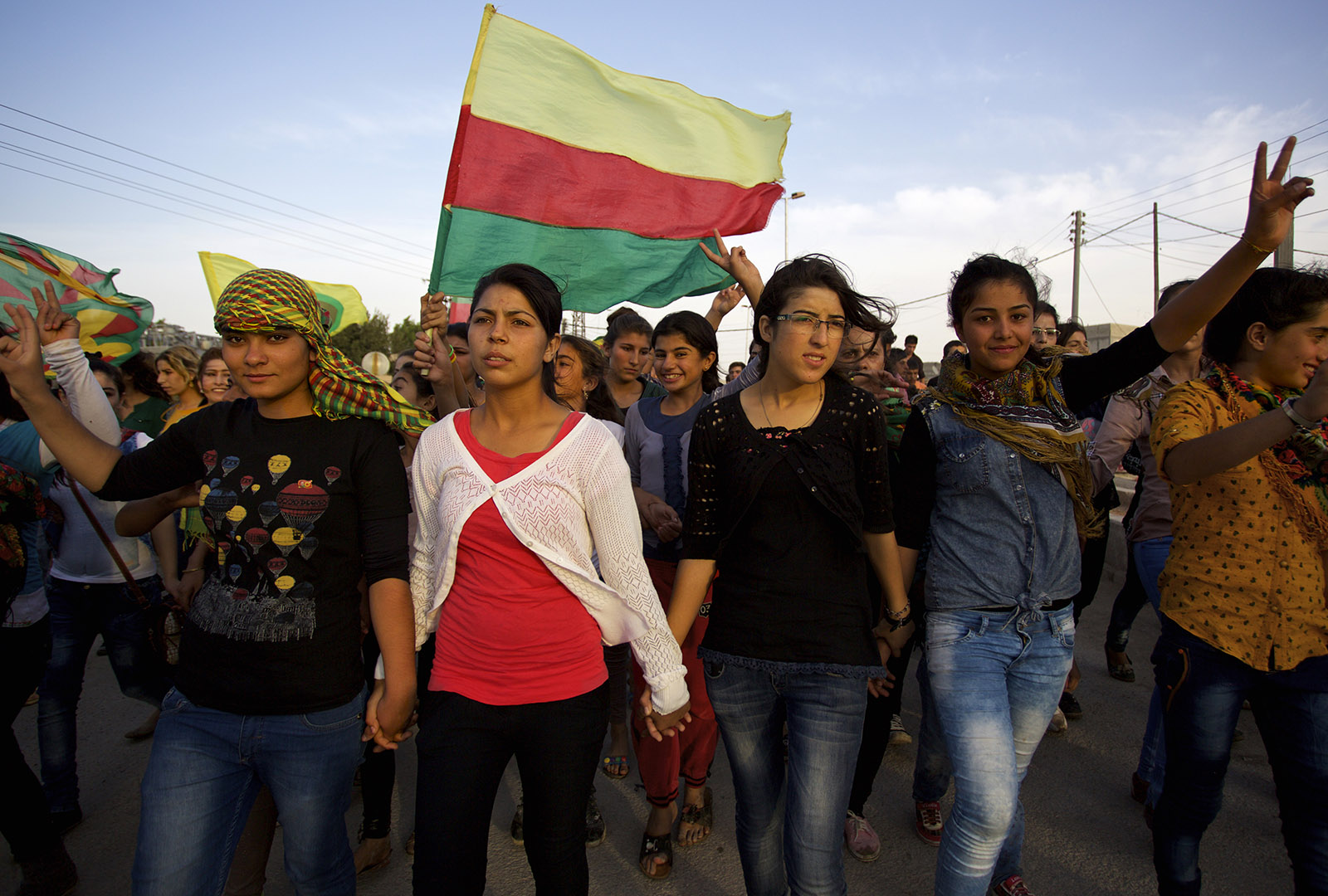
North-East of Syria, Rojava: The Kobani canton, in the Federation of Northern Syria – Rojava, more commonly known as Syrian Kurdistan or Western Kurdistan, struggles against Daesh. Here, demonstration in a street of Kobani for the release of Apo, Abdullah Ocalan, leader of the Kurdistan Workers’ Party (PKK). Young Kurdish women in the crowd of demonstrators. (Photo by: Andia/UIG via Getty Images)
Title: Notes on the CommuneDate: Spring 2012Notes: footnotes references at end are missing the textual reference.Source: copied out of Lawless: a manual for warJan 5, 19
Title: Notes on the CommuneDate: Spring 2012Notes: footnotes references at end are missing the textual reference.Source: copied out of Lawless: a manual for warDec 21, 18
Title: Arming Negativity: Towards the Queerest AttackSubtitle: A Response to “Beyond Negativity: What Comes After Gender Nihilism?”Date: 12/8/2018Dec 17, 18
Title: From the State of Control to a Praxis of Destituent PowerDate: 2013Notes: Transcript of a public lecture by Giorgio Agamben delivered to a packed auditorium in Athens on November 16, 2013.Source: https://roarmag.org/essays/agamben-destituent-power-democracyDec 16, 18
Title: Address to the LivingSubtitle: Concerning the Death That Governs Them and the Opportuneness of the Present Moment for Getting Rid of ItDate: October 16th, 1989Notes: Translated by Jordan Levinson in 2005. Six missing paragraphs (four in “Against Anti-Terrorism” — which was missing completely, the last from “To Rediscover a Blooming Childhood…” and the first from “The Time Torn from the Living”) were subsequently translated from the printed edition, that also served as a basis for adapting segments of the text and for organizing the chapters.Source: Retrieved on October 2nd, 2018 from http://inventin.lautre.net/livres/Vaneigem-Address-to-the-living.pdfDec 16, 18
info from La_Directa and Twitter.. Violent attacks and charges were made by the Mossos local police while protecting an illegal eviction executed by Desokupa, the private Eviction Company, in the Poble-sec barrio of Barcelona . One supporter and three from the squatting collective were arrested, instead of the hired thugs.
”Although the converted ‘luxury’ flats were finally lost the emergency neighbourhood mobiization brought crowds of people onto the streets in record time to block the private mercenaries of the speculation company until the police charged twice”..
La Directa This Tuesday, January 8, the Casa Àfrica space in Marià Aguiló street, in the Poblenou district of Barcelona, celebrated with a breakfast and lunch solidarity that the eviction of the building, scheduled for that same day has been temporarily stopped .
The expulsion aimed to put about twenty young people on the street, who come from several countries of Africa (Morocco, Guinea, Cameroon, Côte d’Ivoire and Gambia) and who they have no place to live, after having being attended by the Red Cross and the Service of Attention to the Immigrants, Migrants and Refugees (SAIER) of the City council of Barcelona. Seydou O., procedent de la Costa d’Ivori, un dels habitants de la Casa Àfrica | Sira Esclasans
At the moment, two vulnerability reports signed by the same council, the group Apropemos and the Association of Neighbors of Poblenou have taken effect in the courts to delay the eviction.
by Clara Macau | @ ClaraM_18 at La Directa Some of Photos by Sira Esclasans and Victor Serri. translation by The Free
Casa Àfrica is the new name given to the property that, from 2007 to 2018, has hosted the Self-managed Okupied Social Center La Teixidora (CSOA), between evictions.The squatters assembly has organised that it be given over to homeless arriving immigrants and asylum seekers
The building is a house of the beginning of the century with a modernist façade that served as the nucleus of the cultural activities of the Federal Republican Center until 1939. Then it was handed over to the Falange fascist party and fiinally went to a family from Poblenou barrio. Today, it is owned by Poblenou Federals Society 1922 S.L., a subsidiary of real estate company One Peking Road S.L. Despite the mediation efforts of the Barcelona City Council, the firm has not yet come to negotiate with the current occupants.
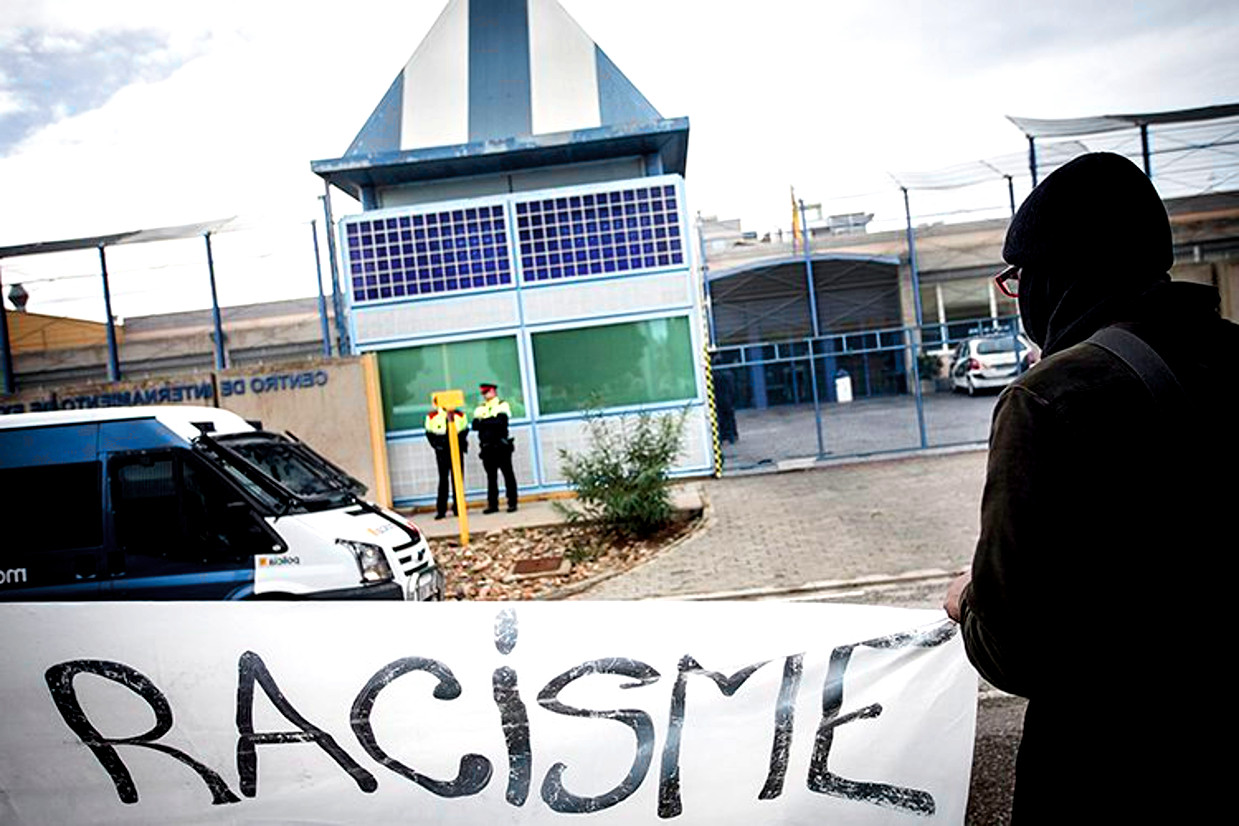
CIEs: The Spanish Guantánamo According to the Spanish Government, a Center for the Internment of Foreigners (CIE) is a non-penitentiary public institution where foreigners are subject to expulsion from the national territory, in short, places of detention for foreigners who, as they usually say , “Have no papers”. However, in practice, and due to lack of regulation and legal regulations, are administrative prisons whose conditions of stay are tougher than the prison itself, where people are interned that without having committed any crime are subjected to a regime Of life harder than those incarcerated accused of a crime.
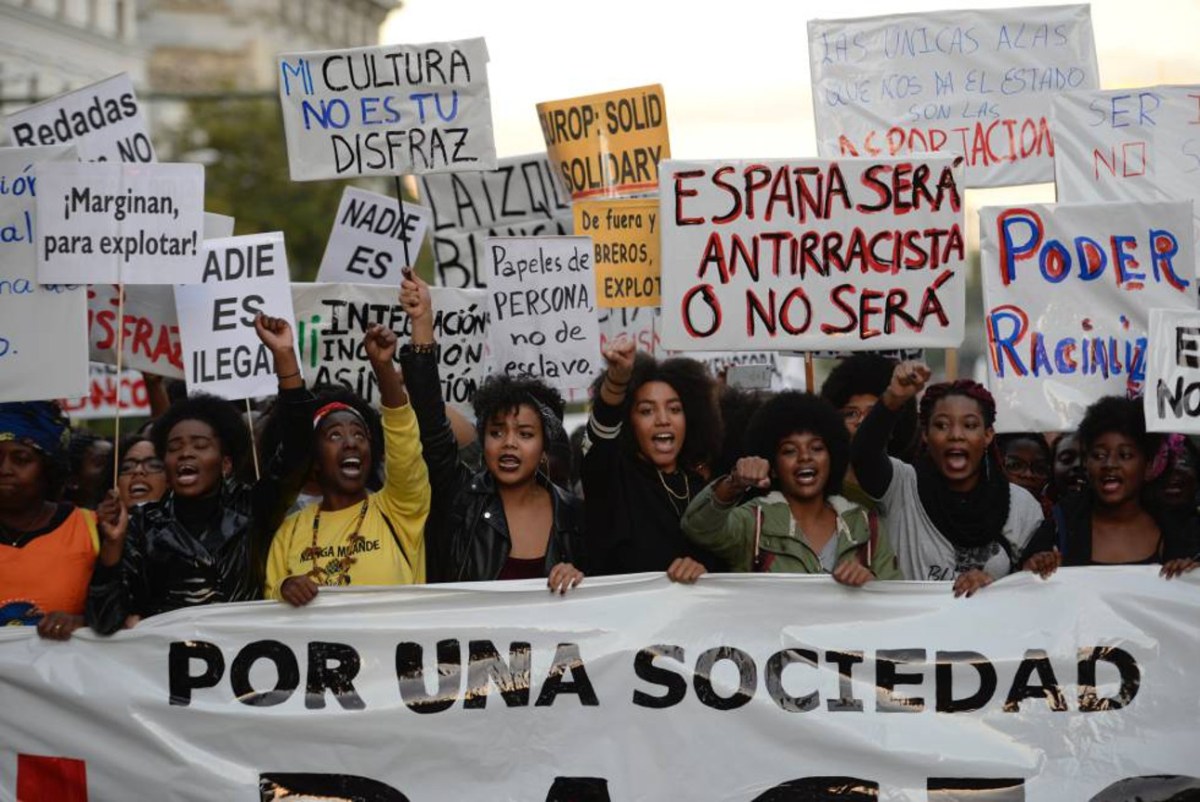
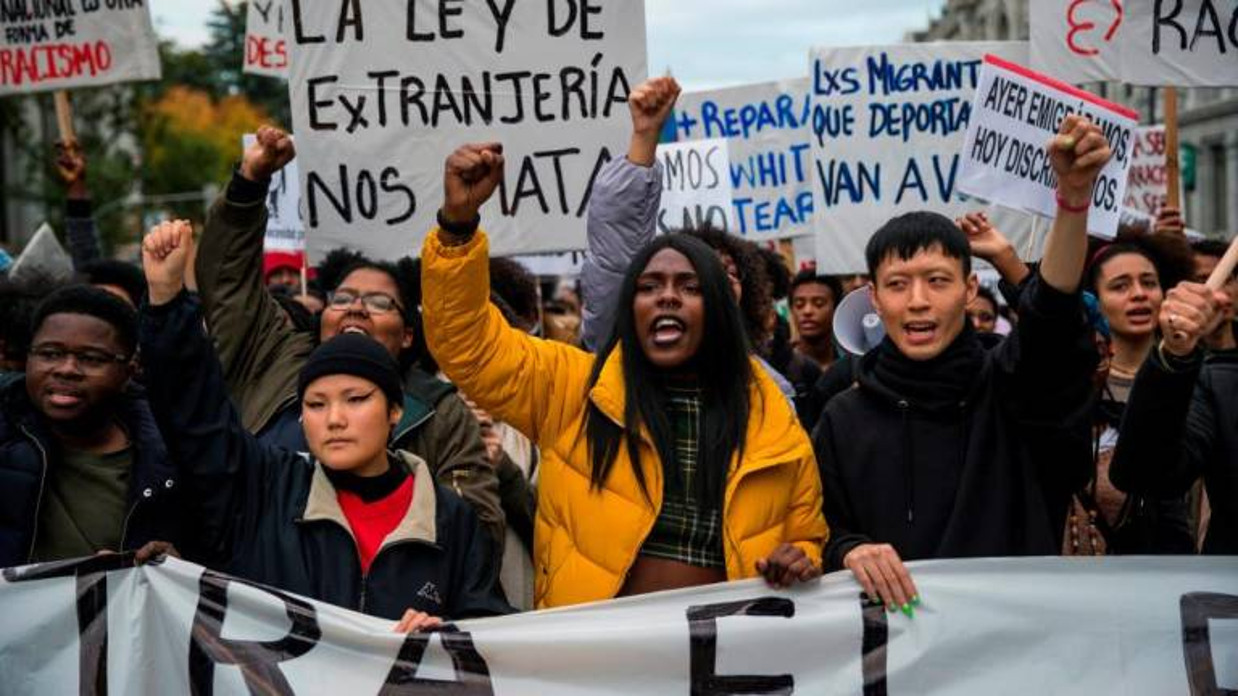
In addition to the solidarity breakfast and lunch, the support platform for Casa Àfrica has called for a demonstration on Friday 11 in defense of the rights of migrants, an announcement that currently has the support of about 150 col Schools, including the Manters Syndicate or the CIE.
Housing exit for asylum seekers
Those responsible for La Teixidora wanted to close their activities on the Marià Aguiló street farm last October, when they contacted the group of activists Emergencia Frontera Sud (EFS). “This summer many people arrived with the Red Cross buses to Barcelona and we were overwhelmed. Finding this house meant that twenty people did not have to sleep in the street, “explains one of the members of the group.
Emergencia Frontera Sur is a citizen network of activists that carries out support and support for migrants. This means that they stay close to the newcomers until they manage to have a stable situation at the place of reception
Casa Africa – Victor Serri
In Barcelona, they pick them up at the North Station when they arrive on the Red Cross buses, they welcome them at home, they give them information about the resources they have to eat, sleep, shower themselves, accompany them to do bureaucratic Procedures for managing the asylum application and trying to give them legal assistance.
According to the data provided by Barcelona City Council and the Red Cross, in 2018 4,758 people arrived in Barcelona from the southern border of Spain. In summer, the City Council authorized 500 new spaces in an emergency organisation to provide basic assistance advice to migrants. “This was launched in August,” says an EFS member, “but in July many people arrived that could not be treated.”
Cartell de la manifestació de suport a les nouvingudes penjat a la façana de la Casa Àfrica – Victor Serri Poster of the demonstration of support for newcomers hanging on the facade of Casa Àfrica – Victor Serri
Most of the occupants of Casa Àfrica are asylum seekers, or they already have the procedures begun to request it. They are listed on the waiting list to enter the hostel and participate in training offered by Barcelona Activa.
The City Council says that it tracks its cases from the district of Sant Martí. Right now, they thank EFS for having achieved a place to live and accompany them with information and legal assistance. The group has volunteer lawyers who help them prepare for asylum interviews.
The limits of the municipal reception
The group says that there is a three months waiting list for access to a municipal shelter. So people who arrive in the city are left on the street. “When you arrive on the bus the Red Cross gives you a map to reach SAIER. And that’s all. They do not know the language. They do not know the city. They do not know what is the SAIER, “says activist Nebon Babou Bassono.
Nebon Babou Bassono is the president of the Burkinabé Association of Barcelona. Since summer, he has been a spokesman for the Emerging Border South community (EFS). We must start the interview, but before we are talking with a young African here. One who has arrived disoriented and angry. He explains the situation: “The first thing we must do is reassure these young people. They have come on a very harsh route and they find themselves with nothing, not even information or directions. “
This is the case of Seydou O., a 27 year old from Ivory Coast, after passing through Morocco and Andalusia. He explains that he arrived at the North Station in Barcelona in the summer and he was received by Red Cross personnel. They moved him to the offices of Calle Sancho de Ávila and there they told him that he could not stay there, so he had to find a solution. Seydou O. adds that he was returned to the bus station with 80 euros and a map to go to SAIER. There, without knowing very well what he had to do, he found the first person of EFS.
EFS was organized last summer to give a roof to people who have just arrived in the city and who do not have family members who can take them. Faced with the saturation of municipal facilities, they are committed to self-management and citizen will. “We do it as we can, in our house, at a friend’s house … the administration does not contemplate the waiting times of the hostels and this means that they have no other exit than the street, if nobody helps them”, explains a member of the group.
Babou Bassono and his colleagues explain that they are neglected when asylum seeks, seeking accommodation or accessing healthcare. In addition to the lack of resources, they indicate that they do not have access to information about the steps that must be followed to establish themselves in the city
Babou Bassono and his colleagues at Emergencia Frontera Sud explain that migrants are told they are neglected when it comes to knowing how to request asylum, search for accommodation or accessing healthcare. At SAIER, they say, there are no translation teams, but staff that can speak English, French or, in some cases, Arabic.
When this is not the case, the team is contacted, by telephone, and after a wait which can be one or two hours, they find a translator that helps to get the information. There are migrants who come from countries in Africa where other languages are spoken and, sometimes, they do not know either French or English. In these cases, it is still harder to find a translator.
The legal assistance provided by SAIER, says Emergencia Frontera Sud, consists of a group appointment with a lawyer. The appointment may take a month. In addition, although the service also provides for individualized advice, of the twenty people that accompany the group and who already have an appointment to request asylum, only two have been able to benefit, due to the waiting periods.
In spite of everything, the Barcelona City Council states that “since the beginning of June, 3,359 people have received first-class service, and all have had access to a translator and a basic legal orientation.”
The council adds that the SAIER, in particular, has a translation service in eight or ten different languages, and offers a free legal orientation. “What we can not offer is accommodation because it is not a municipal responsibility, nor do we have resources to do it,” City Council sources conclude.
Since last summer there have been calls for Spain to fulfill its duties as regards asylum, since, until now, the task of reception must be carried out with the municipal funds .
Neighborhood support in Poblenou district
In the neighborhood of Poblenou, the migrant group has received a warm welcome . The Association of Residents of Poblenou and other entities such as La Flor de Maig have welcomed African young people in their activities and have provided them with clothes and food.
Montse Milà, of the Association of Neighbors, has followed the case together with Emergencia Frontera Sud and the City Council of Barcelona. She is one of those responsible for the vulnerability report by which the eviction of the occupied property has been stopped for the moment. “We know that this is a partial victory,” she says, “because the building is in the middle of the neighborhood and is a speculative candy for the rise of private flats, but we will fight wherever we can to defend that the boys and have them stay in the neighborhood “.
original en Català
La Casa Àfrica del Poblenou, una llar autogestionada per les migrants nouvingudes a Barcelona
gener 8, 2019
Aquest dimarts, 8 de gener, l’espai Casa Àfrica del carrer Marià Aguiló, al barri del Poblenou de Barcelona, celebra amb un esmorzar i dinar solidaris que ha aturat temporalment el desallotjament de l’edifici, previst per aquest mateix dia. L’expulsió havia de deixar al carrer una vintena de joves que vénen de diversos països de l’Àfrica (el Marroc, Guinea, el Camerun, Costa d’Ivori o Gàmbia) i que no tenen cap lloc on viure, després d’haver estat atesos per la Creu Roja i el Servei d’Atenció als Immigrants, Emigrants i Refugiats (SAIER) de l’Ajuntament de Barcelona. De moment, dos informes de vulnerabilitat signats pel mateix consistori, el col·lectiu Apropem-nos i l’Associació de Veïns del Poblenou han fet efecte als jutjats
Casa Àfrica és el nom que s’ha donat a l’immoble que, del 2007 al 2018, ha acollit el Centre Social Okupat Autogestionat La Teixidora. L’edifici és una casa de principis de segle de façana modernista que va funcionar com a nucli de les activitats culturals del Centre Republicà Federalista fins al 1939. Després, va passar a mans de la Falange i d’una família del Poblenou. Avui és propietat de la societat Poblenou Federals 1922 S.L., filial de la immobiliària One Peking Road S.L. Malgrat els esforços de mediació de l’Ajuntament de Barcelona, la firma no s’ha avingut fins al moment a negociar amb les actuals ocupants.
A més de l’esmorzar i el dinar solidaris, la plataforma de suport a Casa Àfrica ha cridat a una manifestació divendres 11 en defensa dels drets de les persones migrants, convocatòria que a hores d’ara compta amb les adhesions d’uns 150 col·lectius, entre els quals hi ha el Sindicat de Manters o Tanquem els CIE.
Sortida habitacional per a sol·licitants d’asil
Els responsables de La Teixidora volien donar per tancades les seves activitats a la finca del carrer de Marià Aguiló el passat mes d’octubre, quan els va contactar el col·lectiu d’activistes Emergència Frontera Sud (EFS). “Aquest estiu van arribar moltes persones amb els autobusos de la Creu Roja fins a Barcelona i ens trobàvem desbordats. Trobar aquesta casa significava que vint persones no havien de dormir al carrer”, explica un dels membres del grup.
Emergència Frontera Sud és una xarxa estatal ciutadana d’activistes que fa tasques de suport i acompanyament a les persones migrants. Això vol dir que són al costat de les nouvingudes fins que aconsegueixen tenir una situació estable al lloc d’acollida
EFS és una xarxa estatal ciutadana d’activistes que fa tasques de suport i acompanyament a les persones migrants. Això vol dir que són al costat de les nouvingudes fins que aconsegueixen tenir una situació estable al lloc d’acollida. A Barcelona, els recullen a l’estació del Nord quan arriben en els autobusos de la Creu Roja, els acullen a casa seva, els donen informació sobre els recursos que hi ha per menjar, dormir, dutxar-se, els acompanyen a fer els tràmits per gestionar la sol·licitud d’asil i miren de donar-los assistència jurídica.
Segons les dades proporcionades per l’Ajuntament de Barcelona i la Creu Roja, el 2018 van arribar a Barcelona 4.758 persones des de la frontera sud de l’Estat espanyol. A l’estiu, l’Ajuntament va habilitar 500 places noves en un dispositiu d’emergència per donar assistència bàsica a més persones. “Aquest dispositiu es va posar en marxa a l’agost”, puntualitza un membre d’EFS, “però ja al juliol van arribar moltes persones que no van poder ser ateses”.
La majoria dels ocupants de Casa Àfrica són sol·licitants d’asil, o bé ja tenen endegats els tràmits per demanar-lo. Estan apuntats a la llista d’espera per entrar a l’alberg i participen en formacions que ofereix Barcelona Activa. L’Ajuntament assegura que fa seguiment dels seus casos des del districte de Sant Martí. Ara mateix, agraeixen a EFS que els hagi aconseguit un lloc on residir i els acompanyi amb informació i assistència jurídica. El grup compta amb advocats voluntaris que els ajuden a preparar les entrevistes per demanar asil.
Els límits de l’acollida municipal
El col·lectiu assegura que hi ha tres mesos de llista d’espera per accedir a un alberg municipal. Així que les persones que arriben a la ciutat, es queden al carrer. “Baixen de l’autobús i la Creu Roja els dóna un mapa per arribar al SAIER. I prou. No coneixen l’idioma. No coneixen la ciutat. No saben què és el SAIER”, rebla l’activista Nebon Babou Bassono.
El col·lectiu Emergència Frontera Sud assegura que hi ha tres mesos de llista d’espera per accedir a un alberg municipal, així que les persones que arriben a la ciutat, es queden al carrer
Nebon Babou Bassono és el president de l’Associació Burkinabé de Barcelona. Des de l’estiu, fa de portaveu del col·lectiu Emergència Frontera Sud (EFS). Hem de començar l’entrevista, però abans ha de parlar amb un jove africà acabat d’arribar que està desorientat i enfadat. Ens explica la situació: “El primer que hem de fer és tranquil·litzar aquests joves. Vénen d’una ruta molt dura i es troben sense res, ni tan sols informació o indicacions”.
Aquest és el cas de Seydou O., jove de 27 anys que ve de Costa d’Ivori, després de passar pel Marroc i Andalusia. Explica que va arribar a l’estació del Nord a l’estiu i el va rebre personal de la Creu Roja. El van traslladar fins a les dependències del carrer de Sancho de Ávila i allà li van dir que no s’hi podia quedar, de manera que havia de cercar una solució. Seydou O. afegeix que el van retornar a l’estació d’autobusos amb 80 euros i un mapa per anar fins al SAIER. Allà, sense saber ben bé què havia de fer, va trobar la primera persona d’EFS.
EFS s’organitza des de l’estiu per donar un sostre a les persones que acaben d’arribar a la ciutat i que no tenen familiars que els puguin acollir. Davant de la saturació dels equipaments municipals, aposten per l’autogestió i la voluntat ciutadana. “Ho fem com podem, a casa nostra, a casa d’algun company… l’administració no contempla els terminis d’espera dels albergs i això vol dir que no tenen cap altra sortida que el carrer, si ningú no els ajuda”, explica un membre del col·lectiu.
Babou Bassono i els seus companys expliquen que queden desatesos a l’hora de demanar asil, cercar allotjament o accedir a l’atenció sanitària. A més de la manca real de recursos, indiquen que tampoc tenen accés a la informació sobre els passos que han de seguir per establir-se a la ciutat
Babou Bassono i els seus companys d’Emergència Frontera Sud expliquen que els migrants els comenten que queden desatesos a l’hora de saber com demanar asil, cercar allotjament o accedir a l’atenció sanitària. Al SAIER, diuen, no hi ha equips de traducció, sinó personal que pot parlar anglès, francès o, en alguns casos, àrab. Quan no és així, des de l’equipament es contacta, per via telefònica, i després d’una espera que pot ser ser d’una o dues hores, amb un traductor que ajuda a fer arribar la informació. Hi ha migrants que vénen de països de l’Àfrica on es parlen altres llengües i, de vegades, no coneixen ni el francès, ni l’anglès. En aquests casos, encara és més difícil trobar un traductor.
L’assistència jurídica que proporciona el SAIER, afirma Emergència Frontera Sud, consisteix en una cita grupal amb un advocat. La concessió de la cita pot trigar un mes. A més, tot i que el servei també preveu un assessorament individualitzat, de les vint persones que acompanya el col·lectiu i que ja tenen cita per demanar asil, només dues se n’han pogut beneficiar, a causa dels terminis d’espera.
Malgrat tot, l’Ajuntament de Barcelona exposa que “des del juny, han passat per servei de primera accolida 3.359 persones i totes han tingut accés a traductor i a orientació jurídica bàsica”. El consistori afegeix que el SAIER, en concret, disposa de servei de traducció en vuit o deu idiomes diferents, i ofereix orientació jurídica gratuïta. “El que no podem oferir és allotjament perquè no és, ni competència municipal, ni tenim recursos per fer-ho”, conclouen fonts de l’Ajuntament. A l’estiu, ja va fer una crida a l’Estat espanyol perquè assumís les competències que li pertoquen en matèria d’asil, ja que, en aquests moments, la tasca d’acollida s’ha de tirar endavant amb els fons municipals.
Suport veïnal al Poblenou
Al barri del Poblenou, el grup de migrants ha rebut l’escalf del veïnat. L’Associació de Veïns del Poblenou i altres entitats com La Flor de Maig han comptat amb els joves africans en les seves activitats i els han facilitat roba i menjar. Montse Milà, de l’Associació de Veïns, ha seguit el cas juntament amb Emergència Frontera Sud i l’Ajuntament de Barcelona. És una de les responsables de l’informe de vulnerabilitat pel qual s’ha aturat, de moment, el desallotjament de l’immoble ocupat. “Sabem que aquesta és una victòria parcial”, matisa, “perquè l’edifici de Marià Aguiló és al centre del barri i és un caramel per a l’aixecament de pisos privats, però lluitarem fins on puguem per defensar que els nois es quedin al barri”.
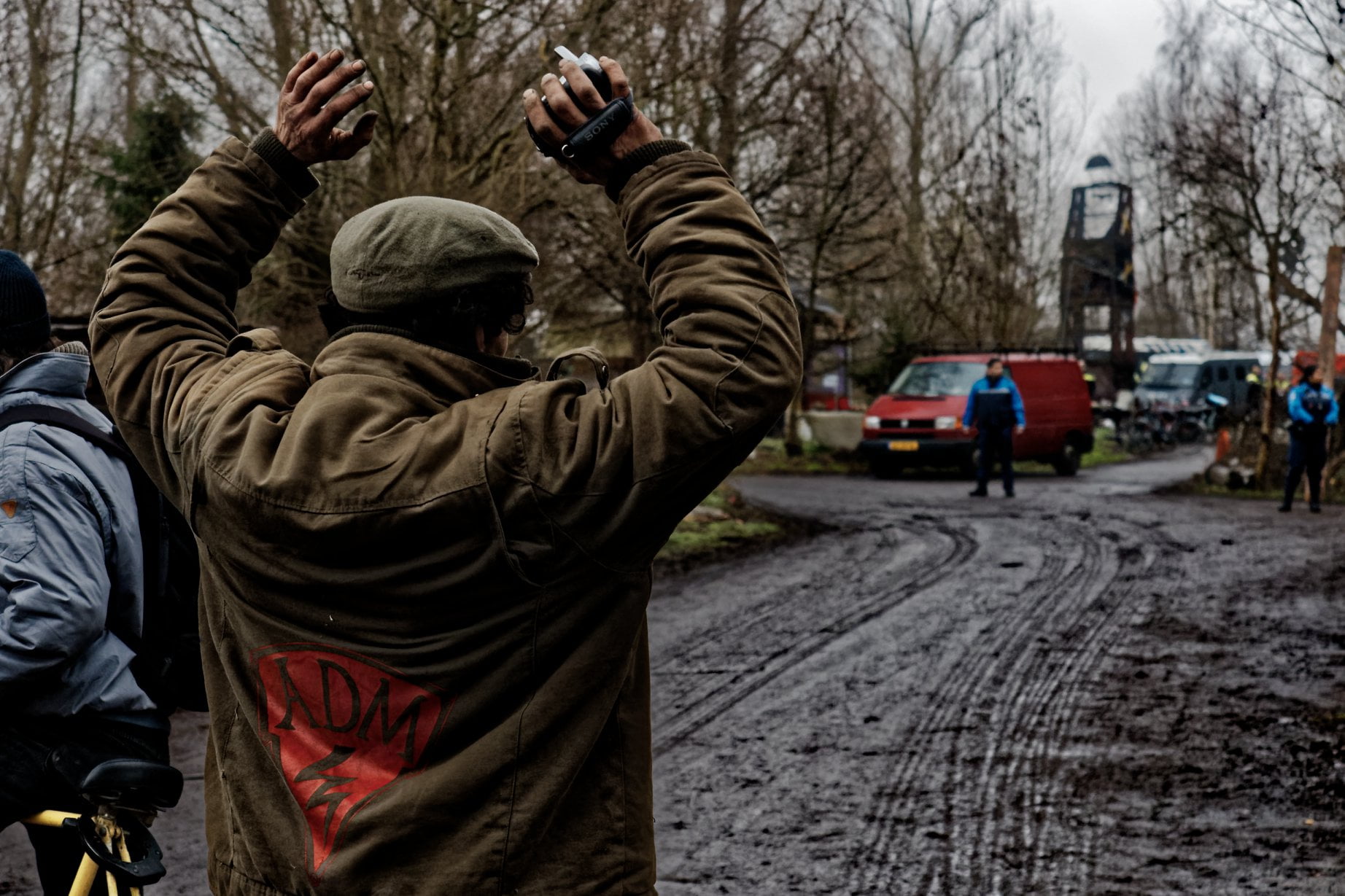
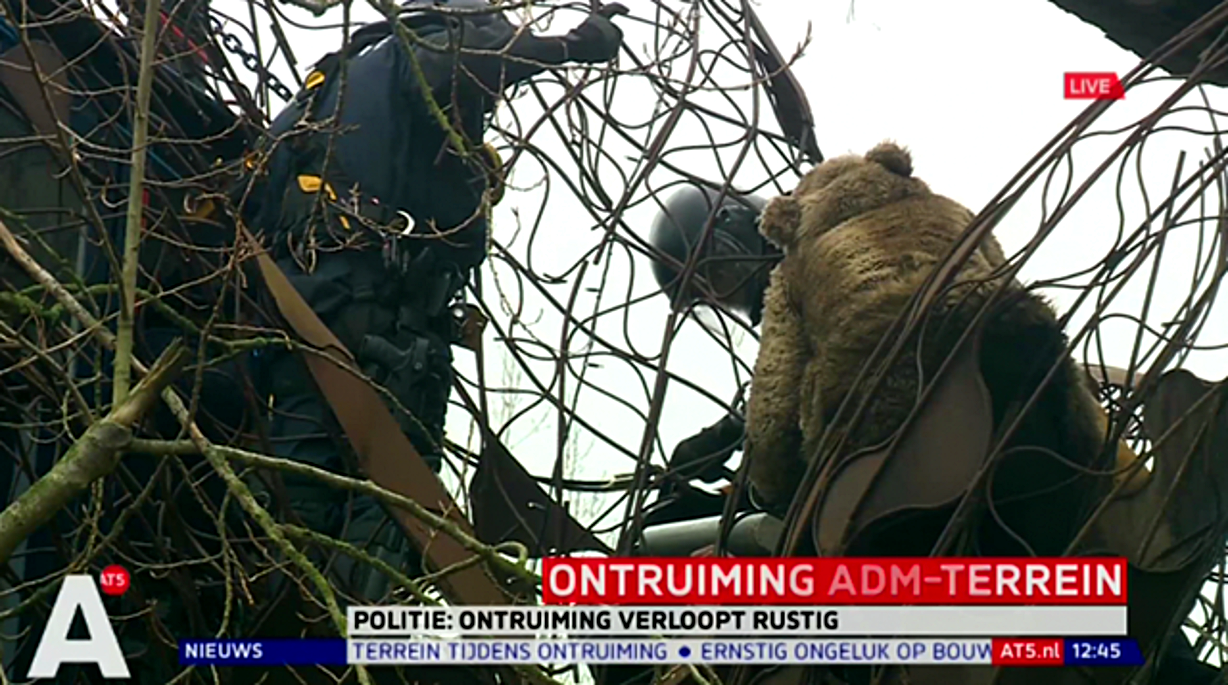
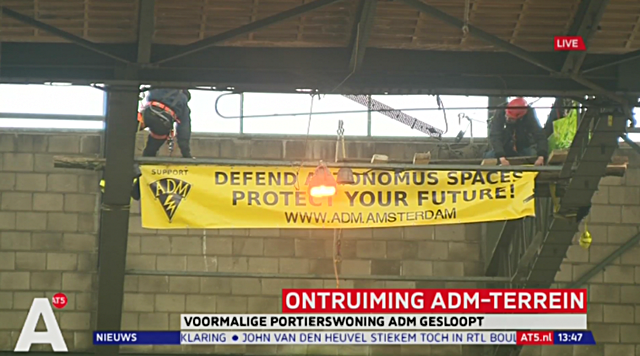
January 7th: Dutch authorities ignored a UN ruling protecting the social centre today to brutally clear the area with riot police, private security and heavy machinery.
Amsterdam: ADM eviction
– January 7th, 2019
The ADM eviction has started on Nonday morning, 7 january 2019. Time line, pictures, videos and more news are to be found on Indymedia Nederland.
No statement at the moment about this eviction on the ADM website. More news to follow as soon as possible…
The Zapatista National Liberation Army (Ejército Zapatista de Liberación Nacional, EZLN) has said that it would not permit President Andrés Manuel López Obrador’s Maya Train project of death and dirty tricks to happen.
It described López Obrador as “crazy” and “crafty,” and therefore, it said, it will defend what it has constructed in the past 25 years.
On Monday, López Obrador arrived in Villahermosa to attend the swearing-in of Adán Augusto López as governor of Tabasco. Upon asking him about the resistance announced by the EZLN to some of his projects, he answered: “They are within their rights, how good that they are going to do it, and many congratulations to everyone.”
In the voice of Subcomandante Moisés, during an event held in the community of La Realidad, municipality of Las Margaritas, in the Lacandón Jungle, the EZLN stated: “Think about how crazy it is that he says he is going to govern for rich and poor. Only a crazy person that is sick in the head can say that; his mind doesn’t work, he is braindead (…).
“He doesn’t know nor understand what he’s saying, and he doesn’t understand because his boss dictates to him what he has to say. It’s simple: you can’t support the exploited and the exploiter, you have to choose one of the two,” he said.
The EZLN criticized, without mentioning him by name, that Lopez Obrador “is very tricky, because (he says) that he is with the people of Mexico and continues deceiving the original peoples, demonstrating that he thrusts himself on the land asking for permission and saying that all the original peoples believe him, but we say that we don’t believe him.”
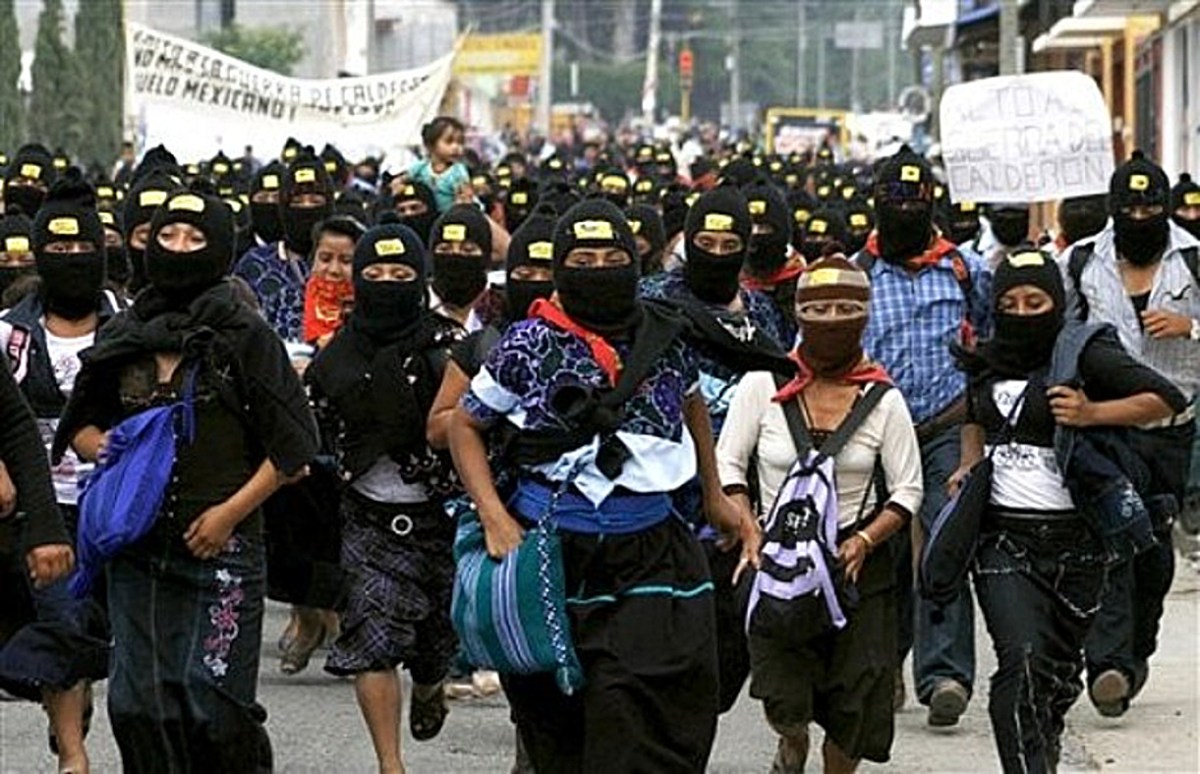
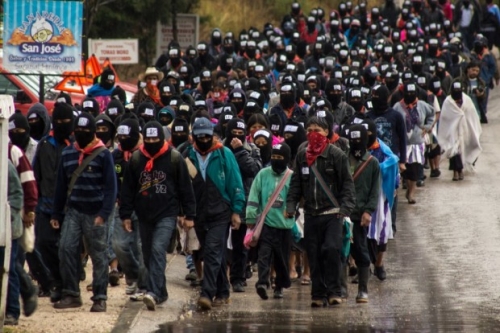
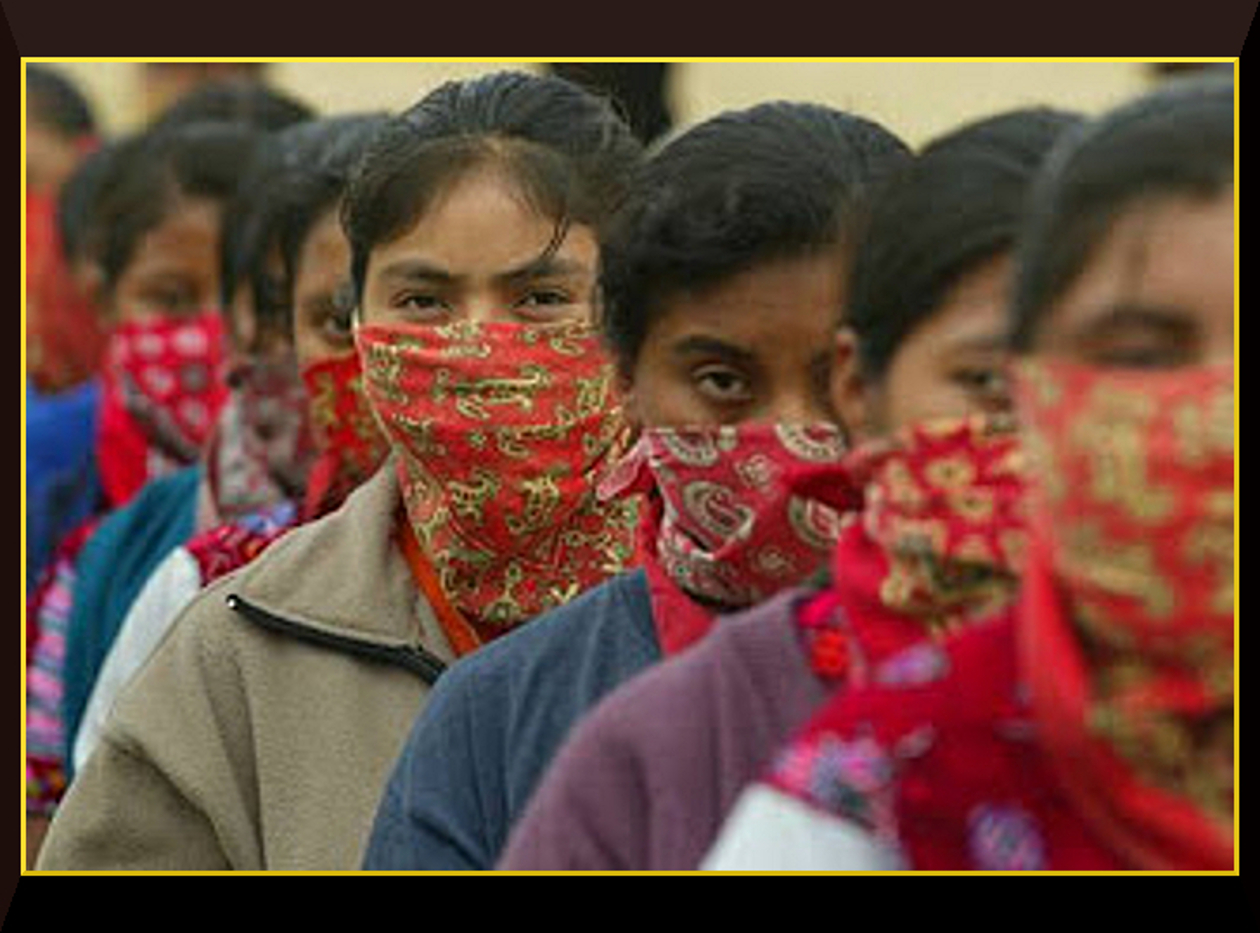
Masked Zapatista rebels participate in a protest against violence in San Cristobal de las Casas, Chiapas state, Mexico. The Zapatistas staged a brief armed uprising for greater indigenous rights in southern Chiapas state in 1994.
Upon referring to the ceremony held on December 1 in Mexico City’s Zócalo, where López Obrador received the staff of command from the indigenous peoples, the EZLN expressed: “Only because Mother Earth doesn’t speak, if she did she would say: fuck your mother; she would say: go to hell!”
In the context of the 25th anniversary of the January 1, 1994 Zapatista Uprising, he added: “We’re not going to allow them to come to destroy us,” and he warned: “We’re not afraid of their Nacional Guard, which changed their name in order to not say Army, but they are the same.”
He maintained that López Obrador “is going to destroy the people of Mexico, but principally the original peoples; they’re coming for us, especially for the EZLN.” He reiterated that they are not afraid of the new federal government. “We’re going to fight and we’re going to confront it.”
He remarked: “They’re coming for us, the original peoples. The consulta (vote) that they make is to manipulate the people. They are asking permission to attack us with votes. They are consulting so that they can come to confront us with that dirty trick of the Maya Train” (Tren Maya),” but “if they provoke us, we are going to defend ourselves. We’re not going to allow anyone to come to establish themselves in this territory in rebellion.”
He asserted that the so-called Fourth Transformation “is nothing of a fourth. Those of the third confronted him with facts. (López Obrador) says, for example, that he is going to forgive all the criminals. Like the one who says that he won’t do anything to the murderers of our Compañero Galeano,” murdered in the community of La Realidad in May 2014.
Advierte el EZLN que no permitirá que pase el proyecto del Tren Maya
Está en su derecho de oponerse, señala López Obrador
▲ El comandante Pablo Contreras (Pablo González Casanova) en el segundo Encuentro de Redes de Resistencia en apoyo al Congreso Nacional Indígena y al Concejo Indígena de Gobierno.Foto Mariana Gutiérrez
Elio Henríquez
Corresponsal
Periódico La Jornada
Miércoles 2 de enero de 2019, p. 4
San Cristóbal de las Casas, Chis., El Ejército Zapatista de Liberación Nacional (EZLN) afirmó que no permitirá que pase el proyecto de muerte y porquería del Tren Maya del presidente Andrés Manuel López Obrador, a quien calificó de loco y mañoso, por lo que, dijo, defenderá lo que ha construido en los pasados 25 años.
El lunes, López Obrador llegó a Villahermosa para asistir a la toma de protesta de Adán Augusto López como gobernador de Tabasco. Al preguntarle sobre la resistencia anunciada por el EZLN a algunos de sus proyectos, respondió: Están en su derecho, qué bueno que lo van a hacer, y muchas felicidades a todas y todos.
En voz del subcomandante Moisés, durante un acto realizado en la comunidad de La Realidad, municipio de Las Margaritas, en la selva Lacandona, el EZLN manifestó: “Figúrense cómo está de loco que dice que va a gobernar para ricos y pobres. Sólo un loco que está mal de su cabeza puede decir eso; no trabaja su mente, es descerebrado (…).
No sabe ni entiende lo que está diciendo, y no lo entiende porque su patrón le dicta lo que tiene que decir. Es sencillo: no se puede apoyar al explotado y al exolotador, se tiene que escoger a uno de los dos, expuso.
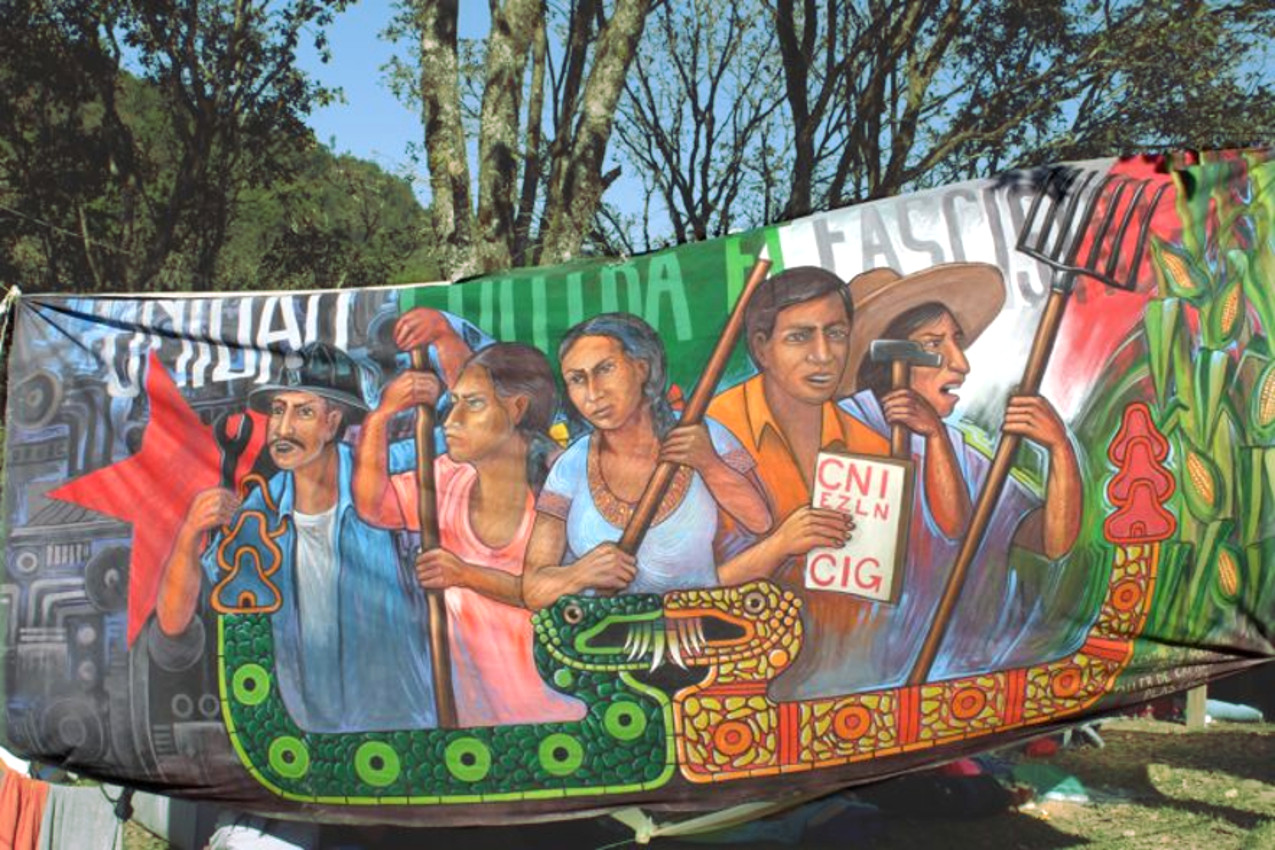
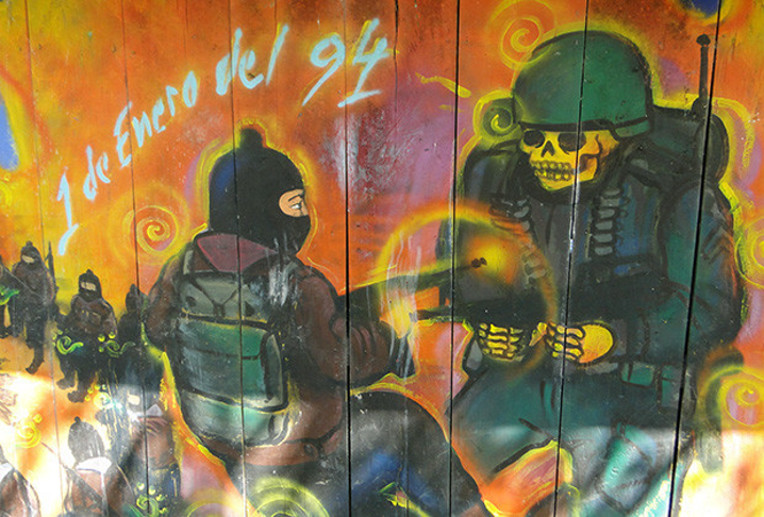
Mural painting near La Realidad symbolizing the Zapatista uprising on 01-01-1994
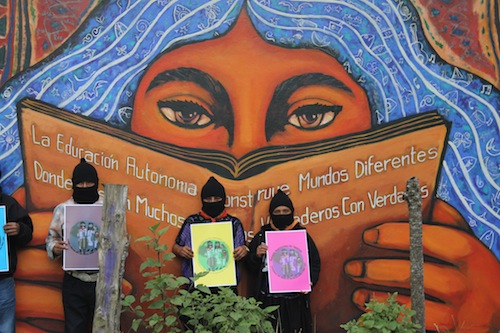
South of the Border: The indigenous people in Chiapas have defended the Zapatista free area for a generation, with a communal, feminist, non-hierarchical and non-tribal culture that has inspired the world.
El EZLN criticó, sin mencionarlo por su nombre, que Lopez Obrador es muy mañoso, porque (dice) que está con el pueblo de México y sigue engañando a los pueblos originarios, demostrando que se hinca en la tierra pidiéndole permiso y diciendo que todos los pueblos originarios le creen, pero nosotros le decimos que no le creemos.
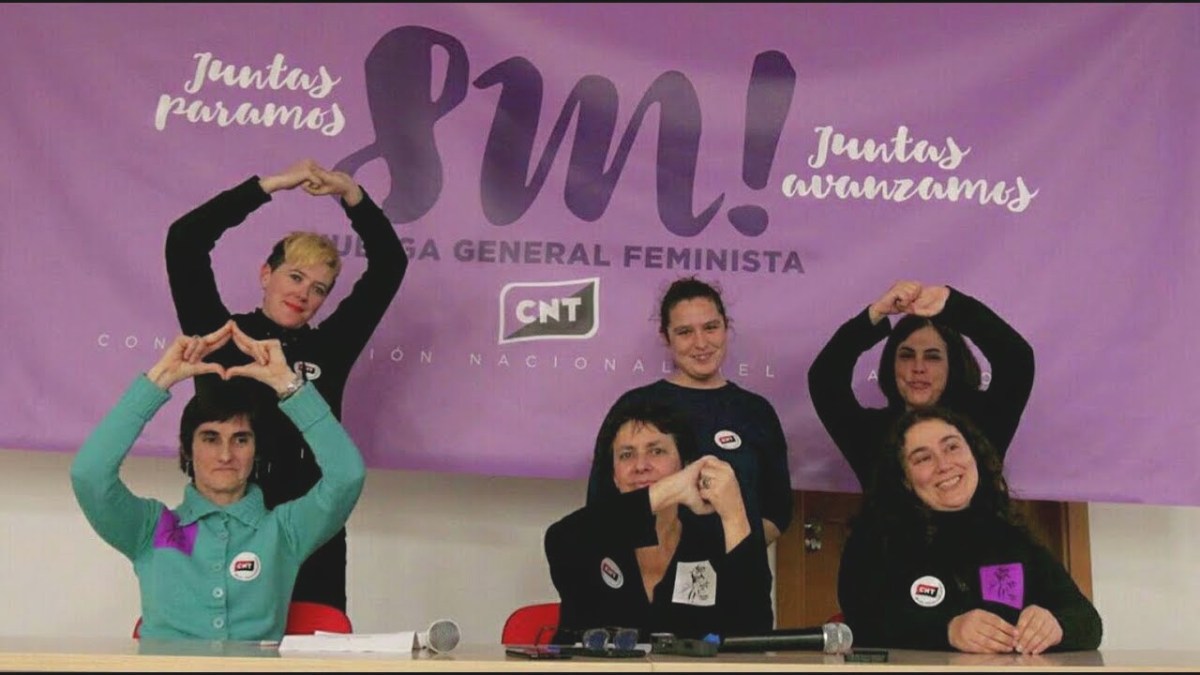
The 8M Commission calls for a feminist strike in 2019
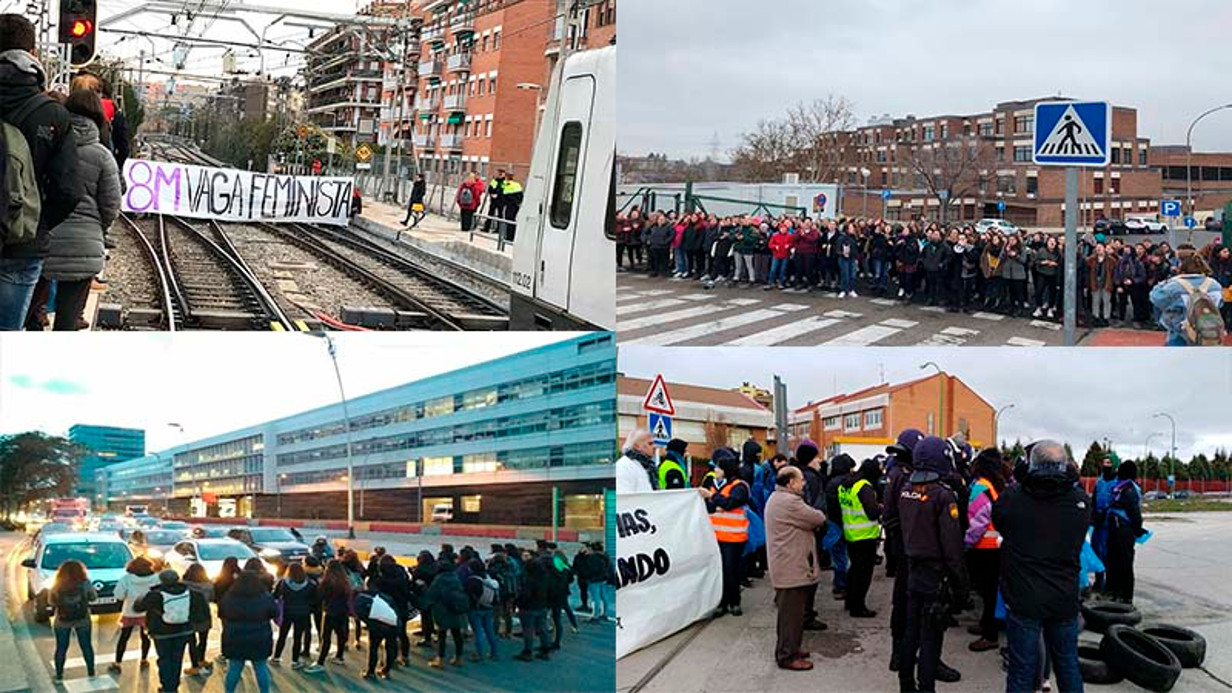
The meeting of the commission of the feminist movement that called the strike of March 8, 2018 has agreed on a new call for a Womens’ Strike for March 8th 2019.
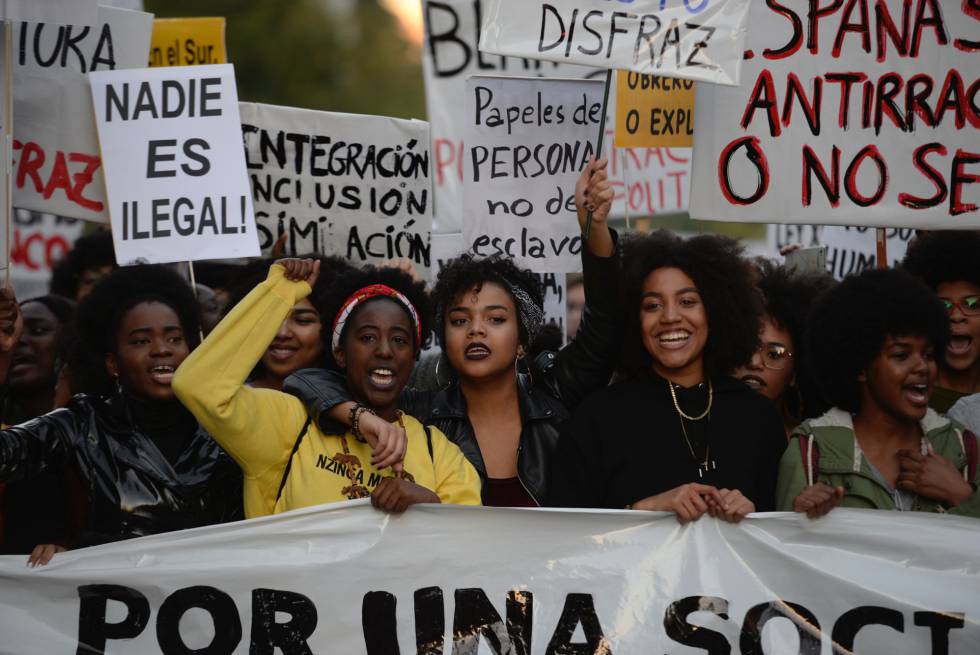
It remains to be decided whether it will be mixed or only women will be summoned , but there is already confirmation: there will be a feminist strike. This has been agreed by the delegates gathered at the IV Feminist State Meeting of the 8M Commission, held in Gijón.Manifestación por el 8M, 2018 en Bilbao. EFE
Only Madrid and Extremadura assemblies remain to pronounce pending what their bases decide. At the moment, in what there is consensus is that the next appointment must “overflow the margins of the strike”, reaching more women and more spaces. Migrants remember in the debates that new spaces of struggle must be created because in the street they are vulnerable.
Now it is the territorial assemblies that have to work and land the convocation to their places.
Among the proposals, extend the day of struggle to eight days of actions that make visible, inform and train in the work spaces, in schools and on the street.
They start from the four main sides of the previous strike (labor, consumption, student and care) but open the door to new areas such as violence. They point out that the consumer and care strikes must be reinforced because of their anti-patriarchal, anti-capitalist and anti-racist character.Manifestación por el 8M, 2018
After the debates, the women gathered in Gijón, Asturias, in this 4th Meeting of the 8M Commission, took to the streets of the city under the slogan ‘They hurt us one, they hurt us all’. The meeting continued on Sunday with spaces for debate and thematic analysis.
Convocada para el próximo 8 de marzo una huelga feminista
La decisión se ha tomado en el IV Encuentro Estatal Feminista de la Comisión 8M celebrado en Gijón.Manifestación por el 8M, 2018
Todavía restan flecos por acordar, como por ejemplo si será una convocatoria general o solamente para las mujeres. Entre algunas de las propuestas destacadas en este encuentro al que acudieron en torno a 600 participantes, destaca la de ampliar la jornada de huelga a ocho días, generando acciones que visibilicen el movimiento, informa el periódico El Salto.
El próximo encuentro estatal será el 26 y 27 de enero en Valencia. Será un espacio de debate y de construcción de la huelga feminista del 8M.
La huelga descansará sobre cuatro pilares principales, muy similares a los del año pasado. Los ámbitos laboral, estudiantil, de consumo y cuidados serán los ejes clave, que trabajarán con la intención de aumentar en número y en fuerza lo vivido el pasado 8 de marzo, según informa la Cadena Ser.
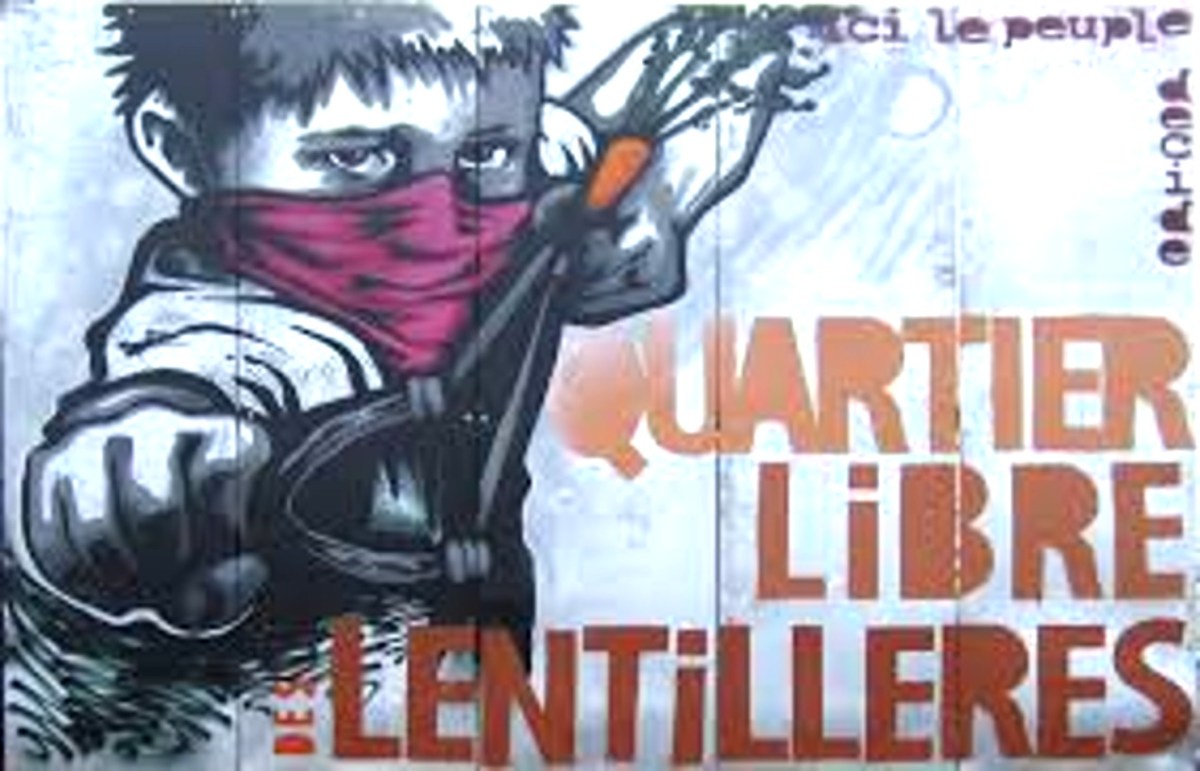
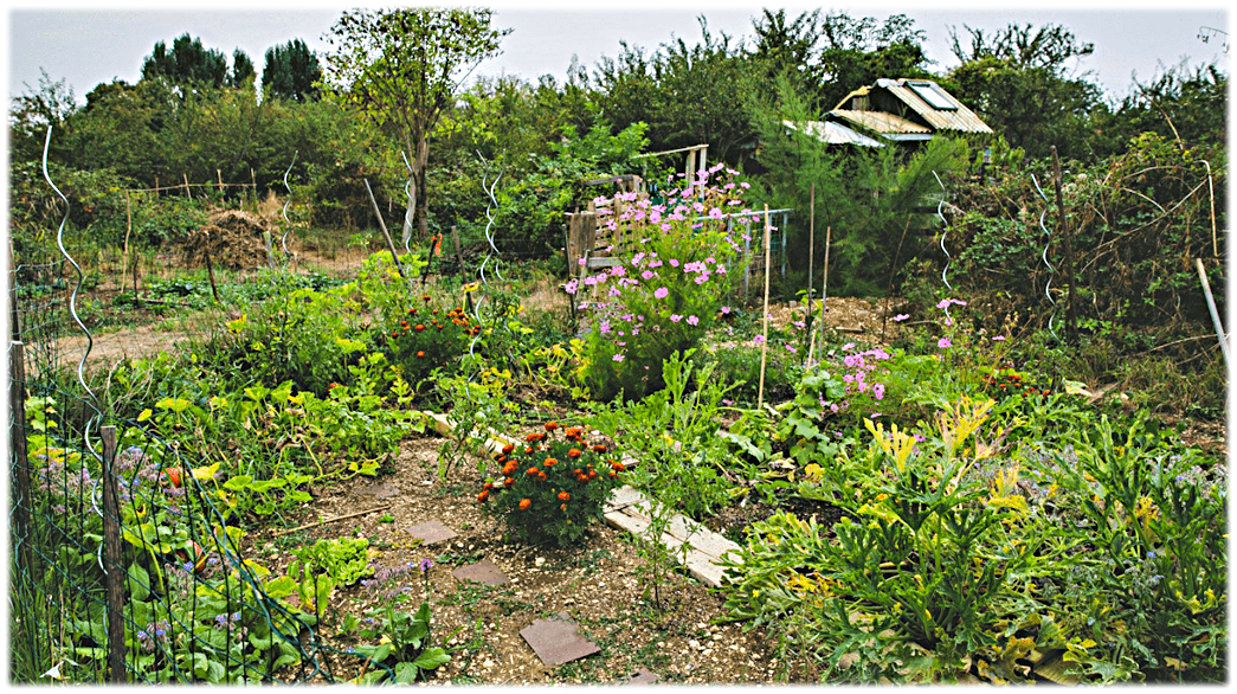
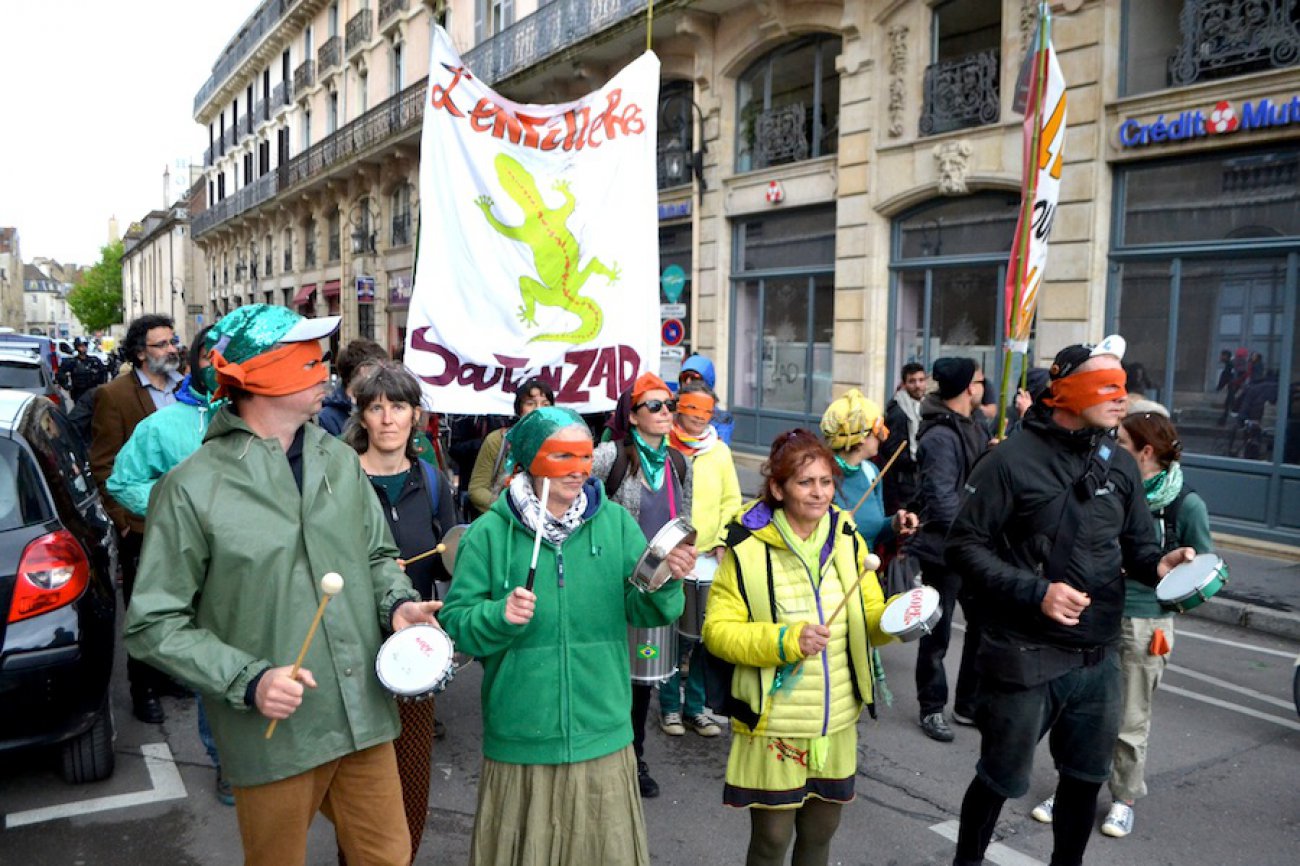
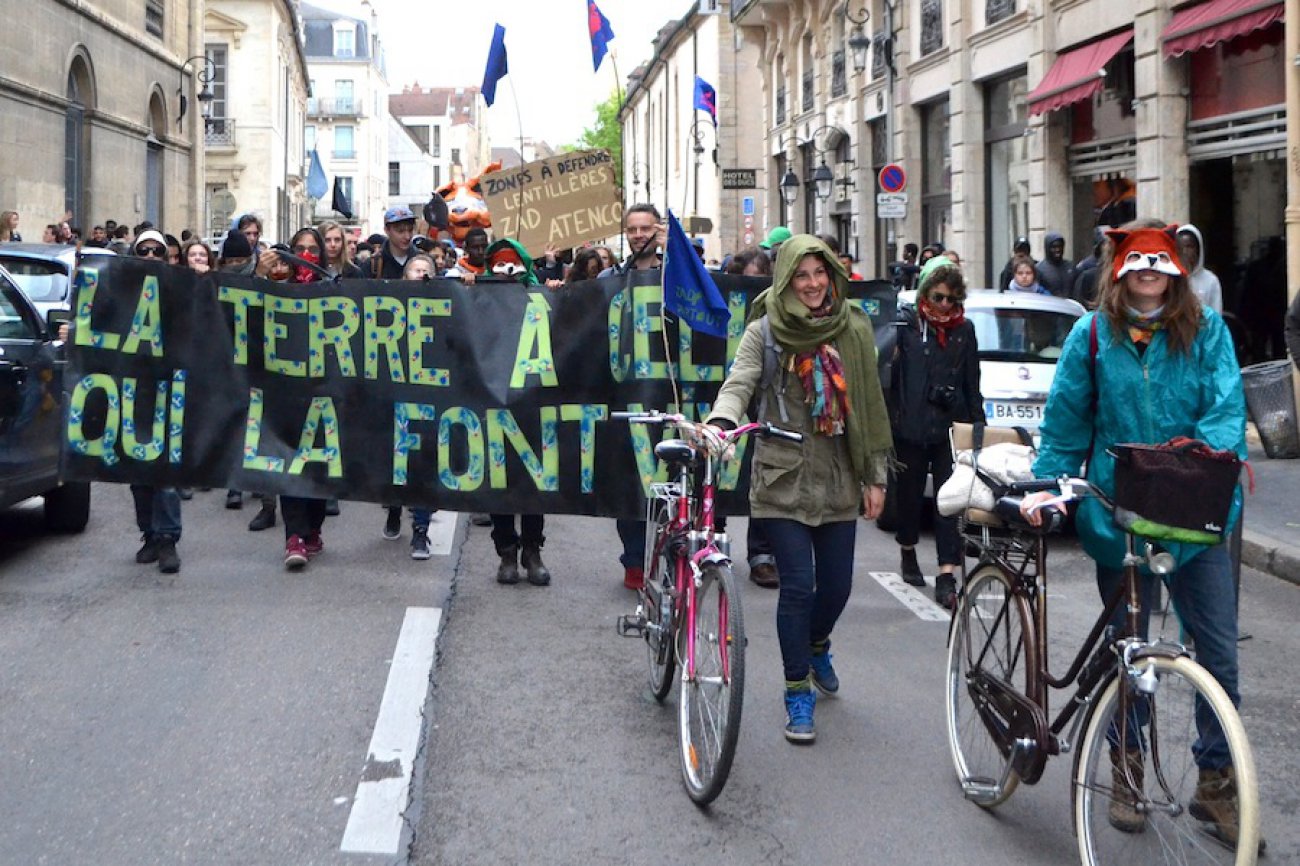
Dijon, France – Over a hundred anti-capitalists have created a nine hectare free district with urban gardens and a free market as they prevent development plans from being constructed. The occupiers are seeking to preserve agricultural land and experiment in collective living while demonstrating horizontal forms of community building.
Presenters from the self-managed Quartier Libre des Lentillères, or Free District of Lentillères, spoke at the Athens Polytechnic University in early June 2018, for the second Networks of Resistance-European Local Struggles Conference.
Starting with a protest in the center of Dijon, France, in the midst of a chilly day in 2010, about 150 people embarked for an abandoned lot, cleaned it up, occupied the area, and formed the Lentillères (lentil garden).
Family farms produce 80 percent of world’s food …Only 1 percent of the world’s farms are larger than 50 hectares, but this small group controls 65 percent of the world’s agricultural land, the FAO report said. Farms smaller than one hectare account for 72 percent of all farms, but control only 8 percent of agricultural land
Eight years later, the urban gardens of the Lentillères encompasses a free zone of over nine hectares that is, by its existence, resisting against development projects while demonstrating “another way of being that [is] non-hierarchical and egalitarian and free.”
“[Lentillères is] a mixture of the preservation of agricultural land, the promotion of agricultural land, mixed in with living spaces and collective spaces.” – Presenter from Lentillères
Dijon, the capital of France’s Golden Coast in the Burgundy region famous for wine and monasteries, is an area rich in history and home to 250,000 people. Presenters said that politicians and developers utilize the history to attract investment. The municipality has been busy with plans to modernize Dijon by building new streets, shopping centers, and installing thousands of CCTV cameras. Developers in Dijon now plan to build 15 new housing projects in what they call ‘eco-quarters’ by 2020.
Recent history of anarcho-punk culture from 1980s-90s is also embedded in the city. Massive “anarcho-fun gigs” in the squatted industrial wastelands of Dijon took place in efforts to reclaim space from capitalism.
The more accepting culture of squatting and land defense in France helped lead to the local, socialist-run government of Dijon essentially allowing anti-capitalists and anarchists to take the space they desired with no problems, the presenters said.

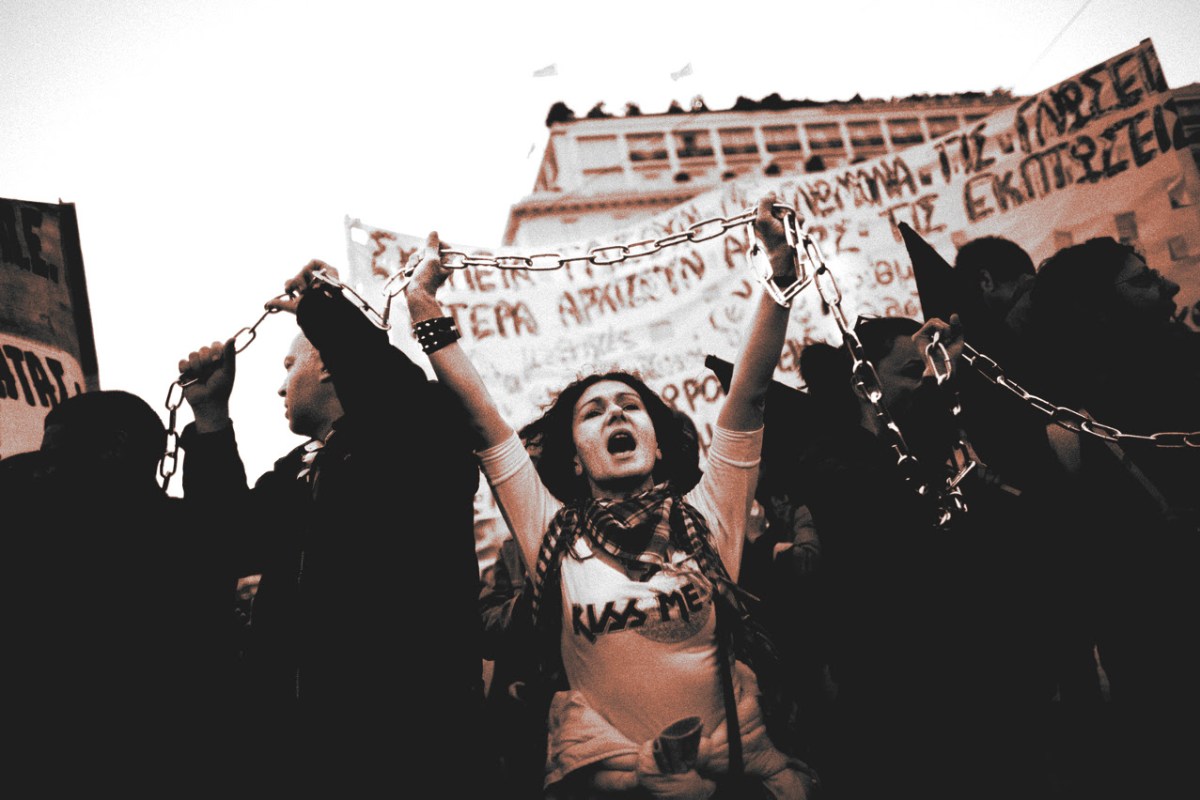
 The Prisons Must Be Destroyed — Author: Raoul Vaneigem
 The Politics of Le Guin’s Opus — David Porter
  The Anarchist Library on mobile
 Anarchism at the End of the World — Author: Darren Allen
 Union of Bulgarian Anarchists in Exile — Author: Union of Bulgarian Anarchists in Exile

 Interview with Abdullah Ocalan — Author: Abdullah OcalanTitle: Interview with Abdullah OcalanDate: June 1998Notes: Abdullah Öcalan: “We Are Fighting Turks Everywhere”, Middle East Quarterly, June 1998, pp. 7985, http://www.meforum.org/399/abdullahocalanwearefightingturkseverywhereSource: https://www.academia.edu/31739562/Interview_with_Abdullah_Öcalan_-_Michael_M._Gunter_1998Dec 16,
  The Xtended Release Manifesto — Author: Xtended Release

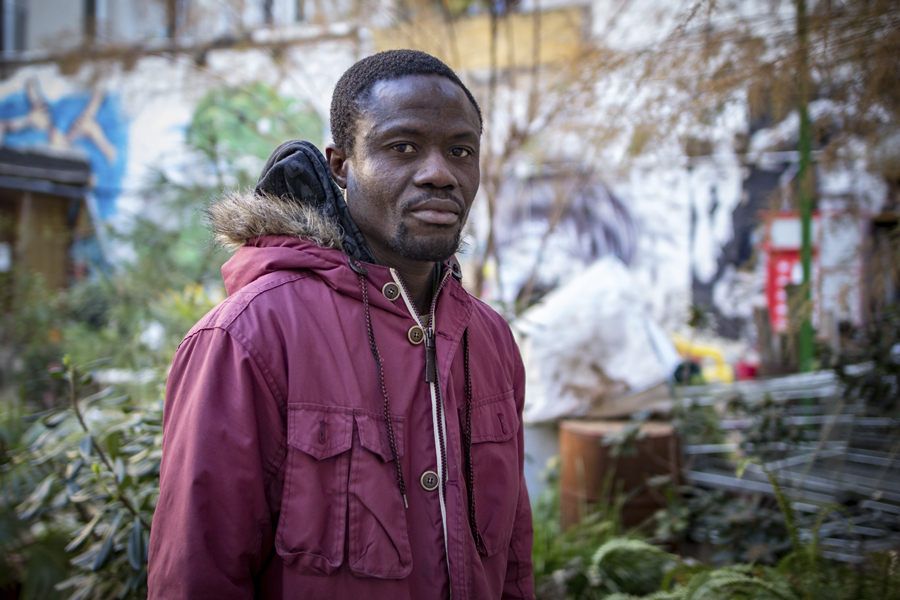 Seydou O., procedent de la Costa d’Ivori, un dels habitants de la Casa Àfrica | Sira Esclasans
 CIEs: The Spanish Guantánamo According to the Spanish Government, a Center for the Internment of Foreigners (CIE) is a non-penitentiary public institution where foreigners are subject to expulsion from the national territory, in short, places of detention for foreigners who, as they usually say , “Have no papers”. However, in practice, and due to lack of regulation and legal regulations, are administrative prisons whose conditions of stay are tougher than the prison itself, where people are interned that without having committed any crime are subjected to a regime Of life harder than those incarcerated accused of a crime.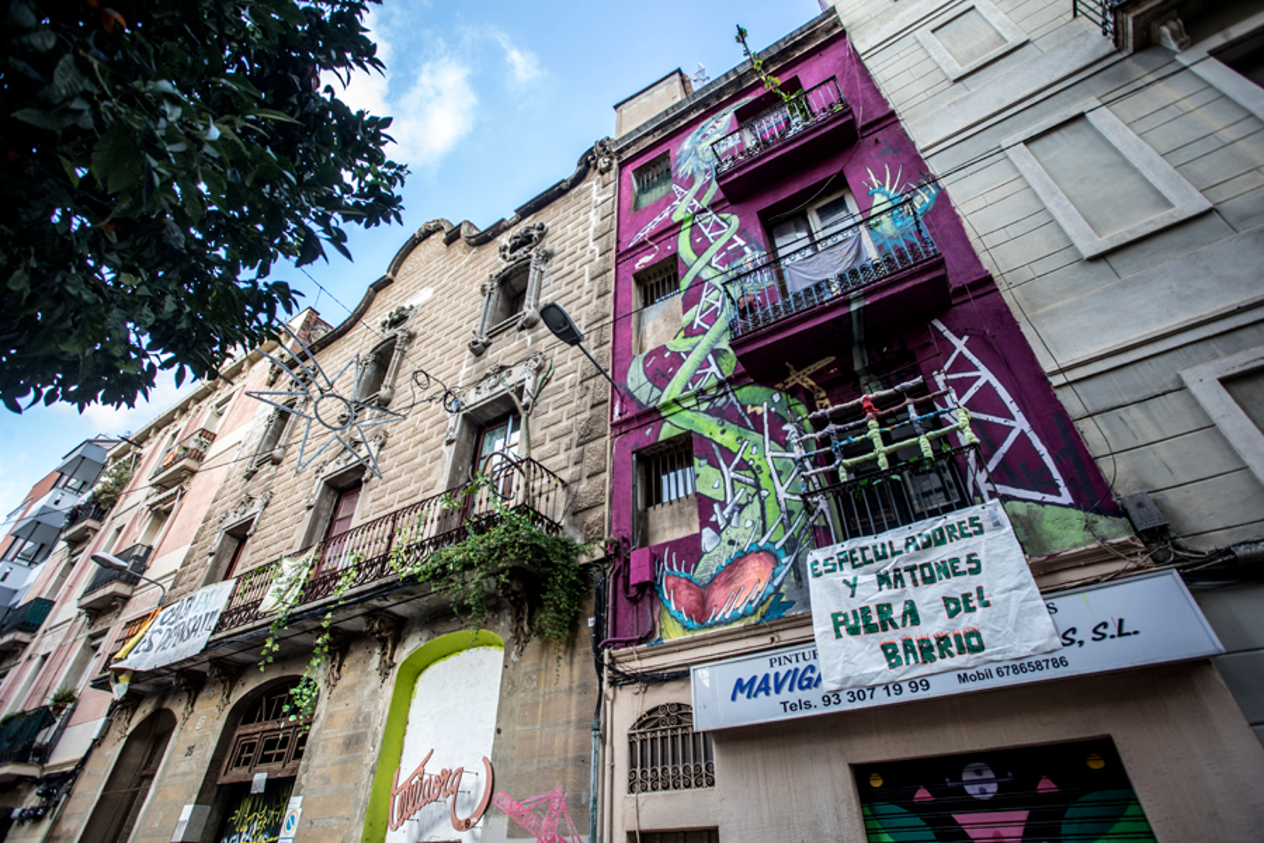
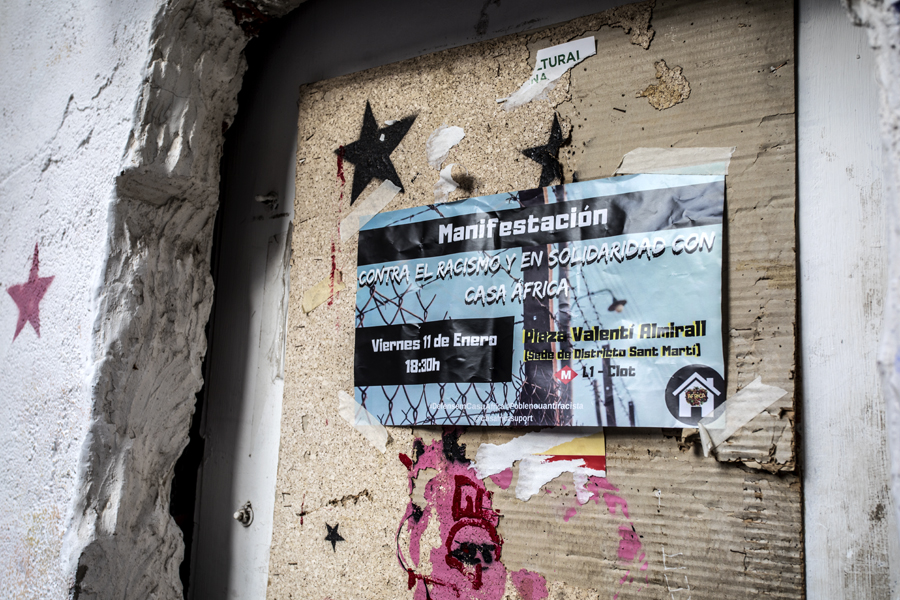 Cartell de la manifestació de suport a les nouvingudes penjat a la façana de la Casa Àfrica – Victor Serri











 Manifestación por el 8M, 2018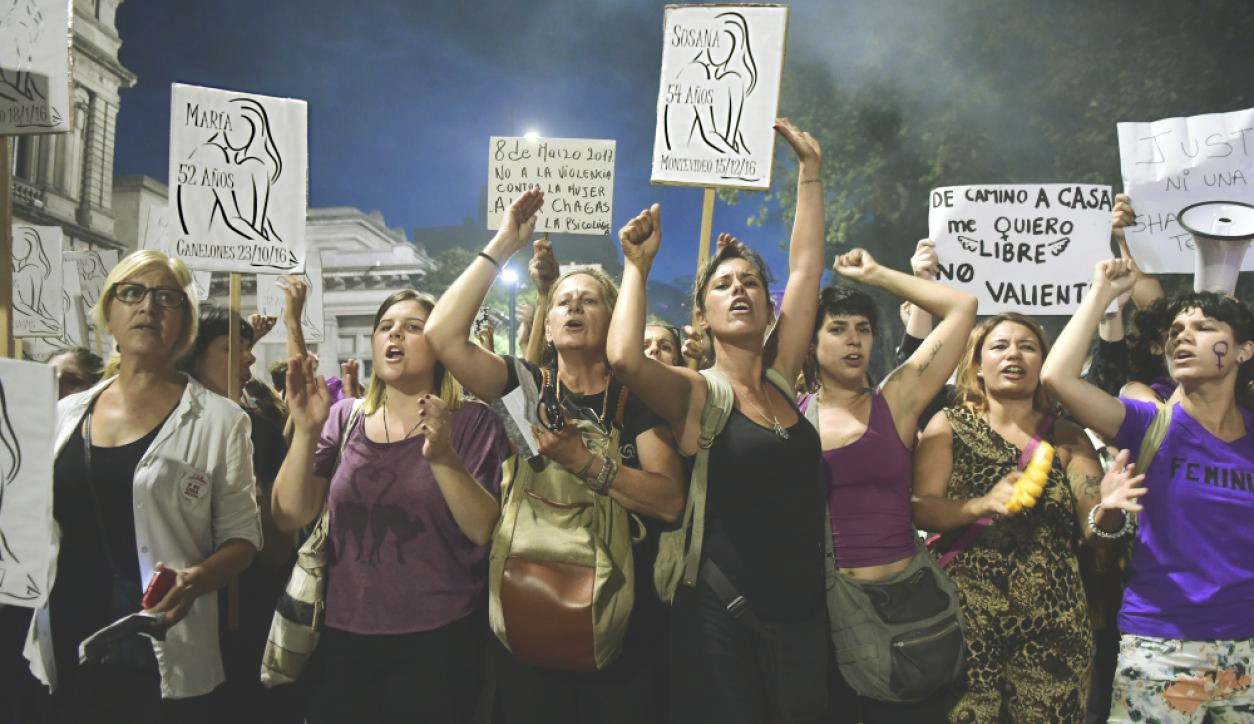




 The Free