-PDF’s- Abraham Guillén -Economist, Anarchist and Creator of the Urban Guerrilla

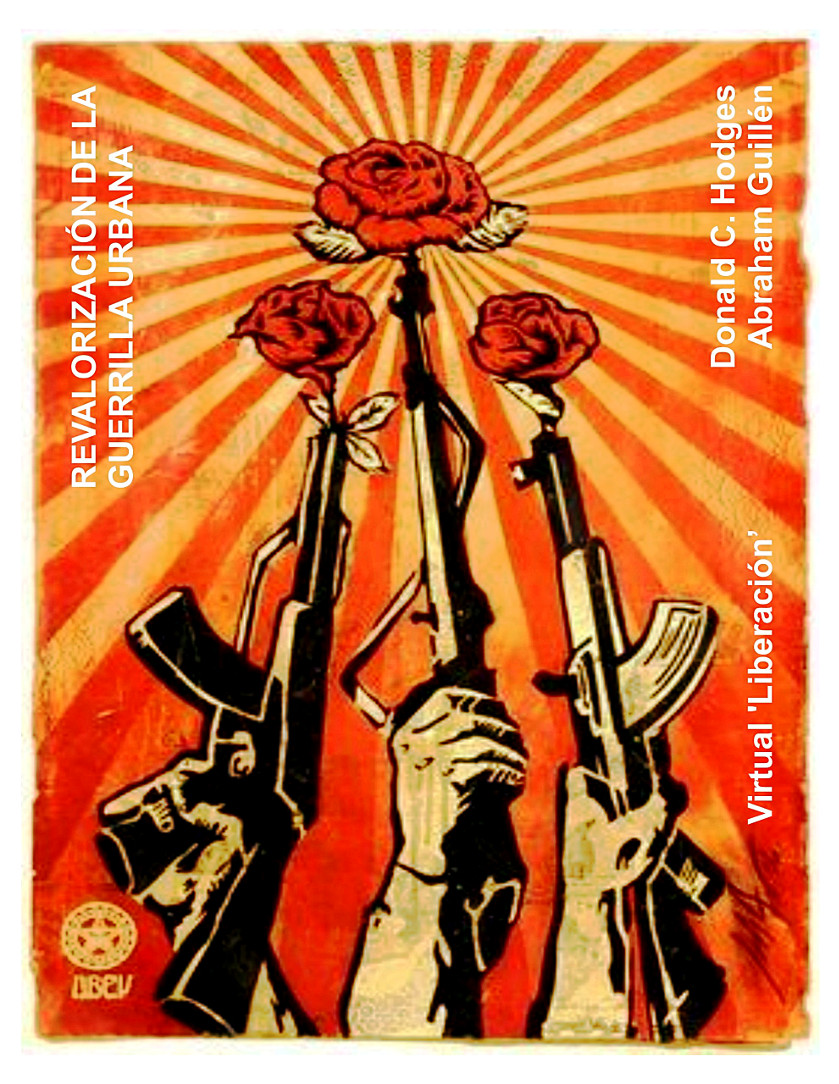
PDF]revalorización de la guerrilla urbana – ARCHIVO DE A. GUILLÉN Y …

original en castellano abajo

   The anarchist militant and libertarian economist Abraham Guillén Sanz wasn born on March 9, 1913  in Corduente (Guadalajara, Spain), in a peasant family,
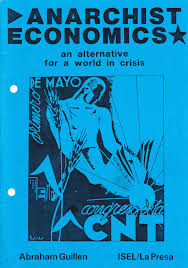
free download here ..Anarchist economics – Abraham Guillen – libcom.org 

PDF book about the economics of the Spanish libertarian collectives 1936-1939.. An improved attempt at describing the possibilities of how production and distribution might be organised on libertarian communist linesfrom an anarcho-syndicalist perspective has been made by SolFed here: http://www.solfed.org.uk/solfed/the-economics-of-freedom

As a young man he did agricultural work and worked extracting resin. Then he studied in Madrid on a scholarship from the republican authorities. Affiliated with the Young Libertarian Youth, he was also a member of the National Confederation of Labor (CNT) and the Iberian Anarchist Federation (FAI).
 

During the first months of the Revolution and Civil War he was director of Juventud Libre  (Free Youth), published by the Peninsular Committee of the Libertarian Youth. He was also editor of Castilla Libre and CNT. He went to the front lines and from 1938 he was political commissar in the XIV Division and the IV Army Corps, commanded by Cipriano Mera. He was also a leader of the Nosotros Group and a spokesman for FAI, the Iberian Federation of Libertarian Youth (FIJL) and the Iron Column in Valencia.

The end of the war found him in Alicante, where he was arrested in the port. He was convicted by a Francoist War court which asked for the death penalty. Later it was commuted to the penalty of 20 years...
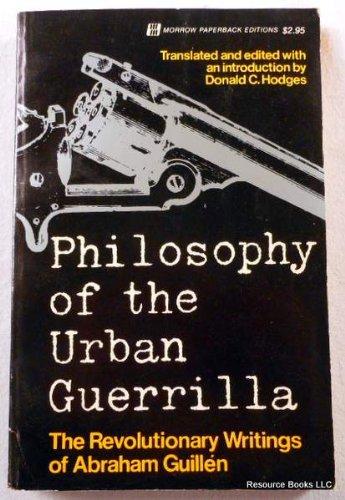
PDF]Philosophy Of The Urban Guerilla The … – PDF Ebook Library

 He was transferred to the penitentiary colony of Añover de Tajo, from where he escaped in 1942.

Then he was part of the National Committee of the clandestine CNT until his arrest in 1943.

Locked in the jail of Carabanchel, he escaped again on New Year’s Eve that same year and, helped by a clan of libertarian gypsies, he went to France in 1944.

In French exile he was editor of the underground publication of the Solidaridad Obrera newspaper wirth Laureano Cerrada and later became involved in the activities of the pro-Communist Supreme Junta of the Spanish National Union (UNE), for which he was expelled from the CNT on February 1 of 1946. He was rehabilitated with the arrival of Germinal Esgleas with the exiled cpmrades.

In 1948 he emigrated to Argentina and spent time in Uruguay and Cuba. During Peronism he edited ‘Economy and Finance’. In Buenos Aires he graduated in Economics and became Professor of Political Economy and Director of Economic Research in the Faculty of Law and Social Sciences of Buenos Aires.

In Argentina he collaborated in several newspapers, such as El Laboralista y Democracia, in Montevideo de Accion, and in Lima de La Prensa. He was also an economic advisor to the University of Labor of Uruguay and internationalist expert of the International Labor Organization (ILO) in self-management economy and cooperative development in Peru.
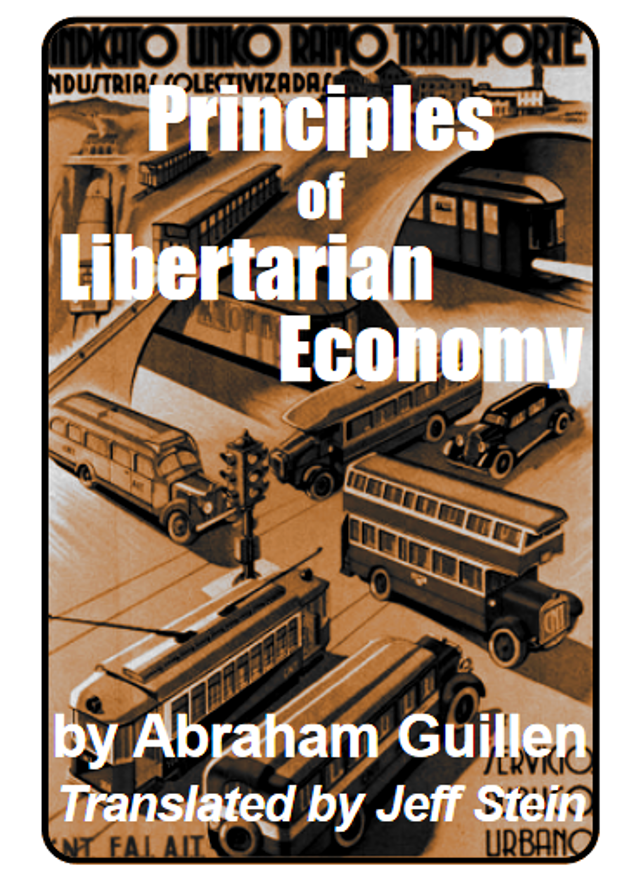
note: ‘Libertarian’ in this translation just means anarchist in the Spanish sense of collective revolution, not in the rightwing US sense..

In 1961 he was imprisoned for a few months accused of being a member of the Uturuncos, active guerrillas in northwestern Argentina during 1960 and 1961; As a result of this, he requested political asylum in Uruguay in 1962 and, shortly after, he got in touch with the revolutionary elements of this country. During these years he was closely investigated by the Latin American and North American intelligence services.
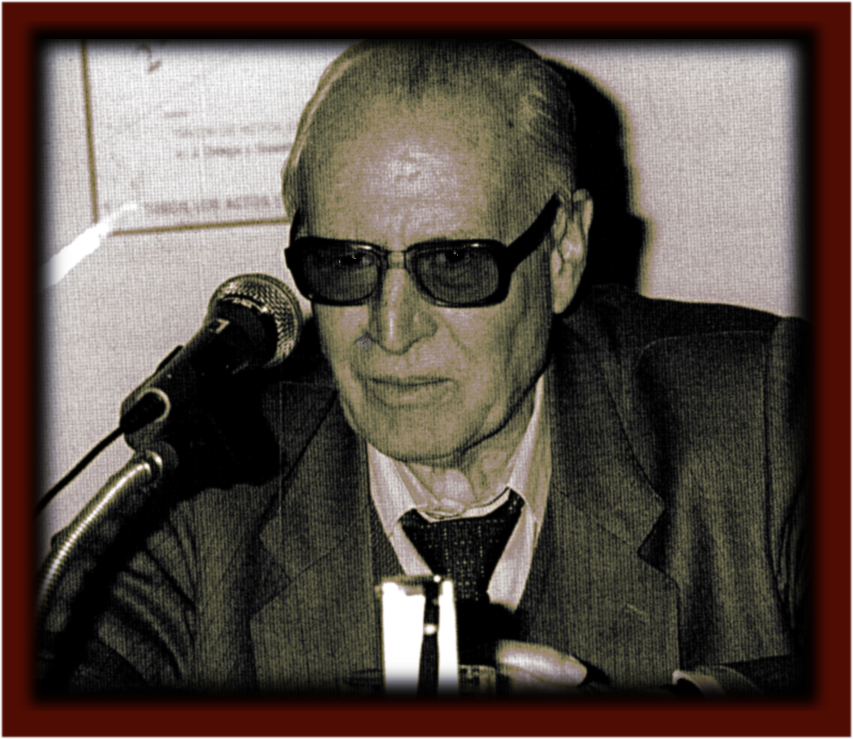
When Franco died, he returned to the Peninsula and in recent years stood out as a lecturer and essay writer in the libertarian press (Anarkia, Year Zero, Bicycle, Cenit, CNT, Espoir, Icaria, Ideas-Orto, Libertarian History, Letter A , Nahia, El Olivo del Oho, Workers Solidarity, Land and Freedom, Working Life, etc.).Abraham Guillén, 1989

His name – he also used pseudonyms (Jaime de las Heras, Fernando Molina, Arapey, etc. – became popular as an expert in urban guerrilla techniques, in multinationals, in self-management and in issues related to the war in Spain and the degeneration of communism.

For many, he was the creator of the urban guerrilla and its practical American configurations (tupamaros, uturuncos, etc.); some have described him as anarcomarxista and guevarista.

Abraham Guillén Sanz died on August 1, 1993 in Madrid (Spain). Professor Donald C. Hodges gave an important part of the personal file of Abraham Guillén in the George A. Smathers Libraries of the University of Florida (Gainesville, Florida, USA).

Source – PACO HEALTH: ABRAHAN GUILLEN SANZ – ECONOMIST, ANARCHIST AND CREATOR OF THE URBAN GUERRILLERA 25.10.2017
original en castellano

martes, 2 de enero de 2018

Abraham Guillén Sanz – economista, anarquista y creador de la guerrilla urbana

Publicado por


Abraham Guillén Sanz – economista, anarquista y creador de la guerrilla urbana

El 9 de marzo de 1913 – según algunos el 13 de marzo – nace en Corduente (Guadalajara, Castilla, España), en una familia campesina, el militante anarquista y economista libertario Abraham Guillén Sanz.
De joven hizo tareas agrícolas y trabajó extrayendo resina. Luego estudió en Madrid becado por las autoridades republicanas. Afiliado a las Juventudes Libertarias de bien jovencito, fue también miembro de la Confederación Nacional del Trabajo (CNT) y de la Federación Anarquista Ibérica (FAI).
 
Durante los primeros meses de la Guerra Civil fue director de Juventud Libre, editada por el Comité Peninsular de las Juventudes Libertarias. También fue redactor de Castilla Libre y de CNT. Marchó al frente y a partir de 1938 fue comisario político en la XIV División y del IV Cuerpo del Ejército, comandado por Cipriano Mera.
 
También dirigió Nosotros, portavoz de FAI, de la Federación Ibérica de Juventudes Libertarias (FIJL) y de la Columna de Hierro en Valencia.
El final de la guerra lo sorprendió en Alicante, donde fue detenido en el puerto. Condenado por un tribunal de guerra franquista, que le pidió la pena de muerte. Posteriormente fue conmutada durante el proceso por la pena de 20 años.
 
Fue trasladado a la colonia penitenciaria de Añover de Tajo, de donde pudo evadirse en 1942.
 
Luego formó parte del Comité Nacional de la CNT clandestina hasta su detención en 1943.
 
 
Encerrado en la cárcel de Carabanchel, pudo huir la noche de Fin de Año de ese mismo año y, ayudado por un clan de gitanos libertarios, pasó a Francia en 1944.
 
En el exilio francés dirigió en la sombra Solidaridad Obrera en la época de Laureano Cerrada y más tarde se implicó en las actividades de la procomunista Junta Suprema de la Unión Nacional Española (UNE), por lo que fue expulsado de la CNT el 1 de febrero de 1946. Fue rehabilitado con la llegada de Germinal Esgleas a la dirección del exilio.
 
En 1948 emigra a la Argentina y pasó un tiempo en Uruguay y Cuba. Durante el peronismo editó Economía y finanzas. En Buenos Aires se licenció en Económicas y fue profesor de Economía Política y director de Investigación Económica de la Facultad de Derecho y Ciencias Sociales de Buenos Aires.
En Argentina colaboró ​​en diversos periódicos, como El Laboralista y Democracia, en Montevideo de Acción, y en Lima de La Prensa. También fue asesor económico de la Universidad del Trabajo de Uruguay y experto internacionalista de la Organización Internacional del Trabajo (OIT) en economía autogestionaria y desarrollo cooperativo en Perú.
 
En 1961 fue encarcelado durante unos meses acusado de ser miembro de los uturuncos, guerrilla activa en el noroeste de la Argentina durante 1960 y 1961; raíz de este hecho pidió asilo político en Uruguay en 1962 y, poco después, se puso en contacto con los elementos revolucionarios de este país. Durante estos años fue investigado de cerca por los servicios de inteligencia latinoamericanos y norteamericanos.
 
Al morir Franco, regresó a la Península y en los últimos años destacó como conferenciante y escritor de ensayos en la prensa libertaria (Anarkia, Año Zero, Bicicleta, Cenit, CNT, Espoir, Icaria, Ideas-Orto, Historia Libertaria, La Letra A, Nahia, El Olivo del Búho, Solidaridad Obrera, Tierra y Libertad, Vida Obrera, etc.).
 
Su nombre – también usó seudónimos (Jaime de las Heras, Fernando Molina, Arapey, etc. – se popularizó como experto en técnicas de guerrilla urbana, en multinacionales, en autogestión y en temas relacionados con la guerra España y la degeneración del comunismo.
 
Para muchos, fue el creador de la guerrilla urbana y de sus plasmaciones prácticas americanas (tupamaros, uturuncos, etc.); algunos lo han calificado de anarcomarxista y guevarista.
 

Abraham Guillén Sanz murió el 1 de agosto de 1993 en Madrid (España ). El profesor Donald C. Hodges dio una importante parte del archivo personal de Abraham Guillén en la George A. Smathers Libraries de la Universidad de Florida (Gainesville, Florida, EE.UU.).

Bibliografía
Es autor de una cincuentena de libros sobre economía, política, filosofía, estrategia, historia, etc., entre los que podemos destacar:

El destino de Hispanoamérica (1952)
Monopolios y latifundios contra la economía argentina (1956)
Radiografía del plan Prebisch (1956)
La oligarquía en la crisis de la economía argentina (1956)
La agonía del imperialismo (1957), Historia de la revolución española (1961)
El imperialismo del dólar (1962)
25 años de economía franquista (1964)
Estrategia de la guerrilla urbana (1965)
Teoría de la violencia (1965)
La Segunda revolución española (1965)
Uruguay: país en crisis (1966)
Dialéctica de la política (1967)
El dilema económico de América Latina (1967)
Checoslovaquia 1968 (1968, con otros)
Pesca industrial y desarrollo económico (1968)
Desafío al Pentágono (1969)
La rebelión del tercer mundo (1969)
Democracia directa (1970)
Socialismo de autogestión. Del utopía a la realidad (1971)
La década crítica de América Latina (1972)
La caída del dólar (1972)
La colonización financiera del FMI (1973)
La élite del poder en España (1973)
Philosophy of the urban guerrilla (1973)
Poder y crisis del dólar (1973)
El cooperativismo Peruano (1975)
La larga crisis de América Latina (1975)
Explosión demográfica, latifundios y revoluciones en América Latina (1975)
El «Gap» tecnológico entre las dos Américas (1975 )
Las inversiones Extranjeras en América Latina (1975)
La propiedad social, modelo peruana de autogestión (Lima 1976)
LTT-IBM en España (1977)
Revalorización de la guerrilla urbana (1977, con Hodges), Guerrilla Y (1978 , con otros)
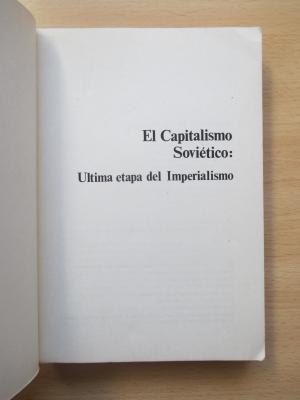
El capitalismo soviético: última etapa del imperialismo (1979)
El error militar de las izquierdas (1980),
Der Krieg ohne enfrentan unos Schlachten (1984)
Stadtguerrilla in Lateinamerika (1984),
Economía libertaria (1988),
Economía autogestionaria (1990),
Socialismo libertario (1990),
Técnica de la desinformaciones (1991)
La guerra. España 1936-1939 (inédito)
etc…https://www.youtube.com/watch?v=aKmvvshF67k
________________
Nota de Edición: mínimos cambios introducidos del original
 
Para Saber más:
You might also like:
Del anarcosindicalismo a la autogestión: propuestas ante …
Declaraciones del Congreso Anarquista Internacional 2016
Comité invisible: El poder es logístico !Bloqueemos Todo!
El Proceso Revolucionario de Cambio de Sistema – La …

9 Anarchist Zines from December 2017, free download

Homeanarchistnews.org

By:   thecollective       The following zines were published over the past month or so within the broad anarchist space. As always, we encourage folks to read, discuss, and engage with the ideas within. Organizing study groups, talk about them with your friends, leave copies in random places, or write scathing critiques of the ideas contained within and circulate them widely. Anarchist ideas are sharper when accompanied by a robust dialog and debate.

If you have suggestions for titles to include next month, let us know.

Below & Beyond Trump: Power and Counter-Power in 2017

This is a “strategy and analysis document” published by the Black Rose Anarchist Federation. It provides an analysis of the political context for social anarchists in 2017 and the prospects for “pro-organizational revolutionary anarchists” to intervene in the current period. The documents focuses on (briefly) understanding ruling class power, social movements, and offers suggestions for a path forward. In response to their understanding of the contemporary period, they call for building social movements from below, offensive campaigns, and developing explicitly socialist practices and programs. It reads a lot like a political party platform with a lot of vague statements, sloganeering, and solutions.

Download the PDF


Plain Words #4

This is the fourth issue of a counter-information project based in Bloomington, Indiana called Plain Words. This issue features a few reports on actions in Bloomington (anti-logging and grand jury solidarity) alongside a number of longer essays. The stand-outs include “Mirror, Kaleidoscope, Dagger: What is Anarchism?” and an essay remembering the life of Haymarket martyr Louis Lingg. Continue reading “9 Anarchist Zines from December 2017, free download”

Local Activist on Iran protests: Bread. Jobs. Freedom.

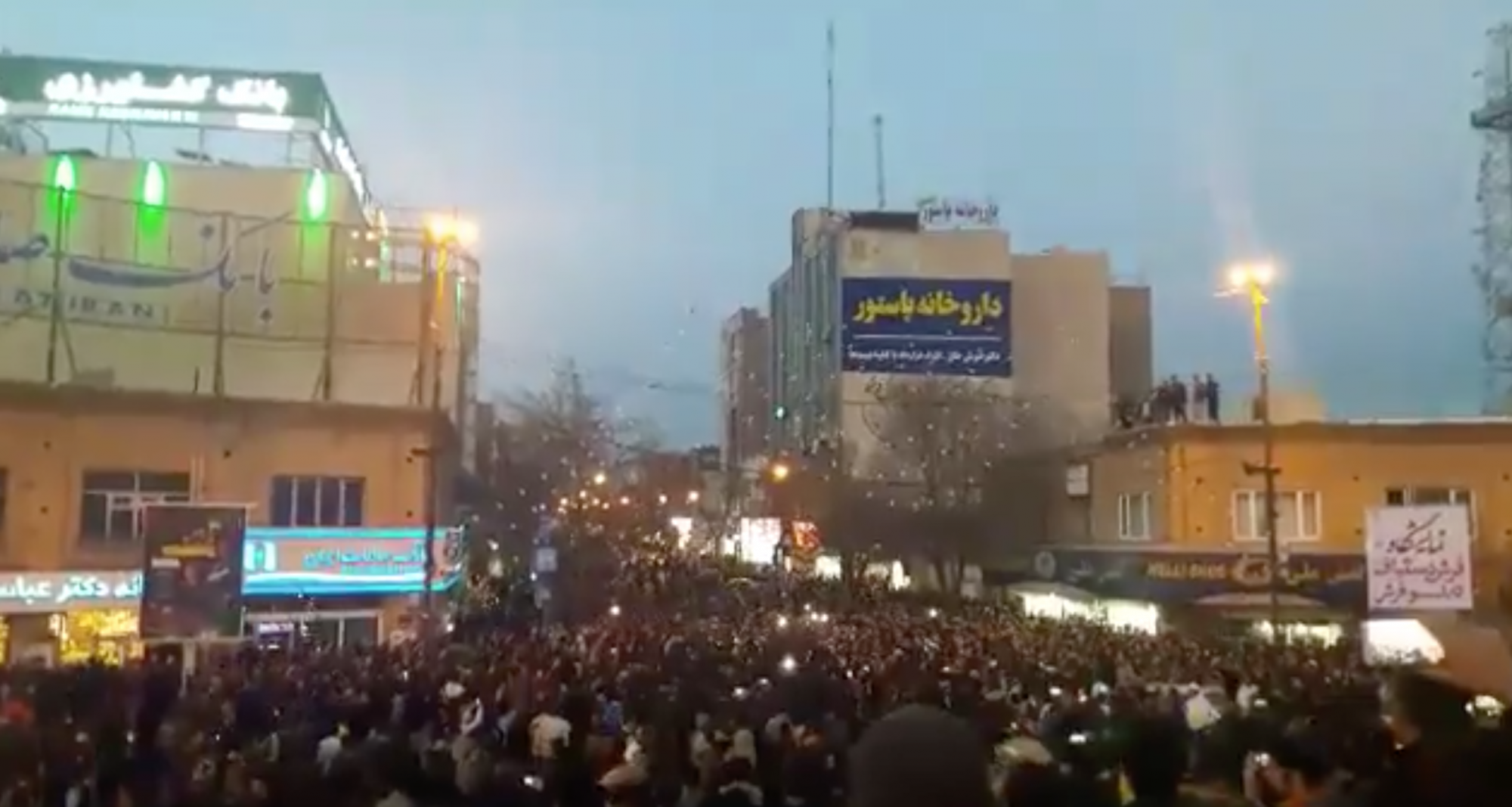
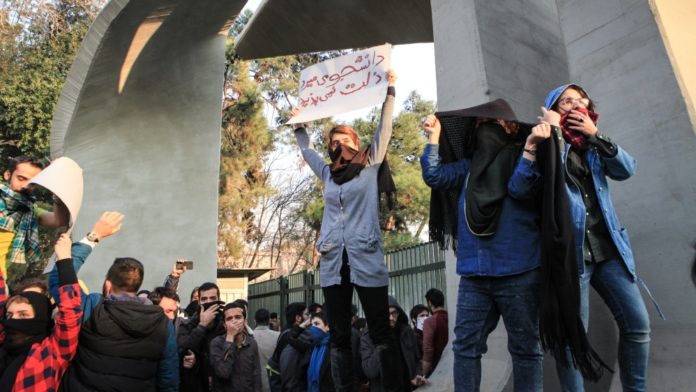
Protest in Zanjan, December 30 2017

https://libcom.org/news/     We are publishing this dispatch direct from an activist in Iran, trying to make some sense of the current wave of protests. The situation is moving so quickly, and the protests sufficiently diffuse, that anyone claiming to know what will happen can be disregarded. The contribution we can make is to ask questions, to look at what has happened, is happening; and only from that speculate about what might happen in the future. We hope that more will contribute to this effort in the coming days and weeks.

We have lightly edited this piece for translation issues and to add footnotes.


From Armin Sadeghi, January 4th 2018.

Are we waging a revolution in Iran? Perhaps not. But if we perceive the essence of a revolution as “the abolition of fear”, then everyone has heard (and seen) the Iranian people shouting with no fear that “the emperor has no clothes”.It is hard to anticipate beyond this, since the conflicting social forces have not yet fully unfolded; and it is almost impossible to grasp a revolution as it’s being made. But, we can speculate on the situation, just as Marx wrote to Ruge1: “The internal difficulties seem to be almost greater than the external obstacles. Continue reading “Local Activist on Iran protests: Bread. Jobs. Freedom.”

Faircoin: the Eco-Solidarity money that could Sweep the World

 1:1 FairCoop risingThe Post-capitalist movement known as FairCoop steadily grows stronger, worldwide, in an integrated way. Independently from the decisions of centralized institutions, statements of hierarchical organizations, fluctuations of market speculation and mainstream skepticism … we are empowering ourselves in an exponential and radiant way.

CONSULT FAIRCOIN DIRECTORY:  HERE

Three years of intense cooperative activism have made economic and social emancipation tools a reality, to the point where anyone with Internet access can become autonomous in their local environment, regardless of the culture, political situation, economic pressures or legal impositions, and become part of the new global fair economy.

For three years with FairCoop, a group of cooperative activists have spent their energy to build an innovative set of tools and solutions to help people to have an actual, practical alternative choice: for instance, they are creating a novel, independent and fair economy with the help of a unique anti-speculative crypto-currency: FairCoin

  •  What is it?
  • https://fair-coin.org/  FairCoin is the first fairly distributed crypto currency.
  • 99.99% Proof-Of-Stake, rewarding savers and cooperation
  • All the coins were premined and fairly distributed to thousands from all over the world. Computing power not needed.
  • Backed by a strong, diverse and committed community.
  • Promotes prosperity and financial freedom with real value.
  • Working to become the coin of fair trade.

In this way, Faircoop and its structures are creating the tools in order to slowly leave the control of the state and capital, offering a realistic transition plan instead of relying simply on empty rhetoric or intellectual abstractions.

It is a constructive project and serves an important role, as the real task for radicalism today is to help people, collectives and regions to realize that they don’t need state bureaucracies, political parties or impersonal economic institutions.

Understanding that we are faced with not just a passing financial crisis but a systemic disintegration, we realized that the truly unrealistic and utopian dream was that of endless capitalist accumulation, as the established powers insist on going headlong over a cliff, stubbornly insisting on growing inequality and endless consumption of finite resources. Continue reading “Faircoin: the Eco-Solidarity money that could Sweep the World”

Kobane Rebuilds: A Trip Through the Nth Syrian Revolution..VIDEO

Democratic Federation of Northern Syria – Communities across northern Syria have begun to rebuild following the cessation of six years’ worth of conflict that transformed once-thriving areas into bombed-out ghost cities.

Kurds Rebuild Kobane as ISIL Loses Foothold in Syria from Unicorn Riot on Vimeo.

British YPG volunteer Oliver Hall was 24 when he recently passed away from clearing buildings booby-trapped by Islamic State fighters

Battles between hardened fighters from the Islamic State of the Levant (ISIL) continue around Deir-ez-Zor as units of the Syrian Democratic Forces (SDF) watch over ISIL’s recently-captured former capital city of Raqqa. Meanwhile, residents are taking steps to re-inhabit the Kobane Canton and other areas recently gained from the Islamic State

Unicorn Riot contributors visited the recovering cities of Kobane and Manbij in northeastern Syria as well as the grim frontline of armed conflict in Deir-ez-Zor, and obtained photographs from Raqqa. The following video presents various elements of life in Syria, such as displaced residents fleeing ISIL control, scoping out an ISIL holdout, clearing a booby-trapped building in Deir-ez-Zor, as well as rebuilding and creating new apartment blocks in Kobane.Bombed-out buildings litter the landscape of Kobane – November 2017

With over half of the country’s population displaced during the last few years and a majority of the infrastructure destroyed, estimates place at least a $300 billion price tag on rebuilding Syria. The human death toll in the Syrian conflict in the past six years, as of early November, was estimated at exceeding 340,000.New Building in Kobani Continue reading “Kobane Rebuilds: A Trip Through the Nth Syrian Revolution..VIDEO”

[31D] XXI Marcha Contra las Cárceles

1_cartel31web

Nos volvemos a encontrar otro año más el 31 de Diciembre alrededor de diferentes centros de encierro para solidarizarnos con todas las personas que sufren el encarcelamiento de sus cuerpos.

La cárcel es la forma más explícita que el poder tiene para reprimirnos: supone un ataque frontal contra la integridad y la autonomía de las personas. El estado utiliza los centros de encierro para castigar a las personas que no siguen las pautas y normas impuestas, disfrazando ese castigo con palabras como reinserción o reeducación.

Se encierra a las personas por el simple hecho de ser pobres, rebeldes o por enfrentarse a este sistema de miseria.
El poder utiliza otros centros de encierro más allá de las cárceles propiamente dichas. Hoy queremos llamar también por su nombre a las cárceles para migrantes y a las cárceles para menores.

Todas las prisiones son una parte esencial de la sociedad en la que vivimos; la sociedad actual y la cárcel se necesitan mutuamente para existir. Afuera encontramos también, aunque con distinta forma, sus mecanismos de control, cámaras, carceleros y chantajes de diversos tipos.

Así pues, la destrucción de la cárcel no pasa solamente por la destrucción de sus muros físicos sino también por la destrucción de unos roles y relaciones sociales que la legitiman y alimentan, convirtiéndonos en presos y presas a todas.

De esta misma manera, el entramado carcelario está formado también por personas, empresas y asociaciones de distinto tipo. Éste no se limita a dentro de los muros y ese hecho abre un amplio abanico de posibilidades de lucha, perfectamente visibles en ciudades construidas cómo cárceles, como Barcelona.

Nuestro mensaje es claro: queremos la destrucción de todos los tipos de cárceles. Hoy hemos querido visibilizar tres tipos de centros de encierro: para menores, para mujeres y para migrantes y así demostrar que si nosotras estamos aquí, ellas no están solas.

MARCHA a LA PRISIÓN DE MUJERES (WAD RAS)
11 h Desayuno + Marcha
C/ Doctor Trueta 76-98, Bogatell L4
*este año más que nunca puntualidad

14 h CONCENTRACIÓN AL CIE ZONA FRANCA
Quedada a las 13:30h al Bus 109 de Plaza España
Comida + Concentración
Trae cualquier cosa para hacer ruido para que puedan oirnos.

MARCHA NOCTURNA en la cárcel de Menores, CAN LLUPIA
Saldremos desde Mundet , linea 3 de metro a las 19:30 hs

Este sera el primer año que nos plantaremos en la cárcel de menores de
Can Llupia, a mostrar nuestra solidaridad, hacer todo el ruido que
podamos y mandar toda nuestra fuerza a lxs chavales que sufren el
encierro.

Luchamos por la destrucción de todo tipo de cárceles y hasta que todas
seamos libres !!
¡¡ABAJO TODOS LOS MUROS , LAS VALLAS Y LAS FRONTERAS !!

Germany in Winter “our Ideas are still Alive, our Resistance not Broken.”

deutsch | english | français | italiano | español

Germany in Winter

Communiqué by the Autonome Antifa Freiburg from 10.11.2017 about the censoring of Indymedia linksunten by the Federal Ministry of the Interior

On 25 August 2017 Federal Minister of the Interior Thomas de Maizière, a member of the CDU, announced the ban of the open-posting platform Indymedia linksunten. Early in the morning, at 5:30, some 250 police raided four private houses and the Autonomous Center KTS in Freiburg. The raids were against five named persons.

Three of these people were handed the ban order from the Federal Ministry of the Interior by the police of the LKA Baden-Württemberg (State Criminal Police Office) who conducted the raid. The Federal Ministry had instructed the State Ministry of the Interior of Baden-Württemberg to enforce the ban. It in turn instructed the Government presidium Freiburg to do so. The Government presidium Freiburg then asked the LKA Baden-Württemberg for official assistance.

On 1 September the LKA confiscated additional IT infrastructure in Freiburg, giving the reason that the computers confiscated in the first raid were described as “strongly encrypted”. In the week following the raids the people concerned were followed round the clock by observation teams. Additionally the confiscation of post and email was ordered.

A week after the raids, the car of one of the concerned people was broken open and the interior panelling of the driver’s door was opened. Inside the KTS, safes were pulled out of walls during the raids and nearly all locks were broken. The autonomous center was devastated. The damage, including the confiscation of money and of technical equipment, amounts to around 80.000 Euro. Continue reading “Germany in Winter “our Ideas are still Alive, our Resistance not Broken.””