Conversion of London Buses to zer0 % of CO2 and toxic gas emissions.
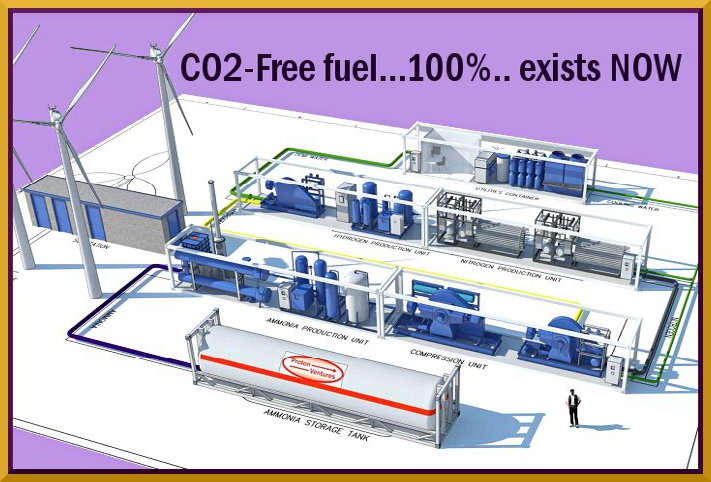
This diagram is the JACKPOT for those really seeking an answer to CO2 and Climate Change. An ‘off the shelf’ NH3 production process is CO2 free and makes a fuel that is also Co2 free and produces no toxic gases when burnt. Available from http ://www.protonchemie.com/NFUEL.html
London Buses manages one of the largest bus networks in the world. Approximately 7,500 iconic red buses carry more than six million passengers each weekday on a network serving all parts of Greater London.
Carbon emissions (approx) = 1.3kg per kilometer www.carb
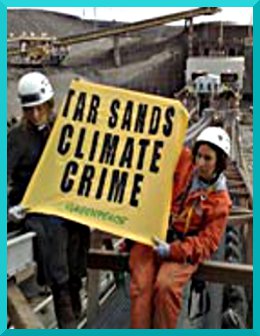
As many as ten thousand demonstrators gathered in Washington today, joining hands to encircle the White House in a human chain. They called on President
Obama to live up to his campaign promises and NOT approve a pipeline to shunt some of the dirtiest oil in the world into America’s heartland.
For months, it had appeared that the Keystone XL pipeline was a done deal. But the pressure appears to be paying off, and just this week President Obama appeared to be backing off, saying he would do what’s best for the economy, but also what’s best for the health of the American people.
The pipeline is a $7 billion project that would carry oil derived from the tar sands of Alberta, Canada – some of the dirtiest oil there is – all the way across the heart of America down to gulf refineries in Texas. The threat has united an incredible range of opposition, from NASA scientist/climate activist James Hansen to the Republican-majority Nebraska State Legislature. (See: Why we should block the Keystone Tar Sands Pipeline – Sen. Bernie Sanders)
.The State Department is supposed to give its final recommendation by December 31, and prior to this week it looked like Obama might try to hide behind that State Department process to let approval slide through. But this week he “took ownership” of the process. “Only a day ago the President’s press secretary said the State Department would make the call,” noted Bill McKibben, climate activist and founder of 350.org. “Now, it’s very good to see the President taking full ownership of this decision and indicating that the environment will be the top priority going forward.”
Obama was playing golf for most of today’s demonstration.
What can you do?
You can go to TarSandsAction.org to get plugged into the fight to stop the Keystone pipeline.
For nearly 100 years we have been forced to use petroleum, causing environmental devast
at
ion, runaway climate change and the agonizing deaths of countless millions of us through air pollution.
Now at last, with Climate Chaos becoming a daily reality, people are starting to ‘discover’ that a CO2, NOx and SOx FREE alternative has existed all along.
We are doing a micro campaign on this blog in favour of this CO2-free fuel. It’s a reformist solution, but one that’s available NOW
The criminal oil industry wants to close blogs like this, afraid prices would collapse if we started making NH3 car fuel.. locally with just wind, air and water
Please can you help? We need lots of free publicity and to persuade ‘respectable’ blogs, magazines, etc to write about it.
For nearly 100 years we have been forced to use petroleum, causing environmental devastation, runaway climate change and the agonizing deaths of countless millions of us through air pollution.
Now at last, with Climate Chaos becoming a daily reality, people are starting to ‘discover’ that a CO2, NOx and SOx FREE alternative has existed all along.
We are doing a micro campaign on this blog in favour of this CO2-free fuel. It’s a reformist solution, but one that’s available NOW
The criminal oil industry wants to close blogs like this, afraid prices would collapse if we started making NH3 car fuel.. locally with just wind, air and water
Please can you help? We need lots of free publicity and to persuade ‘respectable’ blogs, magazines, etc to write about it.
I’ve done some research and lots of posts and links you can view HERE (click below if you’re not already in this section)
NH3 is the closest thing to a perfect transportation fuel.
NH3 is an ultra-clean, energy-dense alternative liquid fuel.
Along with hydrogen, NH3 is the only fuel that does not produce any Greenhouse Gases (GHG) on combustion.
NH3 combustion: 4NH3 + 3O2 2N2 + 6H2O (nitrogen and water vapor)
NH3 is Practical
The first utilization of liquid NH3 as a fuel for motor-buses took place in Belgium during 1943. The motor-bus fleet logged 1,000’s of miles during WWII.
18% hydrogen by weight
NH3 is a liquid fuel at ambient temperatures and moderate pressures (~125 psi)
NH3 has 52% of the energy density of gasoline, and is over 50% more energy dense per gallon than cryogenic liquid hydrogen
Can be used to drive fuel cells, and fuel internal combustion engines (ICE) and combustion turbines
Converting gasoline and diesel ICEs to run on NH3 is relatively straightforward
Can be economically and safely stored and delivered in large quantities
A sustainable, carbon-free fuel for back-up and ‘peaker’ eletricity capacity generation
Will help free us from dependence on imported oil – fossil fuel
I found it, thanks to Proton Ventures http://www.protonchemie.com/NFUEL.htmlThis is it, a process that is CO2 free, which makes a fuel that’s also CO2 free when burned.And it’s cheap and safer than petroleum. Free also of NOx and SOx pollution that KILLS millions of usPlus ALL combustion engines can be adapted to run on it.Q E D… This is a viable answer to cut CO2 emissions by 30% plus (transport)The rest is politics, capitalism, greed and criminal trashing of the planet.
Why NH3?
Our Mission
The mission of the NH3 Fuel Association is to promote the implementation of NH3 as an affordable, sustainable, carbon-free fuel for transportation and stationary power applications, thereby enhancing economic security, reducing fossil-fuel dependence, and helping save the environment.
Addiction to imported petroleum carries with it huge economic, environmental and security risks . The search for a domestically produced, economical and environmentally friendly fuel has led to one acceptable solution: anhydrous ammonia (NH3). Also known as “the other hydrogen” NH3 is the closest thing to a perfect transportation fuel.
NH3 is an ultra-clean, energy-dense alternative liquid fuel.
Along with hydrogen, NH3 is the only fuel that does not produce any Greenhouse Gases (GHG) on combustion.
Hydrogen combustion: 2H2 + O2 2H2O (water vapor)
NH3 combustion: 4NH3 + 3O2 2N2 + 6H2O (nitrogen and water vapor)
NH3 is Practical
The first utilization of liquid NH3 as a fuel for motor-buses took place in Belgium during 1943. The motor-bus fleet logged 1,000’s of miles during WWII.
18% hydrogen by weight
NH3 is a liquid fuel at ambient temperatures and moderate pressures (~125 psi)
NH3 has 52% of the energy density of gasoline, and is over 50% more energy dense per gallon than cryogenic liquid hydrogen
Can be used to drive fuel cells, and fuel internal combustion engines (ICE) and combustion turbines
Converting gasoline and diesel ICEs to run on NH3 is relatively straightforward
Can be economically and safely stored and delivered in large quantities
A sustainable, carbon-free fuel for back-up and ‘peaker’ eletricity capacity generation
Will help free us from dependence on imported oil – fossil fuel
NH3 is Available
Current worldwide annual production is -130 million tons – primarily produced from natural gas and coal. China is the #1 producer at 30 million tons annually
20 million tons of NH3 and NH3-based fertilizers are consumed annually in the US as fertilizer (equivalent in energy to ~3.5 billion gallons of gasoline)
Storage and delivery infrastructure of pipelines, barges, rail and truck already exists (3,000+ miles of pipeline in the US; retail outlets exist in practically every state, 800 outlets in Iowa alone)
Can be produced cleanly from coal and natural gas with carbon sequestration, and also from biomass, renewable energy sources and nuclear power, using nitrogen from the air
Can be recovered from agricultural animal waste
Naturally produced in legumes (via nitrogenase bacteria)
Is an alternative fuel under the Energy Policy Act of 1992, allowing NH3 vehicles to qualify for fleet sale
NH3 is Low Cost
Comparable to or lower in price than gasoline on an equal energy basis
NH3 produced using renewable or nuclear source electricity will be stable in price and increasingly cheaper, per BTU, than fossil based fuels.
NH3 is Environmentally Friendly and Safe
Zero carbon, no resultant Greenhouse Gases (GHG) on combustion
NOx is easily neutralized (NH3 is used as the active chemical reactant in NOx reduction, and CO2 and SO2 capture)
If released NH3 in an accident NH3 is very difficult to ignite, is lighter than air (dissipates upwards), and its odor alerts
NH3 is not a Greenhouse Gas (GHG)
Will not damage the ozone layer
The X-15 rocket plane set speed and altitude records in the 1960s powered by NH3. Wind-generated electricity can be locally converted to NH3 for fertilizer and fuel, without expansion of the electricity transmission grid.
NH3 pipelines and storage terminals cross the agricultural midsection of the United States – an example of existing infrastructure that allows low cost, safe distribution of NH3. Storage is in refrigerated, liquid, above-ground steel tanks. NH3 is also transported by a broad array of existing rail, ship, and truck transports.
What if we do not need to wait for the hydrogen future of the year 2030? What if our hydrogen future is within our grasp right now?
It is.
The one pollution free, hydrogen-based renewable fuel we could begin using today on a large scale is anhydrous ammonia, one of the most commonly synthesized chemical compounds on the planet. Anhydrous ammonia is already used worldwide as fertilizer for its nitrogen content, and delivered by a well-established and safe infrastructure. Due to its hydrogen content, anhydrous ammonia (NH3) can be used in both gas and diesel internal combustion engines with minor modifications, can be used in direct ammonia fuel cells, and can provide hydrogen feedstock for standard hydrogen fuel cells…..
At the same time, improved technologies are coming on-line including lower cost electrolyzers and an approach called solid-state ammonia synthesis (SSAS), which makes ammonia without making hydrogen as an interim step.Even with the existing electrolyzer and Haber-Bosch process, ammonia is cost competitive with gasoline retailing at prices above $3 per gallon.
Ammonia has a long and successful history as a substitute for petroleum based fuels……
Of course, ammonia is not without its challenges. Ammonia is an inhalation hazard and must be handled with respect. But, the world ammonia industry produces and delivers 130 million tons a year with an exemplary safety record. About 20 million tons of ammonia is consumed in the U.S. annually, largely as fertilizer, and delivered by truck, rail, barge, and 3,000 miles of small-diameter, underground carbon steel pipeline in the U.S. agricultural heartland. Ammonia is not classified as a flammable liquid by the DOT, and does not have the fire and explosion hazard of gasoline, natural gas, propane, or hydrogen. Although hazardous when inhaled, it is lighter than air and disperses into the atmosphere when released, and without residual harmful effects. Ammonia is not a greenhouse gas, and does not attack the ozone layer.
For ammonia to be in wide use as a transportation fuel, design standards for on-board ammonia fuel tanks must be established as well as procedures for ammonia transfer from storage to vehicle tanks, however much of this work is already in place…..
The best features of ammonia are those it shares with hydrogen: it can be used both in internal combustion engines and in fuel cells, it produces no greenhouse gasses on combustion, and it can be produced from a wide variety of renewable energy resources…..
If hydrogen is the answer to the energy challenge of peak oil, then there is absolutely no reason to wait. The better hydrogen future is ready right now with proven
Developing new carbon fuels will KILL US ALL
technology, from production and distribution to storage and engine modification. An aggressive program to use wind and solar power to generate this carbon-free fuel can create a sea of change in our energy policy. Ammonia fuel is not the one single answer to peak oil, because there is no single answer. But as an existing implementable strategy to cut greenhouse gases, reduce reliance on fossil fuels, and create new green collar jobs, ammonia is the stepping stone to the hydrogen future that up until now seemed decades away. ….
Larry Bruce is an international consultant in strategic planning and enterprise development and Marketing Director of StrandedWind.org. Joe McClintock is a physicist investigating alternative fuels. John Holbrook is Director of AmmPower LLC and Chairman of the Ammonia Fuel Network.
The front of his white and blueT-shirt had the Watershed Management Group (WMG) logo on it and in a font that looked like it had been stamped diagonally across read the words “CO-OP”. When he turned around to grab a pick axe, other wise known as an Arizona Shovel, the back of the shirt said “I Do My Labor with My Neighbor!”.
-This catchy little phrase does more than just rhyme. It tells of an opportunity for community, a way to reach an otherwise high costing goal. A chance to not only change your own personal landscape, but eventually heal a neighborhood and enjoy a little bit more of a responsible feeling as you look out at your land.
-The WMG has created, and successfully run, this CO-OP program down in Tucson and I have been lucky enough to not only participate in some of the workshops, but I have also been able to meet some amazing and interesting people who share like views on how we should be friendly to the desert……….
……….. -While the clock neared the end of the workshop…who am I kidding, it was actually an hour past end time, the clouds could no longer hold back their hydro-soaked insides and it began to RAIN!! Like I said, the workshop was officially over, but there was still almost every single volunteer still there. This was a passion and a need to see this through. A belief that this was important and an opportunity to grow a property AND grow the knowledge inside. So we hit another gear, put the final pieces into place, and actually started catching that SkyGold into one of the pur-tiest metal tanks in the neighborhood.
-My brain, my clothes and my passion left soaked that early evening as I drove off…back to the Valley of the Sun. -Hopefully in the very near future, I too can wear a white shirt with a blue logo that PROUDLY states:
Here’s what I’m excited about these days: we just held a volunteer workshop to totally makeover a Tucson family’s front yard. 15 volunteers transformed it from a sterile, black-plastic and rock-laden heat island into a runoff-capturing garden of native plants, organic mulch, and (soon) living soil. This workshop, which was followed by blessed afternoon monsoon rain showers, was just the second in some 24 public workshops that WMG is co-hosting with six different Tucson neighborhoods over the next year. Through these projects we will de-pave a closed alley to turn it into a pocket park, install rainwater-fed trees along the entrance of a school, and create rain gardens in the middle of a parking lot, among other things. We will do all of this alongside volunteers from each neighborhood. 20 of these volunteers recently completed a 5-month training with WMG to assess, design, build, and advocate for these kinds of green infrastructure in their communities.
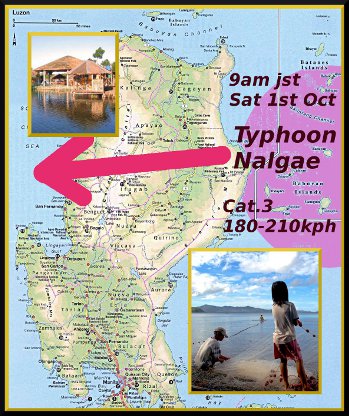
The hotter seas, provoked by global warming are causing tropical storms to mushroom into giant typhoons. Luzon is to be hit twice in a week, threatening 38 million people
As Philippine was observing commemorations for the nearly 700 people killed during the 2009′s typhoon Ketsana, which dumped a month’s rainfall in just 12 hours, powerful typhoon Nesat smashed the country’s coastline. Nesat has killed some 31 people in the country; with winds gusting to 93 mph (150 kph) and rainfall above 100 mm, the country’s capital Manila was completely brought to standstill on September 26 with at least 111,000 people immediately evacuated from the Albay province. Nesat is the 17th tropical storm and the 8th typhoon of the current year. Nesat was a dangerous category-3 hurricane that is still active (September 28) and moving towards Vietnam and adjoining China now after devastating Philippines.
But now another “expected” monster is forming in the Pacific!There had been a total of 32 tropical depressions in the western Pacific ocean during the current year.
Updates regarding Typhoon Nalgae (also known as Quiel)
It is the 19th tropical storm of the current year, it is the 9th typhoon. Tropical storm Nalgae intensified into a category-1 hurricane and now 1, 195 km ENE of Manila. The storm has continued to move westwards. It is expected to further intensify into a category-2 hurricane due to favorable outflow and warm sea temperatures on late Friday/early Saturday, its affect will mostly start by Friday late or Saturday.
Latest: Nalgae is strengthening phenomenally due to temperatures of 30C in The Phillipine Sea. Some reports estimate it will strike Luzon as a Category 4 Hurricane, with winds to 250kph. Some predict it will then swerve North, sparing Vietnam, but threatening Hong Kong
In an end of the summer compact EF!AU, find news about kicking shell in the teeth in Rossport again and then some more, solidarity with the community at Dale Farm, and anti-GM resistance – Spuds you Don’t Like demo in England, sabotage in Germany, France and Scotland.
On top of the usual contacts and dates, read about solidarity with jailed Swiss nanotech activists, resistance against steel plants, mobile phone masts, mining and energy projects here & across the world – stay angry and don’t carry on as usual!



 NH3 is Practical

 NH3 is Low Cost
 NH3 is Environmentally Friendly and Safe
 The X-15 rocket plane set speed and altitude records in the 1960s powered by NH3. Wind-generated electricity can be locally converted to NH3 for fertilizer and fuel, without expansion of the electricity transmission grid.



 The Free