July 8, 2022 from libértame (set me free) comment at original translation thefreeonline

you left quietly Dear friend, leaving us sadness in your absence We owe you so much! On our side you were, down the unpleasant road, marking our footprints With your voice, with your pen; with your heart, you recorded them In the days of struggle, in the hours of pain, in the days of hope… (Pura Pérez to Lola Iturbe)
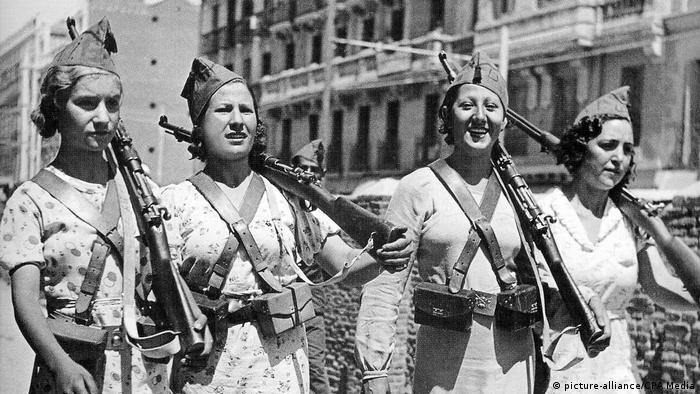
We define a militia woman as any armed woman who, as of 1936, participated directly in the combats of the Spanish Civil War or was trained and prepared for it in order to defend cities and towns.
Although some differences between these two groups of women remain to be identified, these women represented a change in the role of the sexes, not only in military terms, but above all in Spanish society.
The Spain of the 1930s was still very attached to the traditional conception of roles. Women were assigned to the domestic sphere, and poverty often brought them to the estates of large landowners, where they worked in agriculture or as a servant.
The start of the civil war in June 1936 then drastically changed the lives of many Spanish women. It was mainly the women of the cities who gave a new image of women. The first “Milicianas” (Women militia fighters) appeared on posters as a symbol of anti-fascist resistance.
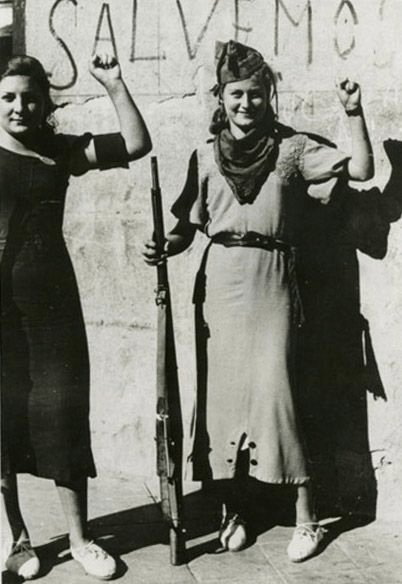
These militia women, especially in the two largest organizations, the “anti-fascist women” and the “free women”, fought on the front lines alongside the men, although they also did what was traditionally considered “women’s work” there (cooking, cleaning , sewing, washing).
“You see, what the men did, we did too. If we also did some extra work like cleaning or cooking, we would stand guard right after like the men. And when we attacked, we attacked just like men. We did what was humanly possible, and some women did it even more than the men.” (Concha Perez Collado)
Continue reading “The Women’s Militias in Spain from 1936 . – libértame. – (set me free) English/Spanish”