Chris, a psychotherapist with sixteen years in the field, joins me to critique the psych profession.
We explore the history of psychology and psychiatric coercion, the violence and carceral logic implicit in locking away the “insane.”
We discuss the ways in which neurotypicality is constructed to serve the hegemony of the ruling class. Chris and I examine the ways that capital and the state regiment our minds, cajoling, commanding, and controling.
We also touch on the emerging concept of “mad liberation.” It’s a pretty wide-ranging conversation.
Follow Chris on Mastadon. https://kolektiva.social/web/@TomMasaniello Support Coffee with Comrades on Patreon, follow us on Twitter and Instagram, and visit our website. Pick up a Coffee with Comrades shirt or coffee mug at our official merch store. Coffee with Comrades is a proud member of the Channel Zero Network.
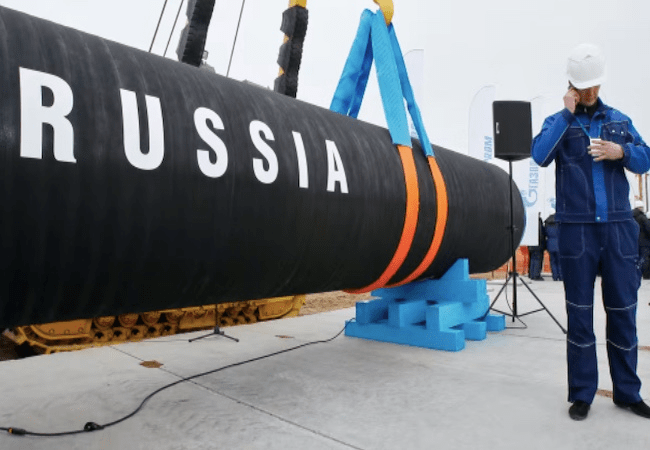
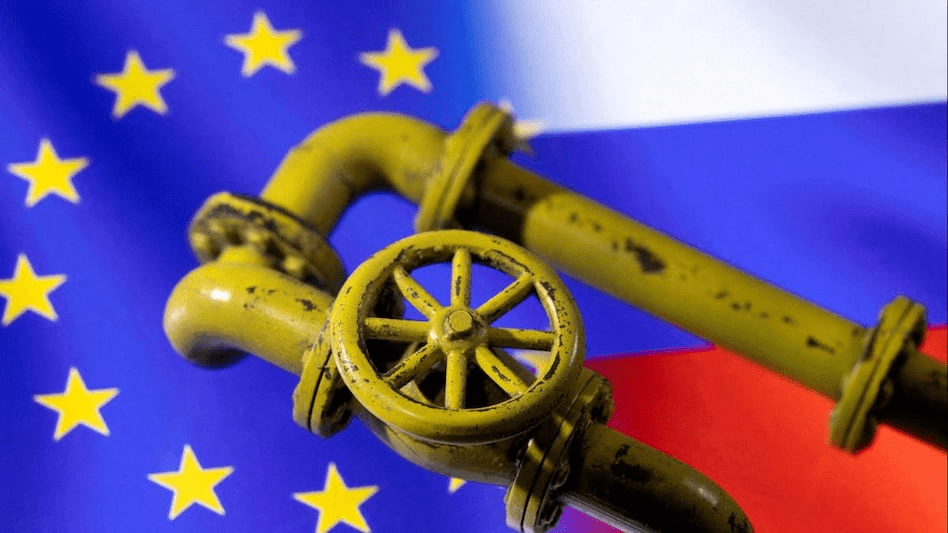
Ukraine’s blocking of Russian gas to Europe will hurt Russia, help the US dollar, and alsodecimate the industry of its European “allies”. At first sight it looks suicidal for the Ukrainian economy.
For decades Ukraine has relied on transit fees for gas passing through to Europe and campaigned for their continuance.
However Ukraine is now being pledged $40.ooo.ooo,000 from their US sponsors, and we can be sure that cutting Russian gas was one condition, destroying European competition into the bargain.
$40 billion is not so outrageous for the US as they have already a cumulative debt burden of $133.38 trillion in debt(Truth in Accounting March 2022), and it should cover the loss of transit fees.
Kiev cites “force majeure” to halt a third of Russian transited gas flow to Europe, while Gazprom says there have been no issues that would justify the move.
Russian gas conglomerate Gazprom has received no confirmation of force majeure or any obstacles to continued transit of gas through a junction in Lugansk Region, the company said on Tuesday, after Ukraine’s operator OGTSU announced it would halt further deliveries starting May 11, due to the presence of “Russian occupiers.”
Gas Transit Services of Ukraine (OGTSU) declared force majeure on Tuesday, saying that it was impossible to continue the transit of gas through a connection point and compressor station located in the Lugansk area. As OGTSU personnel “cannot carry out operational and technological control” over the Sokhranovka connector point and Novopskov compressor station, the company cannot continue to fulfill its contract obligations, it said.
Gas from this connection will not be accepted into the transit system of Ukraine starting at 7 am on Wednesday, OGTSU said. Sokhrankovka accounts for almost a third of the Russian gas that transits through Ukraine to Europe – up to 32.6 million cubic meters per day – according to the operators.
Gazprom has received no confirmation of force majeure or disruption of operations at Sokhranovka or Novopskov, company spokesman Sergey Kupriyanov said on Tuesday. He added that Ukrainian specialists have had full access to both facilities all along, and there had been no complaints about it previously.
Kupriyanov also said that Gazprom has been notified by Ukraine’s gas company Naftogaz that if Russia continues to supply gas through Sokhranovka, Kiev will reduce the volume at the point of exit by the same amount, effectively confiscating the gas.
While OGTSU has proposed to reroute the gas to Sudzha, a connector located in the Sumy region and controlled by the Ukrainian government, Kupriyanov said this was “technologically impossible.”
“The distribution of volumes is clearly spelled out in the cooperation agreement dated December 30, 2019, and the Ukrainian side is well aware of this,” he said.
Gazprom is fulfilling all of its obligations to its European customers, with all the transit services in accordance with the terms of the contract and paid in full, Kupriyanov pointed out. Moscow has continued gas deliveries to Europe, including transit through Ukraine, regardless of the ongoing military operation and the embargoes against Russia imposed by the US and its allies in the EU.
Kiev cites “force majeure” to halt a third of Russian transited gas flow to Europe, while Gazprom says there have been no issues that would justify the move.
For decades Ukraine has relied on transit fees for gas passing through to Europe and campaigned for their continuance.
Ukraine’s blocking of Russian gas to Europe will hurt Russia, help the US dollar, and alsodecimate the industry of its European “allies”. At first sight it looks suicidal for the Ukrainian economy.
However Ukraine is now being pledged $40.ooo.ooo,000 from their US sponsors, and we can be sure that cutting Russian gas was one condition, destroying European competition into the bargain.
$40 billion is not so outrageous for the US as they have already a cumulative debt burden of $133.38 trillion in debt(Truth in Accounting March 2022), and it should cover the loss of transit fees.
*********
Russian gas conglomerate Gazprom has received no confirmation of force majeure or any obstacles to continued transit of gas through a junction in Lugansk Region, the company said on Tuesday, after Ukraine’s operator OGTSU announced it would halt further deliveries starting May 11, due to the presence of “Russian occupiers.”
Gas Transit Services of Ukraine (OGTSU) declared force majeure on Tuesday, saying that it was impossible to continue the transit of gas through a connection point and compressor station located in the Lugansk area.
As OGTSU personnel “cannot carry out operational and technological control” over the Sokhranovka connector point and Novopskov compressor station, the company cannot continue to fulfill its contract obligations, it said.
Gas from this connection will not be accepted into the transit system of Ukraine starting at 7 am on Wednesday, OGTSU said. Sokhrankovka accounts for almost a third of the Russian gas that transits through Ukraine to Europe – up to 32.6 million cubic meters per day – according to the operators.
Gazprom has received no confirmation of force majeure or disruption of operations at Sokhranovka or Novopskov, company spokesman Sergey Kupriyanov said on Tuesday. He added that Ukrainian specialists have had full access to both facilities all along, and there had been no complaints about it previously.
Kupriyanov also said that Gazprom has been notified by Ukraine’s gas company Naftogaz that if Russia continues to supply gas through Sokhranovka, Kiev will reduce the volume at the point of exit by the same amount, effectively confiscating the gas.
While OGTSU has proposed to reroute the gas to Sudzha, a connector located in the Sumy region and controlled by the Ukrainian government, Kupriyanov said this was “technologically impossible.”
“The distribution of volumes is clearly spelled out in the cooperation agreement dated December 30, 2019, and the Ukrainian side is well aware of this,” he said.
Gazprom is fulfilling all of its obligations to its European customers, with all the transit services in accordance with the terms of the contract and paid in full, Kupriyanov pointed out. Moscow has continued gas deliveries to Europe, including transit through Ukraine, regardless of the ongoing military operation and the embargoes against Russia imposed by the US and its allies in the EU.
ER Editor: We imagine the 6 million figure is probably far higher. The truly scary part of this stunning testimony is the reaction of other Canadians, who simply don’t see the problem. We know many such people there.
********
Voices That Need to Be Heard
by LUMA CATHERINE MALONE
I am one of over 6 million Canadians who are currently forbidden to board an airplane, train, boat or long-haul bus to travel across Canada or leave Canada.
The Federal Ministry of Transportation put this rule into effect in October 2021. Now it is late April 2022. The Federal Government of Canada continues to refuse to lift this travel ban. Period. No comment. No discussion. No debate. In addition to the Canadian government travel ban, the United States government forbids us to cross the border by car into the USA.
Canadian Geese Honk & Fly photo by Luma Catherine Malone .
I am one of over 6 million Canadian citizens who are currently being held as political prisoners. The walls of this very large prison are the borders and shorelines of Canada. There are vast amounts of land within the walls of this prison, so it would appear to other Canadians that we are free. But the travel ban has created walls that feel as real as the Berlin Wall once was. I wake up at night, my flight response activated, heart pounding, adrenalin running, terrified. During the day I listen to friends, neighbours and collegues talk about their recent trips to visit family in Canada or holidays abroad. Many are oblivious to the fact that I am one of the invisible prisoners. This disturbs me even more deeply than the midnight panic attacks.
What crime did 6 million Canadians commit? What laws did we break? Why must we be held captive within the borders of Canada? What danger do we pose to airplanes, trains, buses and boats? What harm might we inflict upon our fellow travellers? What havoc might we wreak upon other nations? Why have we been vilified, demonized and condemned?
I am one of over 6 million Canadians who have made health choices other than the government, big pharma and globalist agenda sanctioned drug injection program. I erroneously believed that the Canadian Charter of Rights and Freedoms is a document that protects Canadian citizens from government over reach and tyranny. I innocently believed I lived in a free, democratic country. I received a very shocking wake up call, as did millions of Canadians. Millions have also lost much more than the ability to travel or leave the country. I wonder what it will take for more Canadians to receive their wake up calls.
When the travel ban was announced in August 2021, I was sitting with my mother and sister on the backyard deck at my mother’s home in Toronto. I had flown from my home on Vancouver Island to visit my family, whom I hadn’t seen in 2 years. No drug injections, QR coded vaxports or tests were required to fly. The travel ban announcement pierced me like an arrow to my heart. I collapsed to the ground, weeping. Fear, anger and hurt that I had been silently harbouring since the onset of the plandemic, spilled out. I screamed. I raged. I voiced my heretical views unabashedly. My mother and sister listened.
I expressed how vulnerable and terrified I had been feeling since the Canadian government began to demonize the “unvaxed” and millions of Canadians fell inline like petty bullies, parroting hateful propaganda. I told them how upsetting it was to listen to close relatives condemn and denounce the crazy anti-vaxxers and freedom protesters while we sipped lemonade together at a family gathering. How hurt I felt when I was not welcome in the homes of other family and friends. My sister admitted she was afraid I would die if I didn’t get the vax. I admitted I was afraid my entire family would die because they are all double vaxed. My sister and I laughed. Then we cried. Feeling our love, care and concern for each other, tender places in my heart opened. I let go and cried even more. My mother looked on with slight puzzlement and hugged me.
My mother’s memory and daily functioning are rapidly declining with the onset of Alzheimers. She was always a critical thinker. Even though she struggles to articulate her thoughts, she knows that something is not right. Since the lockdowns and social distancing began in 2020, services, in person programs and assessments for people living with Alzheimers all stopped. She lives alone. My siblings who live in Toronto are her primary support. I live 3,500 km away. It takes 5-6 days to drive to Toronto from Vancouver Island. It takes 5 hours to fly.
Según organizaciones de derechos humanos, la expulsión de civiles representa una clara violación de las leyes internacionales y un crimen de guerra
El régimen de Tel Aviv ha comenzado la expulsión de 1300 palestinos habitantes de . La decisión, tomada por el ministerio de asuntos militares del régimen israelí pretende convertir dicha área en un campo de entrenamiento militar.
Según organizaciones de derechos humanos, la expulsión de civiles representa una clara violación de las leyes internacionales y un crimen de guerra, por lo que Israel podría ser llevado ante el Tribunal Internacional de Justicia.
nota. el video ya no está disponible porque han terminado la cuenta.
Pero, a pesar de todo, el régimen de Tel Aviv ya ha comenzado la limpieza étnica de esta zona de Palestina y decenas de excavadoras militares se han posicionado listas para dar comienzo a la destrucción de cientos de hogares.
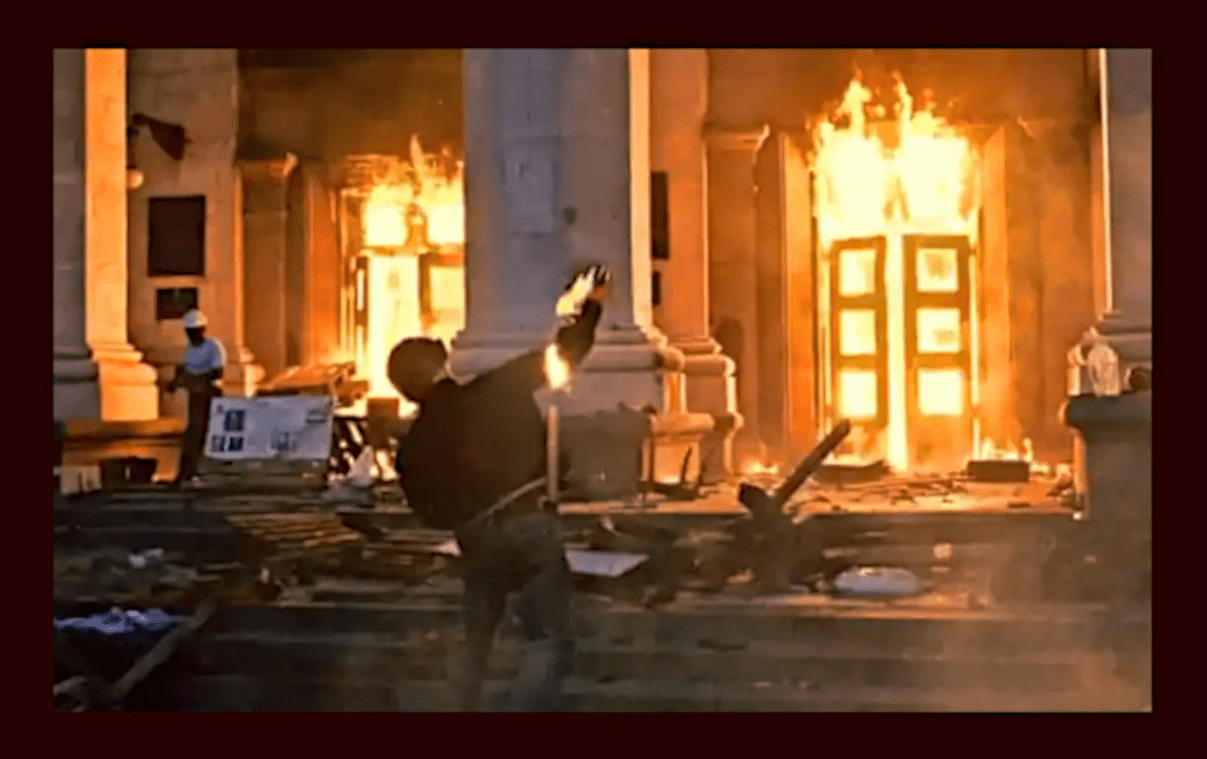
Massacre was part of planned act of intimidation by U.S.-installed government and precipitated the 8 year civil war in Ukraine leading to the Russian intervention.
On May 2, 2014, at least 48 people were killed when right-wing Ukrainian forces burned down the Trade Unions Building in Odessa.
The victims had taken refuge in the building after opposing the February 2014 coup d’etat in Ukraine that was backed by the U.S. State Department.
Eight years after the massacre, the International Action Center, a New York-based anti-war group founded by former U.S. Attorney General Ramsey Clark, hosted a public commemoration that included testimony from a survivor named Alexey who currently lives in Luhansk in eastern Ukraine.
Alexey spoke movingly about his friend and comrade, Andrey Brezevsky, who was beaten to death by neo-Nazi thugs with a metal bar after he jumped out of the Trade Unions Building to escape the fire.
On Wednesday news broke that the Department of Homeland Security (DHS) — a department that didn’t exist 20 years ago but today spends $52 billion annually — had created a new “Disinformation Governance Board.”
The news comes just days after Twitter accepted Tesla-Owner Elon Musk’s offer to buy Twitter for $44 billion, a move that critics of the deal claimed could unleash disinformation. (Musk has been vocal in his support for free speech.)
DHS declined to be interviewed by the Associated Press, but issued a statement after news broke of the development.
“The spread of disinformation can affect border security, Americans’ safety during disasters, and public trust in our democratic institutions,” DHS said.
A Ministry Of Truth?
Perhaps naturally, the revelation that the government had created a new board to fight “disinformation” prompted a slew ofNineteen Eighty-Fourcomparisons, especially since it came so soon after Musk’s purchase of…