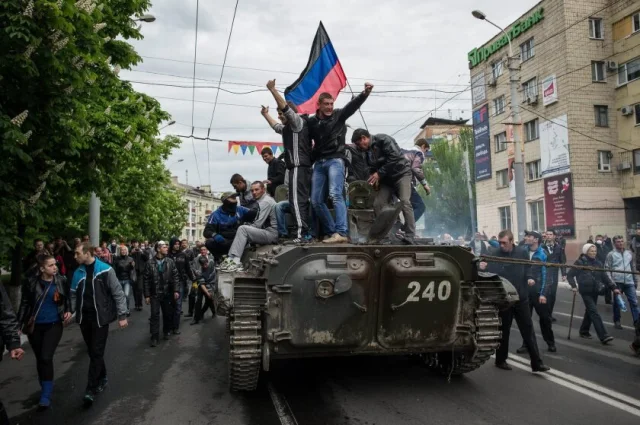
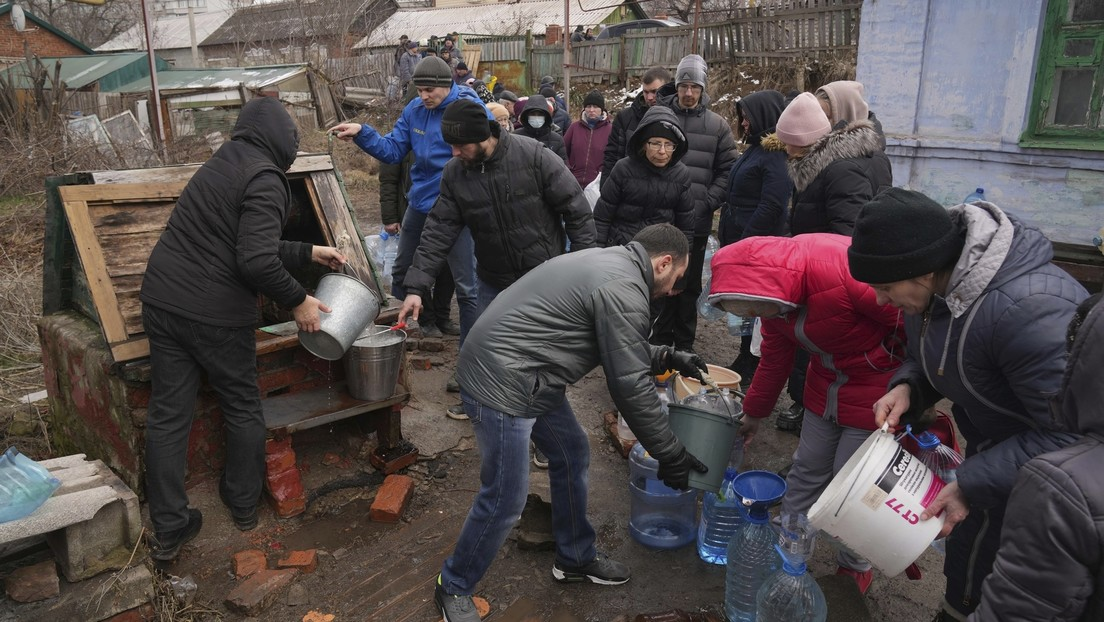
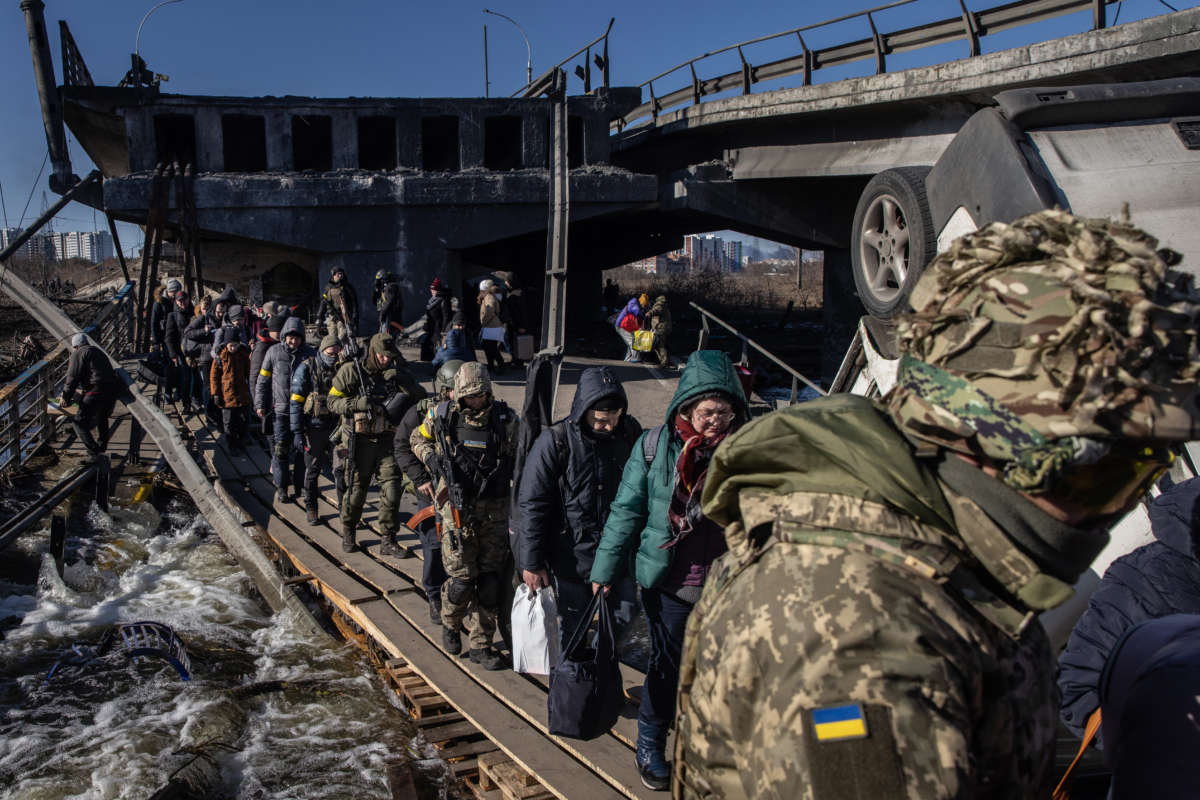
The big news of the day is that the Russian forces finally decided to, shall we say, change pace, and by all account the intensity of the artillery, aerial bombing and missile barrage which hit the Ukie forces in the town of Avdeevka was absolutely unprecedented and following this barrage the LDNR forces broke through 8 kilometers of just about the most heavily defended sectors in the entire theater or operations. The Ukrainian 95th Airmobile Brigade (one of the most combat capable unit of the Ukrainian Army!) was defending this sector. According to reports, this entire brigade was basically wiped out.
Here is what you need to know aboutAvdeevka: this is the very heavily defended location from which the Ukronazis could unleash their terror against the civilians in Donetsk. Now that this entire town has been flattened, the people of Donetsk can now finally hope…
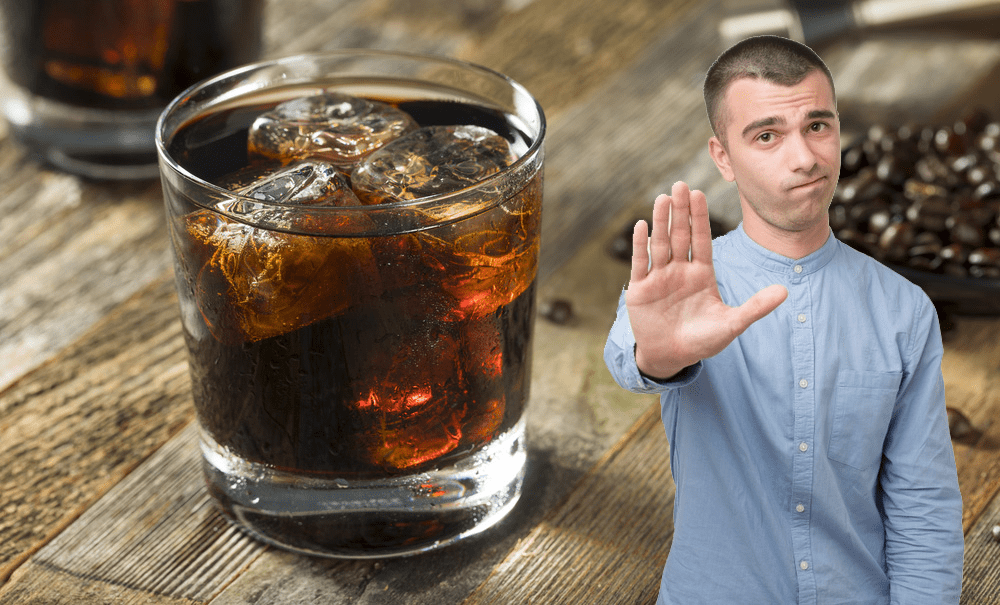
A Waterford man has vowed to never drink a Black Russian cocktail for however long it takes for Russian dictator Vladimir Putin to back out of Ukraine.
Making the announcement on Saturday night, hero David Mannihan gathered friends and revelers attending Egan’s Nightclub around him before ordering the once popular concoction.
“I refuse to drink Black Russians,” the proud 32-year-old began, now making an overly animated ‘no’ gesture toward the mix of vodka and coffee liqueur, before pushing it back to the barman, “eh, no, I’m not paying for it either… yeah, I know you went to the trouble of making it… aw fuck, really, okay, I’ll pay for it, Jesus, how much?” Mannihan continued, now tapping his card for the €15 drink.
“Okay, I mean after this one, I’m definitely not drinking Black Russians after this one as I’ve paid for it now and might as well,” he added, realising that Black Russians aren’t bad now he tastes them, “actually, can we get a round of them in so we can all say goodbye together?”
The move was later hailed as brave by some of his now highly intoxicated peers, before being picked apart by the clique’s designated bleeding heart, Anne Ma-fucking-rie Lyons.
“That’s racist, you can’t just boycott a drink because it’s black and Russian,” Anne Marie insisted, sparking a three-hour heated debate, which ended up on the steps of a local chipper, “you’re such a hypocrite, David, eating a kebab and all the human rights violations in Yemen,” unaware kebabs were of Turkish origin and way too drunk to care.
In a statement issued today in the gangs WhatsApp group, Mannihan retracted his original boycott and apologised if he offended anyone on Saturday night.
Today, the dangers of military escalation are beyond description.
What is now happening in Ukraine has serious geopolitical implications.It could lead us into a World War III Scenario.
It is important that a peace process be initiated with a view to preventing escalation.
Global Research does not support Russia’s invasion of Ukraine.
The history of this war must beunderstood.
The bombing and shelling led by Ukraine’s Armed Forces directed against the people of Donbass started eight years ago, resulting in the destruction of residential areas and more than 10,000 civilian casualties.
A bilateral Peace Agreement is required.
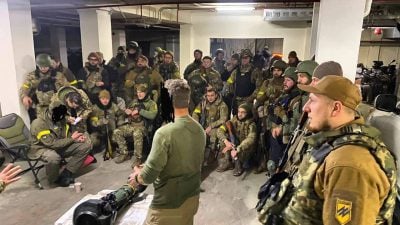
NATO is sending weapons and trainers to help neo-Nazis in Ukraine’s white-supremacist Azov movement fight Russia. This follows numerous reports of Western government support…
The weeks since our last Acorn bulletin have seen a dramatic shift in the system’s narrative.
While the Covid story remains ongoing, it has largely been replaced by the frenzied hysteria over events in Ukraine.
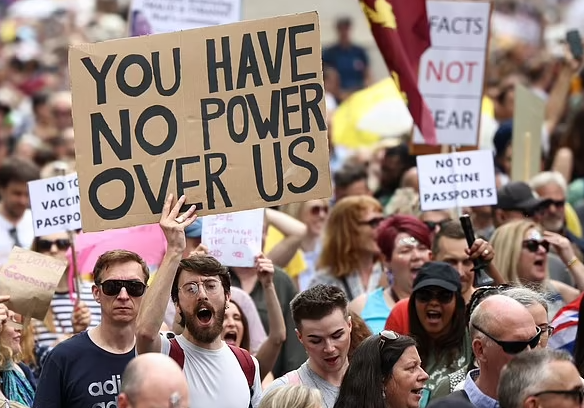
It seems rather convenient that, at the precise moment that the “pandemic” scam was unravelling and the Great Resist against this global coup growing greater than ever, attention so suddenly switched elsewhere!
In fact, as is explained here, the Ukraine-Russia conflict clearly represents a continuation, by other means, of the Great Reset agenda and will help push forward all the technocrat slavemasters’ pet projects from “green” energy to lab-grown food and, of course, their holy grail of compulsory digital identities for all.
Dissident academic Dr Piers Robinson writes in a similar vein: “War in the Ukraine has significant potential to serve as a new enabling event facilitating the drive toward restrictions on liberties and the roll-out of agendas that the WEF has been waxing lyrical about for two years”.
The situation is obviously a complex one and it is important not to fall into the divisive traps being set for us.
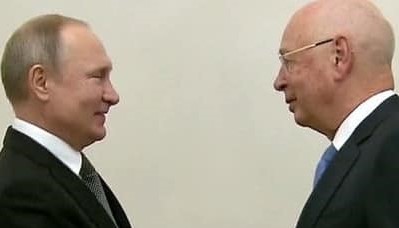
It is possible, after all, to be aware at one and the same time of NATO’s provocative expansionism and of the historical links between the militarist Putin regime and the World Economic Forum, which saw a WEF Centre for the Fourth Industrial Revolution being set up in Russia as recently as 2021.
We would do well to remember George Orwell’s line from his masterful novel Nineteen Eighty-Four: “The war is waged by the ruling group against its own subjects and its object is not the victory over either Eurasia or East Asia, but to keep the very structure of society intact”.
As the perpetual targets and victims of the ruling group’s militarist spectacles, we, the 99.9%, need to oppose all their foul bloodbaths, under whatever guise they try to sell them to us.
If we take this principled stance, intelligently and coherently making the connection with all the other facets of this vile system, then the war in Ukraine will not undermine our Great Resist, but strengthen and amplify it!
We can stand tall and proud and declare ourselves to be against everything that the murderous and manipulative global billionaire class represents.
We will not rally around any of the flags they try to hand us. We will not be herded like sheep into the pens they have prepared.
Our opposition comes from beyond their stage-managed world, from outside the manufactured reality they pump into our minds with their endless brain-rotting propaganda.
Our resistance surges up from below and is directed against those above who have trampled all over us for far too long.
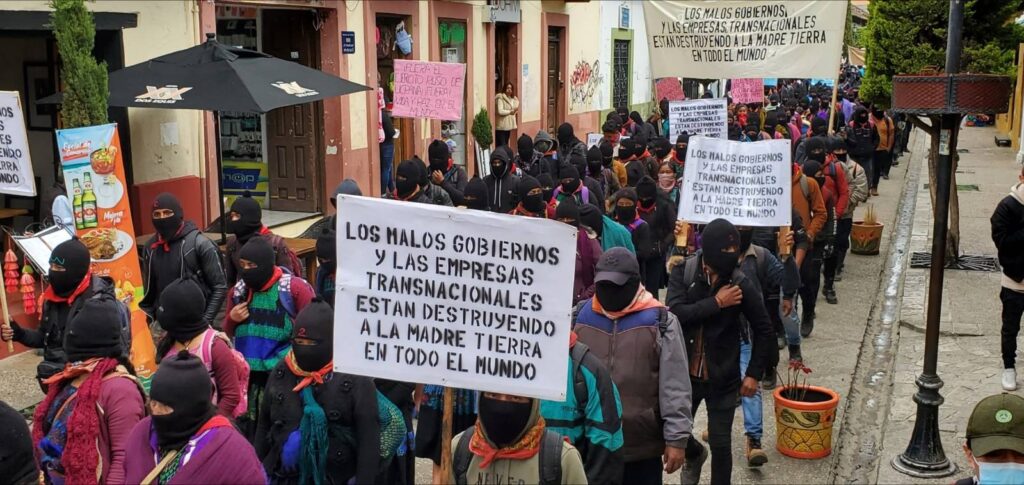
This is, indeed, the powerful message from the Zapatista movement in Chiapas, Mexico, whose emergence in 1994 in opposition to the North American Free Trade Agreement (NAFTA) inspired the mighty anti-globalisation movement only broken by 9/11 and the subsequent “war on terror”.
On Sunday March 13, they converged on the city of San Cristobal de las Casas, in their biggest demonstration for many a year, to declare their opposition to both the Russian invasion of Ukraine and NATO imperialism.
They declared: “There are big capital interests at stake, on both sides. As Zapatistas, we do not support one state or another, but those who fight for life against the system”.
It is hard to fully grasp the sheer monstrosity of the system under which we live.
Most people simply cannot imagine that anyone could deliberately inflict untold misery and death on others, purely in pursuit of their own selfish goals.
Instead, even when they are not happy about what has happened, they cling to the semi-reassuring notion that it must have been some kind of mistake, or accident, the unforeseen outcome of a collision of social circumstances or geopolitical forces for which nobody in particular could be held responsible.
They consider it outlandish to suggest, despite the abundant evidence, that our own ruling clique has created, funded and trained terrorist groups to attack its own populations so as to frighten them into cowed obedience.
They do not think it likely for a fake “pandemic” to be sold to a global public in a pre-planned and co-ordinated fashion in order to advance a certain nefarious agenda, with the vast and irreparable suffering caused by this scam regarded as acceptable collateral damage.
They struggle to see how it could really be true that the social and environmental goals and solutions offered to us by virtue-signalling “do-gooders” are nothing but lies, Trojan horses for yet more exploitation and destruction.
It is impossible for many folk to imagine that nightmarish military conflicts costing thousands, if not millions, of innocent lives, could be schemed up behind the scenes and sold to the public on false pretences.
They cannot believe any of this because they, like most of us, fall into the “mostly good” category of human being, tripping and stumbling our way through life trying not to cause too much harm to others and still feeling uneasy, years later, about the times when we did not meet our own moral standards.
But the powerful individuals who pull the strings in this world are not like us and therefore behave in ways which we cannot begin to fathom.
They are psychopaths, utterly lacking in empathy for their fellow humans and addicted to the taste of blood and power.
In their vile arrogance, they imagine themselves better than all the little people, all the peasants, all the nobodies and failures over whom they merrily trample in their quest for yet more wealth and glory.
Their sneering sense of superiority fuels their behaviour. They see themselves as the glorious end product of neo-Darwinian “dog eats dog” evolution, the “fittest” who are destined to survive and prosper at the expense of the despised masses.
In truth, of course, the opposite is true. These liars and manipulators, these mass-murdering mafiosi, represent the very worst of humanity.
Only in their own inverted and amoral view of the world do the ruthless and greedy occupy any kind of high ground. They are the lowest of the low.
But as long as we continue to see the world from their perspective, which they present to us as the one and only truth, we will not be able to grasp this.
We need to step right out of the picture they have painted for us, in which we will only ever be the background to the triumph of their own twisted will.
The first thing we obviously have to do is to stop listening to and believing their lies, refuse to base our understanding of reality on what they tell us, decline to take “sides” in the gruesome games they devise to further divide and control us.
We also have to shake ourselves free from the language they use and all the assumptions this brings with it. Enough of their “economy” and “growth” and “security” and “progress”! These are all just mislabelled facets of their ongoing domination.
As we strip away the fake reality they have painted, we will ditch all kinds of previously unchallengeable “truths”.
No, we do not really have a “moral” duty to spend our lives working for the profit of the ruling class, just in order to live and eat and breathe!
No, our children do not belong to them and we did not have to hand them over for obligatory slave-think indoctrination or for experimental drug injection!
No, we do not “need” their infrastructures in order to live our lives and we certainly do not need “protection” from those who themselves represent by far the greatest threat to our well-being!
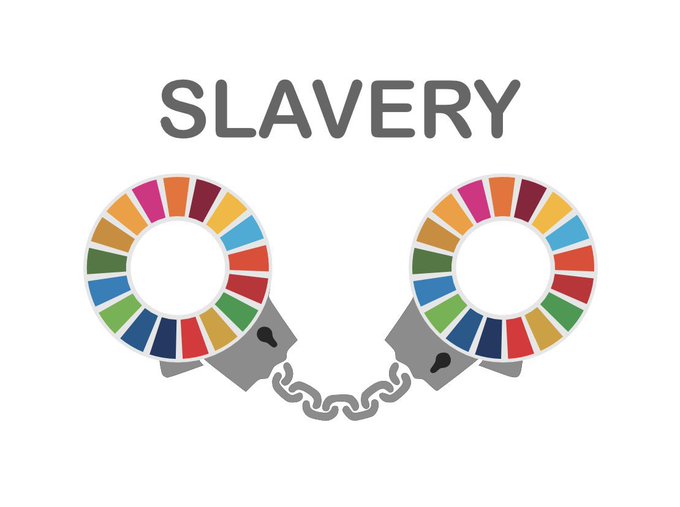
Eventually, after layer after layer of artifice has been peeled away, we will see the horrible truth about the psychopathic mafia and the physical and psychological slavery they have imposed on us for so long.
Once we have understood this, we will all know what to do next.
Anne-Laure Bonnel, reportera de guerra francesa que ha estado en Ucrania desde 2015, dice: “Lamento sorprender a todos, no tengo una posición política, no defiendo a Putin, pero es el gobierno ucraniano el que está bombardeando a la población ucraniana de habla rusa en Donbass en este momento y ha estado sucediendo durante 8 años, tengo videos para demostrarlo!” .
Anne-Laure Bonnel, una joven directora y madre de familia francesa, decide acompañar a Alexandre, padre de origen ucraniano, a la región de Donbass, al este de Ucrania en la zona prorrusa.
En el corazón de la guerra que comenzó en 2014, captura las terribles imágenes de un conflicto mortal y un desastre humanitario sin precedentes. Donbass es una road movie inmersiva, un apasionante documental en un país desgarrado.
Un conflicto que, antes de que se reiniciara la guerra este año, se cobró 13.000 víctimas según la Oficina del Alto Comisionado…
Victory!.. Nazi forces ‘eradicated in most areas of Mariupiol’…From Moscow they denounced that the neo-Nazis use the ceasefire to regroup their forces and use civilians as a “human shield”.
Likewise, from the Russian ministry they announced the sending of humanitarian convoys, the first of which arrived in Mariúpol with 450 tons of medicines, basic necessities and food, including baby food..
‘Without liberating Mariupol the war could never end’. Mariupol is a mainly ethnic Russian port city next to Donetsk which was colonised for years by the notorious pro Hitler Azov batallion incorporated into the Ukrainian armed forces.
The Russian Defense Ministry declared on Monday that the operation to liberate Mariupol from Ukrainian neo-Nazi fighters has managed to open humanitarian corridors and begin the evacuation of civilians from the city.
As Russia steps up its assault on Ukraine and its forces advance on Kyiv, peace talks between the two sides were scheduled to resume today for the fourth time, but have now been postponed until tomorrow.
Unfortunately, some opportunities for a peace agreement have already been squandered, so it’s hard to be optimistic about when the war will end. Regardless of when or how the war ends, though, its impact is already being felt across the international security system, as the rearmament of Europe shows.
The Russian invasion of Ukraine also complicates the urgent fight against the climate crisis. The war takes a heavy toll on Ukraine and on the environment, but it also gives the fossil fuel industry extra leverage among governments.
In the interview that follows, world-renowned scholar and dissident Noam Chomsky shares his insights about the prospects for peace in Ukraine and how this war may impact our efforts to combat global warming.
Noam Chomsky, who is internationally recognized as one of the most important intellectuals alive, is the author of some 150 books and the recipient of scores of highly prestigious awards, including the Sydney Peace Prize and the Kyoto Prize (Japan’s equivalent of the Nobel Prize), and of dozens of honorary doctorate degrees from the world’s most renowned universities. Chomsky is Institute Professor Emeritus at MIT and currently Laureate Professor at the University of Arizona.
C.J. Polychroniou: Noam, while a fourth round of negotiations was scheduled to take place today between Russian and Ukrainian representatives, it is now postponed until tomorrow, and it still seems unlikely that peace will be reached in Ukraine any time soon.
Ukrainians don’t appear likely to surrender, and Putin seems determined to continue his invasion. In that context, what do you think of Ukrainian President Volodymyr Zelensky’s response to Vladimir Putin’s four core demands, which were (a) cease military action, (b) acknowledge Crimea as Russian territory, (c) amend the Ukrainian constitution to enshrine neutrality, and (d) recognize the separatist republics in eastern Ukraine?
Noam Chomsky: Before responding, I would like to stress the crucial issue that must be in the forefront of all discussions of this terrible tragedy: We must find a way to bring this war to an end before it escalates, possibly to utter devastation of Ukraine and unimaginable catastrophe beyond. The only way is a negotiated settlement. Like it or not, this must provide some kind of escape hatch for Putin, or the worst will happen. Not victory, but an escape hatch. These concerns must be uppermost in our minds.
I don’t think that Zelensky should have simply accepted Putin’s demands. I think his public response on March 7 was judicious and appropriate.