This post concerns Richard Drax, one of the richest MPs in the Brit Parliament, whose inherited fortune was apparently built on the slave trade.
Richard Drax: he likes to dress the part of the landed gentry, but it seems his fortune is built on something sordid. Time to face reality?
His family owned plantations in Barbados that were farmed by slaves; he still has one there now, although working practices have changed with the times. As a result, he now owns a large amount of Dorset.
‘Of course the entire wealth of the UK is based on slavery and centuries colonial looting, which continues today via its vast overseas ‘holdings’ and the great fraud machine of the ‘City’ of London’.
Barbados has recently become a republic and its people are asking him to make reparation for the slave-profiteering that built his fortune.
Here’s the report:
Will this MP make amends for his family’s sordid past? Or will he deny responsibility?
RichardDrax still owns the family’s ancestral slave plantation, comprising 621 acres, Drax Hall, situated on the island of Barbados. Workers on the plantation allegedly earn as little as £24 a day, half the average wage in Barbados. (4) The call for reparation and restitution The people of Barbados call for reparation and restitution.
South Dorset Tory MP RichardDrax is descended from John Sawbridge Erle-Drax, who was awarded £4,293 12s 6d – worth £3m today – for 189 slaves. The money was paid in May 1836 for slaves at a…
British empire killed 165 million Indians in 40 years
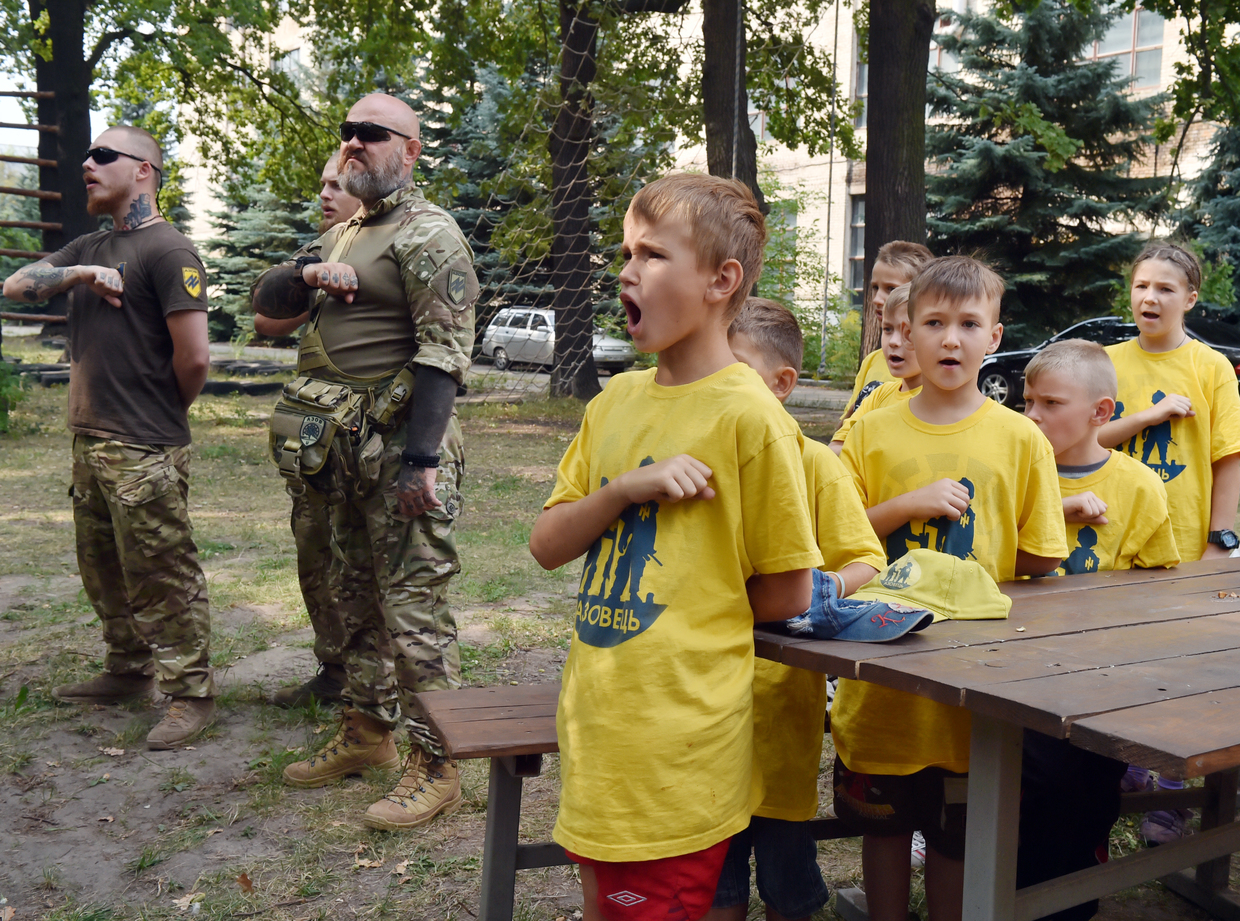
Vacationing children undergo military training at a base of the Azov battalion in Kiev on August 14, 2015.
Earlier this month, Juan Sinmiedo, who runs a popular Telegram channel documenting human rights abuses in Ukraine, published an explosive interview with ‘Boneface’ – real name Kent McLellan – a 32-year-old Neo-Nazi from Florida who joined the fascist volunteer Right Sector group during the Donbass war, and returned to fight alongside the Azov Battalion in January 2022.
It was this background that led him to travel to Ukraine in 2014. The American fascist circles he moved in had direct links and regular contact with nationalist groups at the forefront of the Maidan, which at the time were hosting large public events “nearly daily in every Oblast that wasn’t seeing war.” As did far-right movements in many other nearby countries, including Finland, Georgia, and Latvia.
In this interview we are talking with people of the No Borders Team, an anarchist collective from Polans, about the situation at the polish-belarusian border in the past year. The north-eastern European migration route experienced a devastating renaissance late summer of 2021. The monster of EU has in turn showed its ugly face yet again too. Politicians feeding the narrative of danger through migration, lining up with right-wing and conservative forces. Europe defends its wealth with all possible means and accepts the death of people without hesitation.
Within a very short time, the polish-belarusian border zone was shielded, walls were built and the so-called border protection was incredibly militarized. Despite this sometimes deadly border policy, many people still try to cross it and seek protection in Europe. Activists who support them on their way face serious police and government repression.
We will try to give a picture of the most important things that happened in the last months, polish migrant policy and the conditions of People on the Move on the eastern border of the European Union (EU). And also we will talk about the work that grassroot groups are doing, from the very beginning in the border forests till today solidarity network that is trying to support people locked in closed detention centers.
The situation in Poland is a result of the EU anti-migrant policy, that People on the Move are facing in every external border of the EU. So this border is now one point more where human rights are violated and the EU is fighting a war against migration.
Cowardly attacks are being launched by Turkish occupation state against the Kurdish component wherever at highest level, in which 2nd Paris Massacre is not separated of Gonia Massacre that had been committed by Turkish fanatics, or the series the crimes of the Turkish occupation in Southern, Northern and Western Kurdistan.
At a time that the Guerilla Fighters in the mountains in Southern Kurdistan have been exposed to chemical attacks by Turkish state in July, 2021, Turkish nationalist fanatics killed a Kurdish family; Consisting of 7 individuals on the outskirts of the city of Gonia in a heinous crime; The perpetrators chanted, “Kurds are not allowed to live here.”
At the time, Kurdish political circles considered that the Turkish government and its judicial system were lenient towards Turkish fanatics. They opened the way for brutal crimes against the Kurdish people.
Before that, 6 bullets were shot in the body of the Kurdish activist, Deniz Poyraz, and her body sank in a pool of blood at the headquarters of the Peoples’ Democratic Party in the heart of Izmir in June, and they were the “Gray Wolves”; It is an anti-Kurdish Turkish nationalist movement behind the crime.
Two weeks before that, 5 Turkish youths attacked a 20-year-old Kurdish man, Barış Chakan, and brutally killed him by stabbed with knives, while he was listening to Kurdish songs in a garden in the Turkish capital, Ankara.
One month before the incident of the Kurdish youth, the Turkish media had reported from the “Jana Qala” region in the far west of Turkey the incident of assaulting the elderly Kurdish “Akram Elder”, who was accompanying his wife in the city hospital, and because they were speaking Kurdish, which they do not know any other language, they were attacked by Turkish residents of the same hospital, chanting slogans such as “No to the division of Turkey.”
The terrorism of the Turkish state has gone beyond the borders of the country. In Southern Kurdistan, a Kurdish citizen from Northern Kurdistan, Mohammad Zaki Chalabi, a national figure, was seriously injured on the night of May 17 in front of his restaurant on Bakhtiar Street in Sulaymaniyah. After he was shot by people linked to Turkish intelligence, he died hours after being transferred to the hospital, while the killers had not been arrested for 7 months.
US researcher: Turkish attacks undermine efforts to fight ISIS
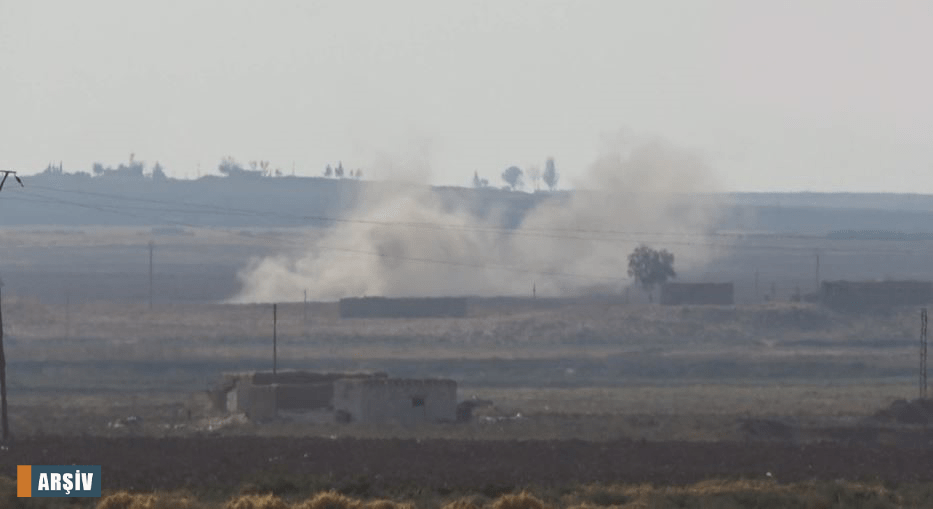
An American researcher warned that the Turkish occupation army’s attacks on North and East Syria would negatively affect the battle against ISIS.
A few days later, a Turkish drone was targeted. The prominent Kurdish politician, and one of the pillars of the Autonomous Administration in North and East Syria, Farhad Shibli, in Southern Kurdistan, which led to his martyrdom on the 17th of last June.
Hundreds of villages, towns, and border cities with the occupying Turkish state were not spared from the systematic bombing and destruction in Southern and Western Kurdistan. The violence it has practiced has not stopped for 100 years, and is still continuing at a higher rate, through which the Turkish state uses chemical weapons to eliminate Guerrilla fighters in the mountains of Kurdistan.
The war of extermination waged by the occupying Turkish state against the Kurdish presence is expanding. The second Paris massacre is clear evidence and a message that “no Kurd will be spared on the face of this earth.”
Although the French authorities have not revealed the party behind the second Paris massacre until this moment, the Kurdish people are fully aware; The party that seeks to annihilate it is the fascist Turkish state.
Accordingly, the Kurdish people demand the French authorities, in the ongoing protests, to reveal to the public opinion the party behind the second Paris massacre, and not be satisfied with a number of statements, at a time when the Kurdish presence around the world is threatened by the Turkish state.
Noting that the French government did not provide clear evidence about the 2013 Paris massacre, when Turkish intelligence targeted 3 Kurdish women activists, namely ” Sakîne Cansiz, Leyla Şaylemez, Fîdan Dogan.”
In addition to the killings carried out by the Turkish intelligence in Europe, most of the terrorist operations in Europe during the past decade were carried out by mercenaries with links to ISIS, which bases itself in the Turkish occupation state, according to dozens of reports and documents that talked about the transformation of Turkish cities into dens for extremist groups.
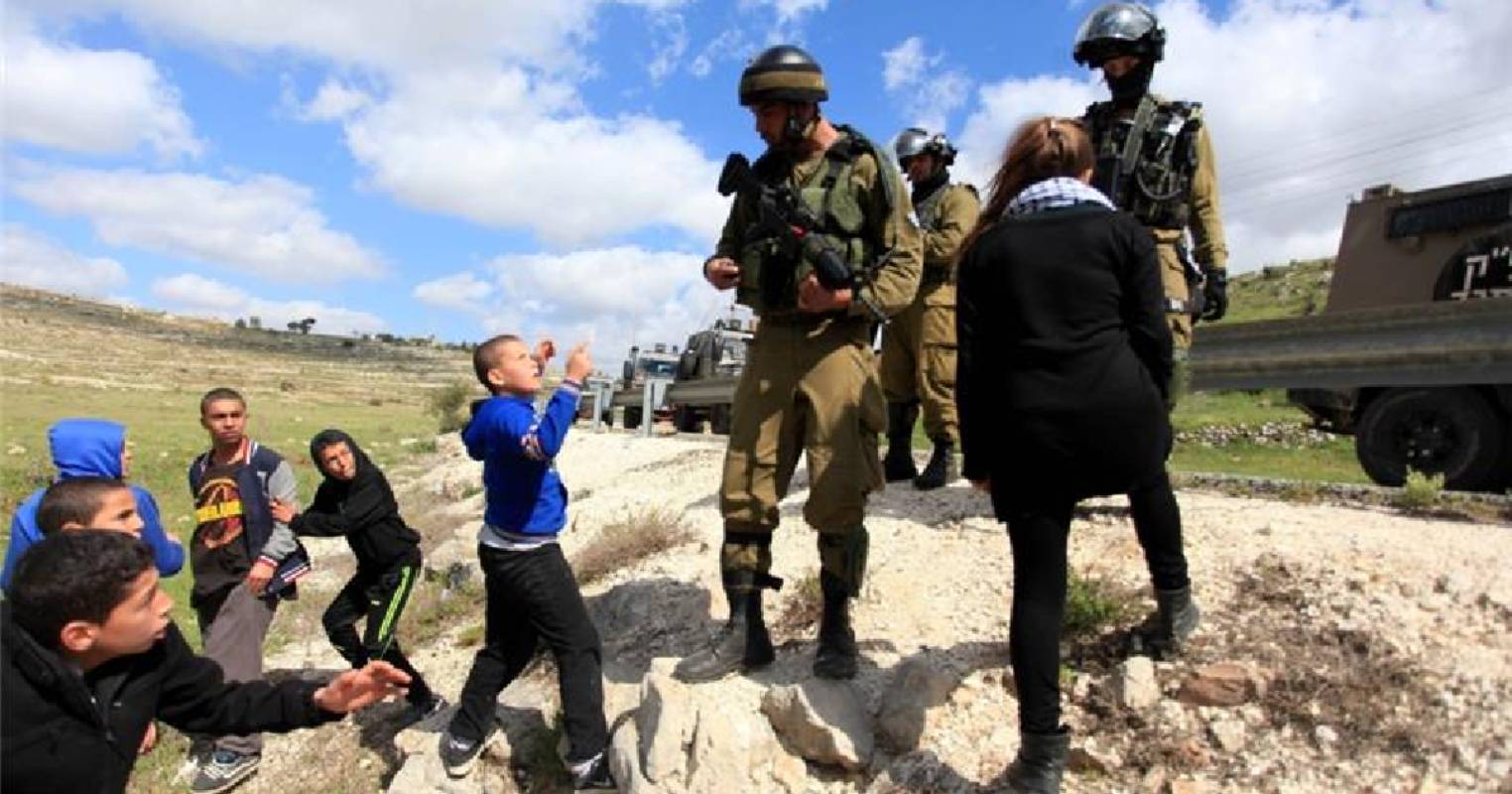
Israel sigue impune en su invasión sobre tierra Palestina, dejando un reguero de fallecidos. Israel ha perpetrado durante 2022 la mayor matanza de niños palestinos en Cisjordania desde 2006, algo que la Representante Especial del Secretario General de la ONU para la cuestión de los niños y los conflictos armados, Virginia Gamba, declaró ser consciente…
The destruction of the Roehampton Estate in January 1832. (Adolphe Duperly / Wikimedia Commons) Originally Published in Jacobin on December 25, 2022 On Christmas Day in 1831, 60,000 enslaved Africans carried out the largest uprising in British West Indies history. Their uprising would prove a milestone on the road to emancipation only a few years […]
En los últimos años se ha intensificado la investigación sobre el estudio de las partículas de neutrinos y su posible interacción con la materia, lo que fue consecuencia directa de la concesión del Premio Nobel de Física de 2015 a Takaaki Kajita y Arthur McDonald (Arthur B. McDonald) -el líderes de dos grupos experimentales, Super-Kamiokande […]